Amazon Shuts Its AGI Lab After 18 Months: It Decided Renting the Frontier Beats Building It

🕒 Published on Zendoric: July 28, 2026 · 00:38
✨ AI-generated · how it's made
Amazon has closed the San Francisco lab it founded in December 2024 to chase general-purpose AI, 18 months in. The company that wrote the first big cheque to Anthropic has concluded it doesn't need to build frontier models — it needs to be the ground they run on. That's rational, and it's a warning about concentration.
📚 Go deeper
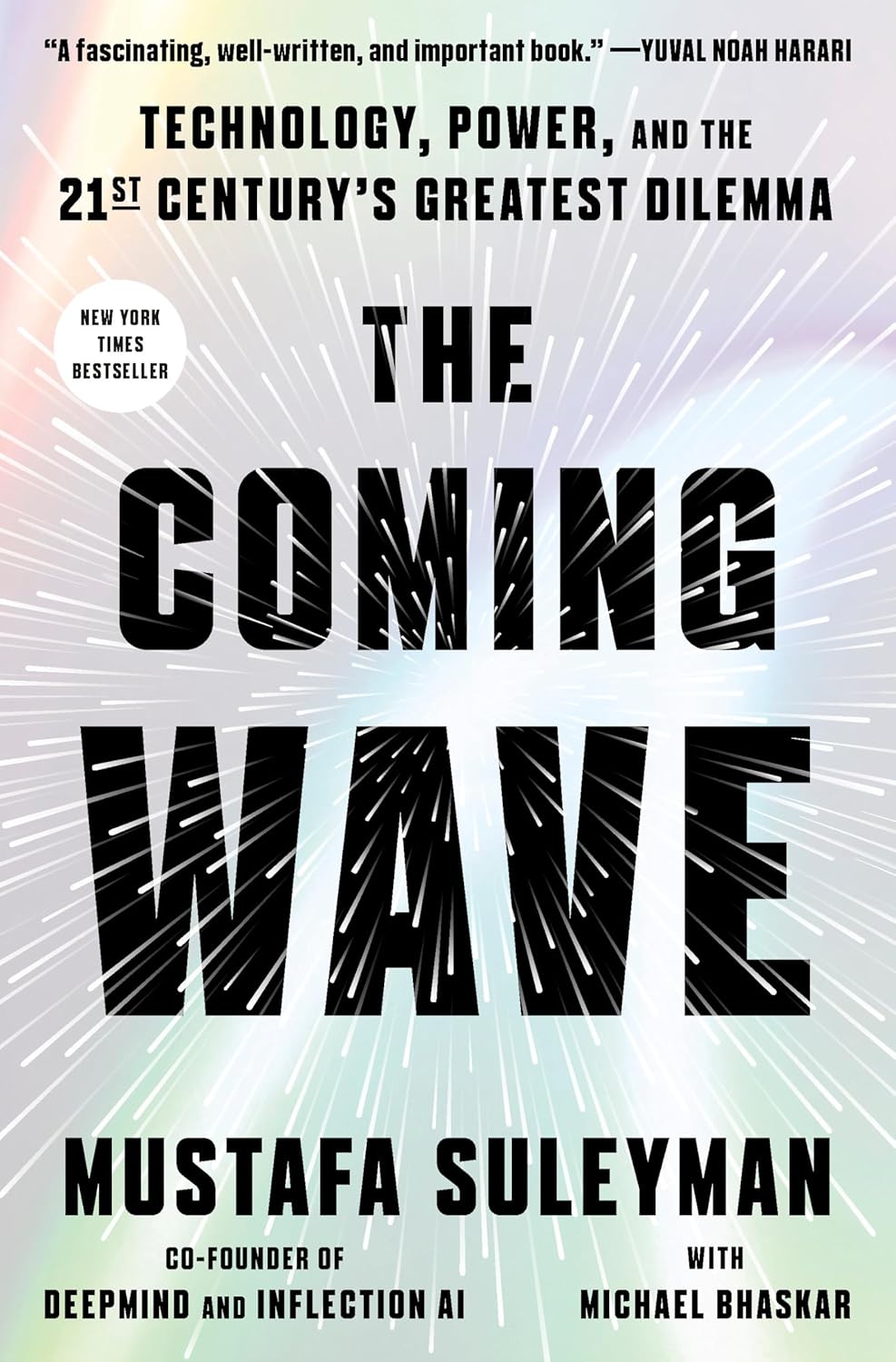
DeepMind co-founder on the dilemma of containing technologies that do not want to be contained.
As an Amazon Associate, Zendoric earns from qualifying purchases; the price does not change for you. · all our recommended books →
Amazon has shut down its AGI Lab, the San Francisco team it created in December 2024 to build general-purpose AI. The Information and Reuters reported the closure, picked up by The Next Web on July 24, 2026. The lab had several dozen employees and the shutdown is part of a wider round of cuts inside Amazon's AGI unit whose exact scope the company hasn't confirmed. Amazon frames it as prioritization: "We continue to work on large AI models, and it's one of the most important things we work on," a spokesperson said, adding that the company is "sharpening our focus" and has eliminated "some roles within parts of our AGI organization."
The leadership left before the lab did. Rohit Prasad, who oversaw Amazon's entire AGI effort and owned its long-term AI vision, departed in late 2024. David Luan, who ran the AGI Lab specifically, left in February 2026. The remaining work was folded under Peter DeSantis, combining AI, chips and quantum into a single organization. That reorganization is the real signal. When speculative research gets absorbed into an infrastructure group, the projects that survive are the ones nearest to revenue.
The context is a company already cutting hard — Amazon eliminated 16,000 positions in January 2026, and Microsoft has shed more than 15,000 across 2025-2026 — and a capital landscape that makes frontier ambition look expensive by comparison. Google put $40 billion into Anthropic in April 2026. Amazon got there first, with commitments exceeding $4 billion since 2023. Read those two numbers side by side and Amazon's decision writes itself: for a fraction of what an in-house frontier lab costs in talent alone, it holds a position in one of the two or three organizations actually pushing the state of the art. Meanwhile it keeps real AI capability of its own — the Nova family powers Alexa Plus and AWS services, and Bedrock continues. This is an exit from the frontier race, not from AI.
And the frontier race was never Amazon's business model. AWS is. The company raised GPU pricing twice in six months on HBM memory scarcity — high-bandwidth memory, the expensive stacked DRAM that feeds AI accelerators. Amazon doesn't control that shortage; it monetizes it. Every lab it competes with as a model builder is a customer it serves as a landlord. Qualcomm's acquisition of Modular to chip away at Nvidia's CUDA lock-in belongs to the same story: the infrastructure layer is where a lot of durable value is being captured while everyone watches the model leaderboards.
Our reading: the decision is economically coherent and strategically narrowing at the same time. Specialization is how industries mature — not every cloud provider needs to run a research lab, any more than every carmaker needs a steel mill. But if the world's third-largest cloud concludes that frontier models aren't its game, the honest question is how many mid-size players reach the same conclusion, and whether the frontier ends up governed by three companies. That's the concentration risk we keep flagging: not that the models get worse, but that pricing, access and safety norms get set by a very small room. The counterweight already exists and is underrated — open-weight models from GLM, Qwen, DeepSeek and Kimi are closing on the closed frontier fast, and they're the reason "three labs decide everything" isn't yet destiny.
What to watch over the next year: whether Amazon ships mid-tier proprietary models aimed squarely at AWS use cases — summarization, data extraction, code completion — where owning the weights buys price and privacy advantages without requiring it to out-research Anthropic. That would be the mature version of this retreat: not abandoning AI, but picking the layer where it can actually win. The abundance we expect from this technology in the long run needs cheap, reliable, boring infrastructure as much as it needs breakthroughs. Somebody has to build the roads.
📚 Go deeper

The story of NVIDIA and Jensen Huang: how a video-game card company ended up making the most coveted resource on the planet.

AI as the latest chapter in the history of information networks, from gossip to the printing press to the algorithm.
As an Amazon Associate, Zendoric earns from qualifying purchases; the price does not change for you. · all our recommended books →
🔗 Related on Zendoric
- Amazon closes its AGI Lab after 18 months: it would rather own the toll road than win the model race · 2026-07-27
- Amazon cuts its own general AI division: those who build the models are also caught in the adjustment · 2026-07-24
- When a decree shuts off an API: the Legion case exposes the fragility of building on a single AI provider · 2026-06-24