Amazon closes its AGI Lab after 18 months: it would rather own the toll road than win the model race

🕒 Published on Zendoric: July 27, 2026 · 00:21
✨ AI-generated · how it's made
Amazon has shut the AGI Lab it founded in December 2024, cutting several dozen roles and folding what's left of its AGI work under its infrastructure chief. This is not an exit from AI — it's a decision to finance Anthropic's frontier instead of building one, and to sell compute to everyone still racing. The precedent worries us more than the closure does.
📚 Go deeper
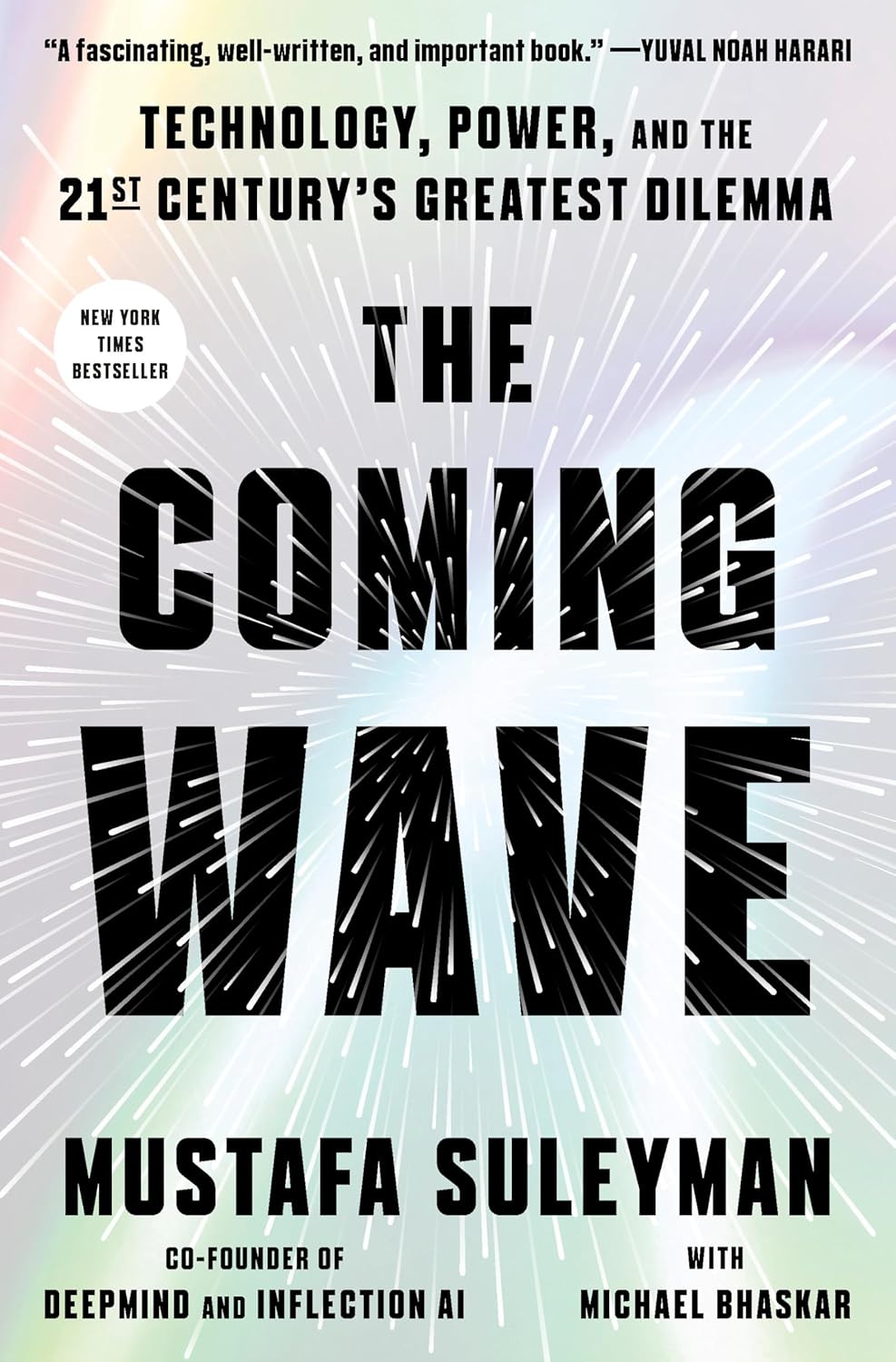
DeepMind co-founder on the dilemma of containing technologies that do not want to be contained.
As an Amazon Associate, Zendoric earns from qualifying purchases; the price does not change for you. · all our recommended books →
Amazon has shut down the AGI Lab it created in San Francisco in December 2024 to build general-purpose AI. The team had "several dozen" employees and 18 months of existence, according to The Information and Reuters, as reported by The Next Web on 24 July 2026. The closure sits inside a broader round of layoffs in Amazon's AGI unit whose exact scope the company has not officially confirmed. Amazon frames it as focus, not retreat: "We continue to work on large AI models, and it's one of the most important things we work on," a spokesperson said, adding that the company is "sharpening our focus on the initiatives that matter most to customers" — which meant "eliminating some roles within parts of our AGI organization."
The lab lost its leadership long before it lost its mandate. Rohit Prasad, the executive who oversaw Amazon's entire AGI effort and owned its long-term AI vision, left at the end of 2024 — essentially as the lab was being stood up. David Luan, who ran the AGI Lab itself, departed in February 2026. Amazon then reorganized the work under Peter DeSantis, bundling AI, chips and quantum computing into a single area. That last detail is the real signal: when speculative research gets filed under infrastructure, it has stopped being a bet and become a line item. The same report places the move in a wider cost cycle — Amazon eliminated 16,000 roles in January 2026.
Read as strategy rather than drama, the decision is an admission of arithmetic. Several dozen researchers were never going to out-run labs staffed with hundreds of top-tier researchers publishing the field's most-cited work. Amazon was Anthropic's first major backer, with commitments above $4 billion since 2023, and the source notes Google committed $40 billion to Anthropic in April 2026 — a figure that draws the industry's real dividing line between who builds frontier models and who funds them. Amazon's exposure to the frontier is an equity position, not a payroll. Its actual AI business is AWS: compute, Bedrock, and the meter that runs while everyone else trains. The article points out AWS raised GPU prices twice in six months on HBM memory scarcity (HBM is the high-bandwidth memory that feeds AI accelerators). You don't need to win the race if every racer rents your track.
This fits a pattern we've been tracking for months: in this cycle, value migrates from the model to the plumbing — distribution, integration, agent standards, and now electrons and memory. Compute scarcity has already dissolved the line between rival and supplier; Meta negotiating to rent capacity from Anthropic was the tell. Amazon has now made that blur official policy: fund the lab you can't be, then sell it the hardware. Qualcomm's acquisition of Modular to chip away at Nvidia's CUDA lock-in, cited by the source, belongs to the same layer of the stack — the one that profits from competition without entering it.
What deserves genuine concern isn't the closure but the precedent. If the third-largest cloud provider on earth concludes that frontier models aren't its business, plenty of mid-sized companies will reach the same verdict faster. A frontier owned by two or three closed labs is a governance problem before it's a competition problem: fewer institutions setting safety norms, more leverage over pricing and access, and a dangerously thin bench if one of them stumbles. And beneath the strategy memo are people who were hired 18 months ago to work on the most ambitious problem in tech and are now looking for jobs.
Our reading: don't confuse concentration at the ceiling with concentration of capability. The open-weight tier keeps closing the gap — GLM-5.2, Qwen3.7-Max, DeepSeek V4-Pro and Kimi K2.6 now sit within striking distance of closed frontier models on our own quality index — which means the useful floor rises even as the top narrows. The abundance case for AI never required every company to train its own frontier model; it requires capability to become cheap, auditable and broadly available. That is happening, and Amazon renting rather than racing is a rational response to it, not evidence of retreat. Amazon still ships Nova, which powers Alexa Plus and AWS services, and the source predicts mid-tier in-house models aimed at AWS-specific tasks like summarization, extraction and code completion. Watch for that. The interesting question over the next 12 months isn't who builds AGI — it's who owns the meter, and whether anyone is governing them.
📚 Go deeper

An MIT computer scientist connects AI, quantum physics and video games to take an uncomfortable question seriously: what if we live in a simulation? M

The story of NVIDIA and Jensen Huang: how a video-game card company ended up making the most coveted resource on the planet.
As an Amazon Associate, Zendoric earns from qualifying purchases; the price does not change for you. · all our recommended books →
🔗 Related on Zendoric
- OpenAI cutting off Cursor turns model access into a revocable utility, not infrastructure · 2026-08-31
- Amazon Shuts Its AGI Lab After 18 Months: It Decided Renting the Frontier Beats Building It · 2026-07-28
- Brazil opens another front: Amazon's investment in Anthropic comes under antitrust scrutiny · 2026-07-09