NVIDIA unveils Minerva, an end-to-end AIOps observability platform for AI factories

🕒 Published on Zendoric: October 27, 2026 · 00:16
✨ AI-generated · how it's made
NVIDIA has launched Minerva, an AIOps platform designed to help teams detect problems early and keep so-called "AI factories" productive.
📚 Go deeper

The best starting book if you're not technical: a Wharton professor explains how to work WITH AI — when to delegate, when to supervise, when to keep i
As an Amazon Associate, Zendoric earns from qualifying purchases; the price does not change for you. · all our recommended books →
NVIDIA has launched Minerva, an AIOps platform designed to help teams detect problems early and keep so-called "AI factories" productive. According to the announcement published on the company's blog on October 22, 2026, the platform brings together telemetry from infrastructure and AI workloads and applies purpose-built AI models to turn that data into timely, actionable insights.
The approach starts from a premise: AI factories are among the most complex operations in existence, with enormous numbers of GPUs working over high-speed networks to train models and serve applications. At that scale, a single degraded component can slow down an entire job. NVIDIA cites signals that can go unnoticed, such as a GPU running hotter than its peers or an NVMe drive losing performance under load.
The platform focuses on "AI factory yield," which NVIDIA defines as a measure of the useful work the infrastructure produces in terms of GPU hours, goodput, cluster availability and token output.
A dynamic view of the factory. NVIDIA criticizes traditional monitoring tools for splitting the data center into separate views: networking, compute, site reliability (SRE) and machine learning teams each see a different part. Minerva connects those signals across NVIDIA GPUs, networking, storage, schedulers and workloads. From them it builds a dynamic knowledge graph that logically maps the infrastructure (GPUs, SuperNICs, switches and cables) and the jobs running on it. According to the company, this context makes it possible to trace a slow training job back to the component affecting it, even in a factory with hundreds of thousands of GPUs.
Analysis and correlation. NVIDIA says Minerva analyzes billions of data points per hour using supervised and unsupervised machine learning. It learns normal behavior, detects previously unseen anomalies, predicts incipient failures and correlates related events based on the factory's topology. Instead of sending every symptom to an operator, it can group an "event storm" into a single incident with a probable root cause.
Assistant and agent integration. The platform includes a native AI assistant and connects with external agentic AI tools, adding a natural-language interface grounded in live telemetry. Operators can investigate cluster health and receive remediation recommendations through conversation. Teams can keep a human in the loop to apply fixes manually, or connect Minerva to automation through infrastructure APIs and external systems.
Stated benefits. NVIDIA argues that grouping related issues into a single actionable item makes it possible to shift from reactive to proactive maintenance and maximize GPU uptime. It sums up the value in three metrics: longer time between interruptions (detecting problems before they occur so jobs run longer without incidents), shorter time to repair (pinpointing the problem precisely when an incident occurs) and greater visibility (filtering the data stream to leave only the alerts that matter). It should be noted that these are the company's own claims; the article provides no concrete figures or independent measurements.
Customers and partners. IREN is among the partners using Minerva. Its chief technology officer, Denis Skrinnikoff, said the platform gives the operations team a single view of the network, the GPUs and the jobs running on them, allowing it to focus more on proactive maintenance than on troubleshooting. According to the announcement, Aolani, Bitdeer AI, IBM, Jio, Lambda, Quake AI and Tesla also plan to deploy Minerva. In addition, Dell Technologies, Lenovo and Supermicro will offer Minerva as part of their AI factory operations portfolios.
Context. The announcement is part of NVIDIA's series of news in Europe around GTC Berlin 2026. The text does not detail pricing, general availability or specific technical requirements, so those aspects remain to be clarified.
📚 Go deeper
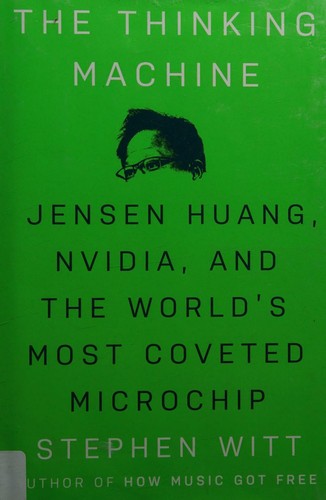
The story of NVIDIA and Jensen Huang: how a video-game card company ended up making the most coveted resource on the planet.

Semiconductors as the oil of the 21st century: history, espionage, and why an island of 23 million people underpins the entire AI economy.
As an Amazon Associate, Zendoric earns from qualifying purchases; the price does not change for you. · all our recommended books →
🔗 Related on Zendoric
- OpenAI unveils ChatGPT Work, its new agentic 'super app', and intensifies the rivalry with Anthropic · 2026-07-11
- Dorsey unveils Buzz, an open-source Slack with native AI: the fight is over where agents will live · 2026-07-22
- OpenAI unveils GPT-6 Astra and Nvidia certifies the 'AGI era': the problem is that nobody agrees on what that means · 2026-09-09