New York pauses 'Sally', its AI robot teacher: the failure is not the technology, but trust

🕒 Published on Zendoric: July 29, 2026 · 00:34
✨ AI-generated · how it's made
A rural school district in Salamanca, New York, halts the arrival of 'Sally', a $60,000 humanoid robot intended for robotics classes, after criticism from teachers, families and the state over data privacy and its manufacturer's ties to a sex doll company.
📚 Go deeper
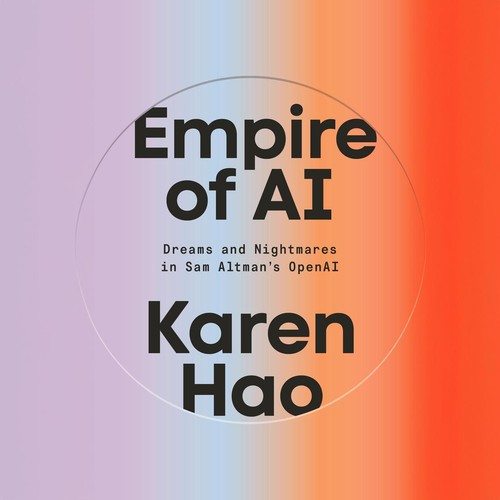
The definitive piece of investigative journalism on OpenAI: 260+ interviews, the clash between safety and speed, and the attempted firing of Sam Altma
As an Amazon Associate, Zendoric earns from qualifying purchases; the price does not change for you. · all our recommended books →
By ABC News (AP) · July 28, 2026.
The school district of Salamanca, a rural town in western New York located on the Allegheny River and within the territory of the Seneca Nation reservation, has paused the arrival of "Sally", a stationary humanoid robot its school board had approved buying for about $60,000 from Las Vegas-based company Realbotix. The plan was to use it as support in the high school's robotics and technology classes: it can move its arms and hands, though it has no functional legs, and according to superintendent Mark Beehler it was intended to answer students' technical questions — "You don't even know what an Arduino board is? Ask Sally," he said, referring to the hardware used to program basic electronics projects — and to let the students themselves learn to maintain and update it.
The controversy erupted as soon as word spread through the community. Teachers, families and, ultimately, the state Education Department raised two distinct objections. The first, technical and legal: what would happen to minors' personal data processed by the robot. The second, about public perception: Realbotix is a sister company of Intima LLC, which holds a stake in RealDoll, a maker of sex dolls that sells AI models described as "the world's most advanced sex robot". The teachers' union NYSUT, through its president Melinda Person, put it bluntly: "A robot built by a company associated with sex dolls has no place in our classrooms." Realbotix responded that Realbotix LLC and Intima LLC "have distinct product offerings, with no overlap", with separate management, staff, payroll, facilities and product development, and that "Sally" is "a newly manufactured educational unit designed for that purpose", not a repurposed sex doll.
State Education Commissioner Betty Rosa was not satisfied, even after her team met with the district. In a letter sent Friday, she pointed to a relevant contradiction: the district had assured her the robot would play no role in delivering classes, but a recent presentation to the school board described it as a "tutoring platform". Rosa also repeated her doubts about what privacy and data-security protections would exist in practice. The district, for its part, has posted on social media that "Sally" will not collect students' personal data, will not record audio or video of its interactions and will not send information to Realbotix: everything would be stored locally, with energy consumption comparable to that of a laptop. Realbotix added that student authentication would be handled through the district's existing systems, with the information encrypted and under the school's own control, and that the robot is programmed to avoid topics such as sex, violence or gambling, with no access to the open internet or to unverified generative services.
Overall, the episode fits into a broader wave of humanoid robots entering US classrooms. Last year, a charter school in San Diego deployed two AI robots from the UK's Engineered Arts for $500,000, more than eight times Salamanca's figure. Beehler defended the purchase precisely with an argument about geographic equity: his students have to travel one to two hours to see cutting-edge technology, and the robot — also linked to a broader plan that includes an AI virtual assistant and an at-home tutoring programme — sought to "level the playing field". Not everyone in the community buys it: Joplin Ficek, who graduated from the high school in 2024 and now works at a daycare, summed up local scepticism with a line that will probably resonate in more than one rural district: "They need to hire more people willing to put in the effort for the kids, not a robot raising our children."
Our reading: what is interesting about Salamanca is not that AI failed as an educational technology, but that it failed as an exercise in institutional trust. Nothing the district describes — local storage, no recording, no open internet connection, no data sent to third parties — is exotic or unworkable; it is, in fact, the kind of responsible design one should demand of any AI tool dealing with minors. The problem was process: a purchase approved without enough advance explanation to families, a corporate structure that — however legally separate — is indefensible in terms of public perception, and an internal message ("tutoring platform") that contradicted the external promise ("it will never replace a teacher"). In a sector like education, where we have already noted that the winner is the teacher who knows how to orchestrate AI and the loser is the one who merely transmits content, this case adds a nuance: orchestration is not only pedagogical, it is also a matter of communication and governance. Without clear rules explained in good time, even the best-intentioned rollout sinks before it can show whether it works.
In the short term, episodes like this will slow the adoption of robots and AI tutors in classrooms, and rightly so: the privacy of minors' data does not get the benefit of the doubt, and educational technology companies would do well to shore up — and explain — their data governance before selling the next demo. But the underlying ambition driving Salamanca — bringing personalised learning tools to rural communities that today depend on travelling for hours to access STEM training — points in the right direction. If the technology matures with the appropriate safeguards and the companies building it earn public trust through real transparency rather than defensive statements, AI tutors have genuine potential to democratise access to quality education in areas where specialised teachers are scarce today. The obstacle, once again, will not be the model's capability, but whether the institutions deploying it know how to deserve the trust they ask for.
📚 Go deeper
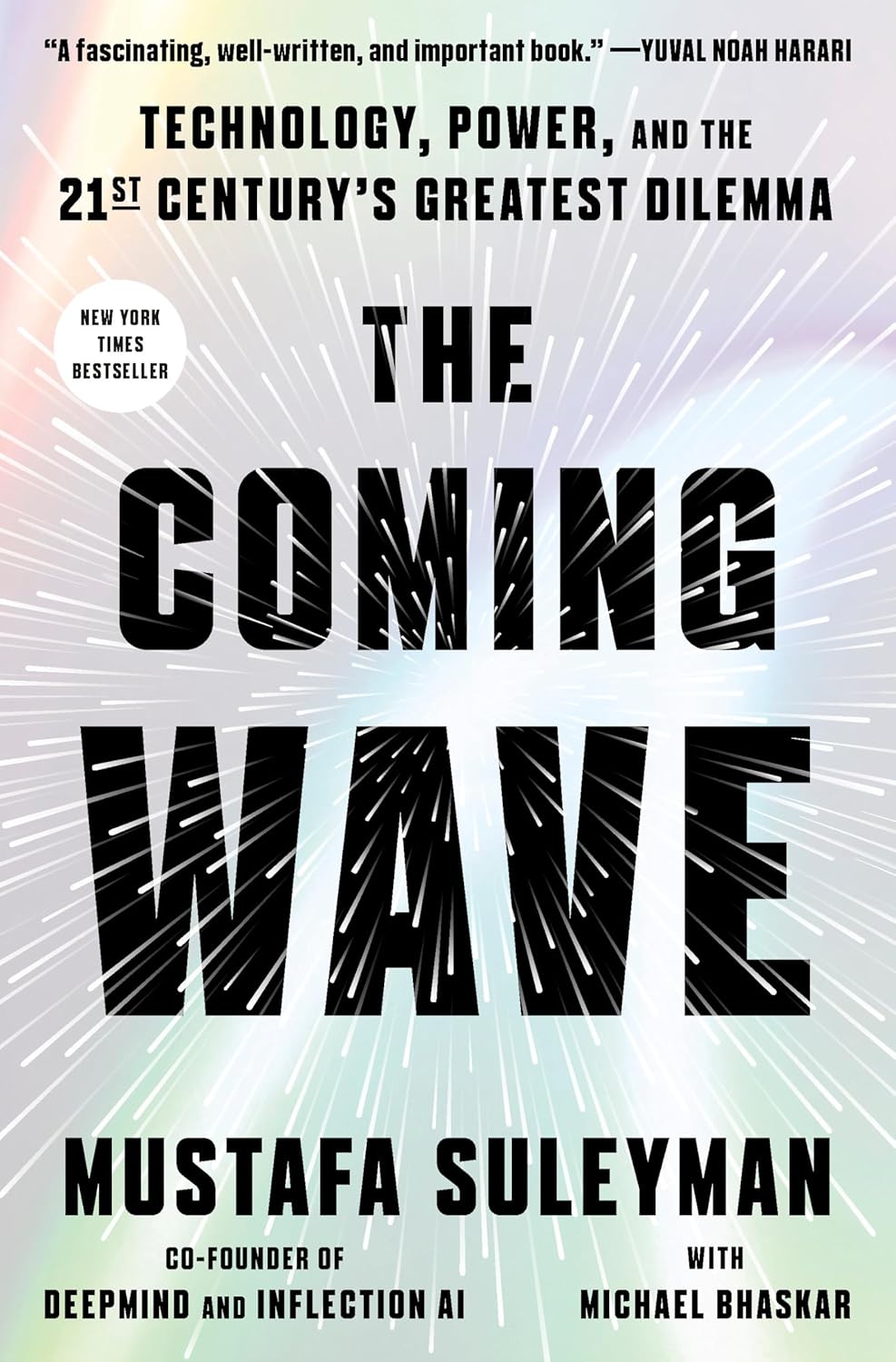
DeepMind co-founder on the dilemma of containing technologies that do not want to be contained.
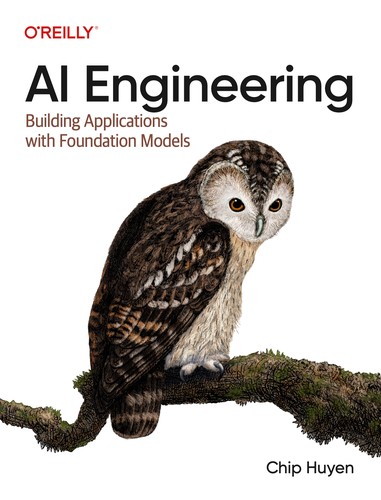
The reference manual for building products on top of AI models: prompts, RAG, fine-tuning, agents, evaluation and deployment.
As an Amazon Associate, Zendoric earns from qualifying purchases; the price does not change for you. · all our recommended books →
🔗 Related on Zendoric
- Sally, the $57,590 robot arriving at a rural high school in New York (and not here to replace anyone) · 2026-07-21
- New York halts an AI robot in the classroom: children's privacy and the maker's past spark controversy · 2026-07-27
- New York stopped robot teacher 'Sally' in 24 hours: journalism did it, not the law · 2026-07-28