A school in Jalandhar certifies India's new AI curriculum: the story is the machinery, not the event
🕒 Published on Zendoric: July 28, 2026 · 00:38
✨ AI-generated · how it's made
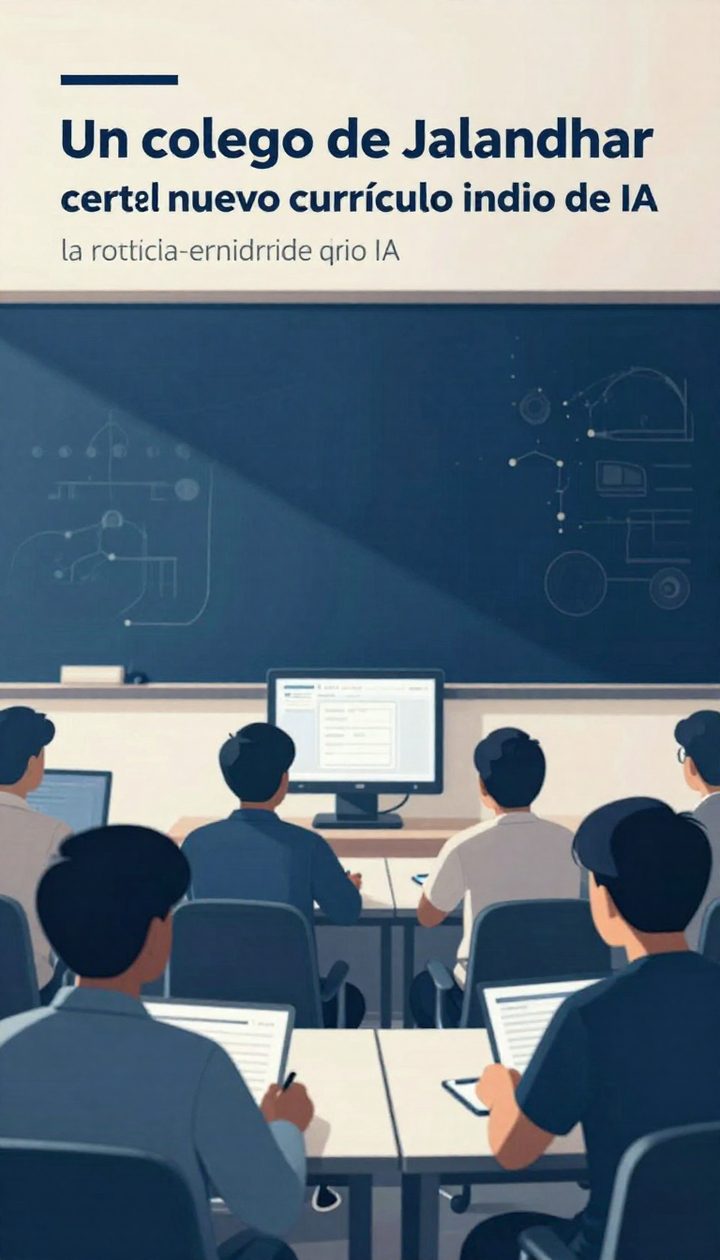
A school in Jalandhar (India) topped the district phase of an official CBSE process assessing how schools bring AI and computational thinking into the classroom. The event itself is minor, but it reveals the scale of India's plan to push AI into compulsory education right now.
📚 Go deeper
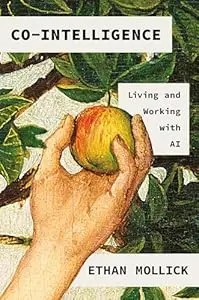
The best starting book if you're not technical: a Wharton professor explains how to work WITH AI — when to delegate, when to supervise, when to keep i
As an Amazon Associate, Zendoric earns from qualifying purchases; the price does not change for you. · all our recommended books →
By Zendoric · July 28, 2026.
The Cambridge Innovative School in Jalandhar, in the Indian state of Punjab, hosted the final presentation of the "District-Level Deliberation" (DLD), an assessment process run by the CBSE (Central Board of Secondary Education, India's main examining body) to verify how schools are applying the new computational thinking and artificial intelligence curriculum, aligned with the National Education Policy (NEP) 2020. Six schools from the district — Cambridge, Darshan Academy, Delhi Public School, Innocent Hearts, Kamla Nehru and Swami Sant Dass — presented their classroom practices before an evaluation committee with profiles linked to IIT Bombay, ISB, IIM Bangalore and Durham University, according to the source. Three finalist schools now go on to represent the district in the national stage, organized by the CBSE Centre of Excellence.
Broadly speaking, NEP 2020 has been India's benchmark education reform for several years, and since then the CBSE has been progressively incorporating digital and AI skills into the curriculum of its affiliated schools, which number several thousand across the country. This event in Jalandhar is not a policy announcement or an adoption figure: it is an administrative step in that process, replicated district by district, with a tiered assessment format (district, then national) designed to extract and spread good classroom practices.
Let us be honest about the material: there are no deployment figures, budget numbers or learning outcomes here that would allow the real impact of this reform to be measured. What is noteworthy, if only indirectly, is the existence of an already operating bureaucratic infrastructure — committees, criteria, stages, centres of excellence — whose explicit aim is to install AI in the classroom from compulsory education onwards, not as an isolated subject but as cross-cutting "computational thinking".
This connects with something we have already pointed out about AI and education: the value lies not in the technology being in the classroom, but in what kind of teacher uses it. The winner is the teacher who orchestrates AI as a tool for thinking; the loser is the one who merely delivers content that AI itself already explains better. If these teacher-training processes — beyond the noise of committees at this kind of event — manage to train orchestrating teachers at scale, India will be sowing, years in advance, the foundation of a workforce better prepared for an economy in which human judgment about AI is worth more than manual execution. That is the horizon of abundance we aspire to; what we have documented today is, simply, a school in Punjab competing for a place in the national stage.
📚 Go deeper
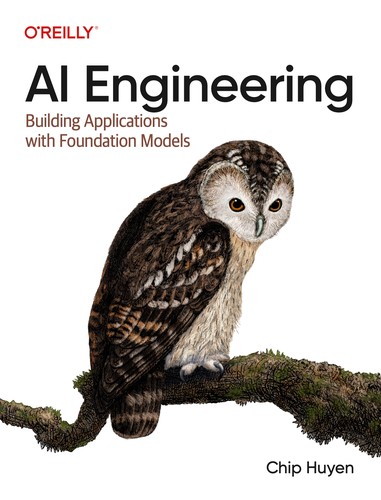
The reference manual for building products on top of AI models: prompts, RAG, fine-tuning, agents, evaluation and deployment.
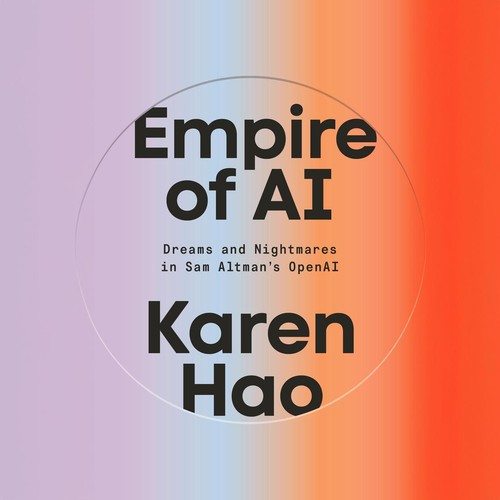
The definitive piece of investigative journalism on OpenAI: 260+ interviews, the clash between safety and speed, and the attempted firing of Sam Altma
As an Amazon Associate, Zendoric earns from qualifying purchases; the price does not change for you. · all our recommended books →
🔗 Related on Zendoric
- New York halts school software purchases: AI in the classroom needs governance before a catalog · 2026-07-09
- A NY School Bought a $58K Classroom Robot From a Sex-Doll Maker. The Real Story Is Procurement. · 2026-07-19
- NYC starts the school year with no AI rules: the largest city in the US tests how to tame artificial intelligence in the classroom · 2026-09-02