Anthropic versus the Pentagon: Thursday decides whether Washington can blacklist an AI for setting ethical limits
🕒 Published on Zendoric: July 28, 2026 · 00:38
✨ AI-generated · how it's made
Anthropic and the Pentagon will ask a San Francisco judge on Thursday to rule in their favor over the ban on Claude for 'supply-chain risk'. The judge has already called it unconstitutional retaliation. At stake: multimillion-dollar contracts and who sets the limits of military AI.
📚 Go deeper
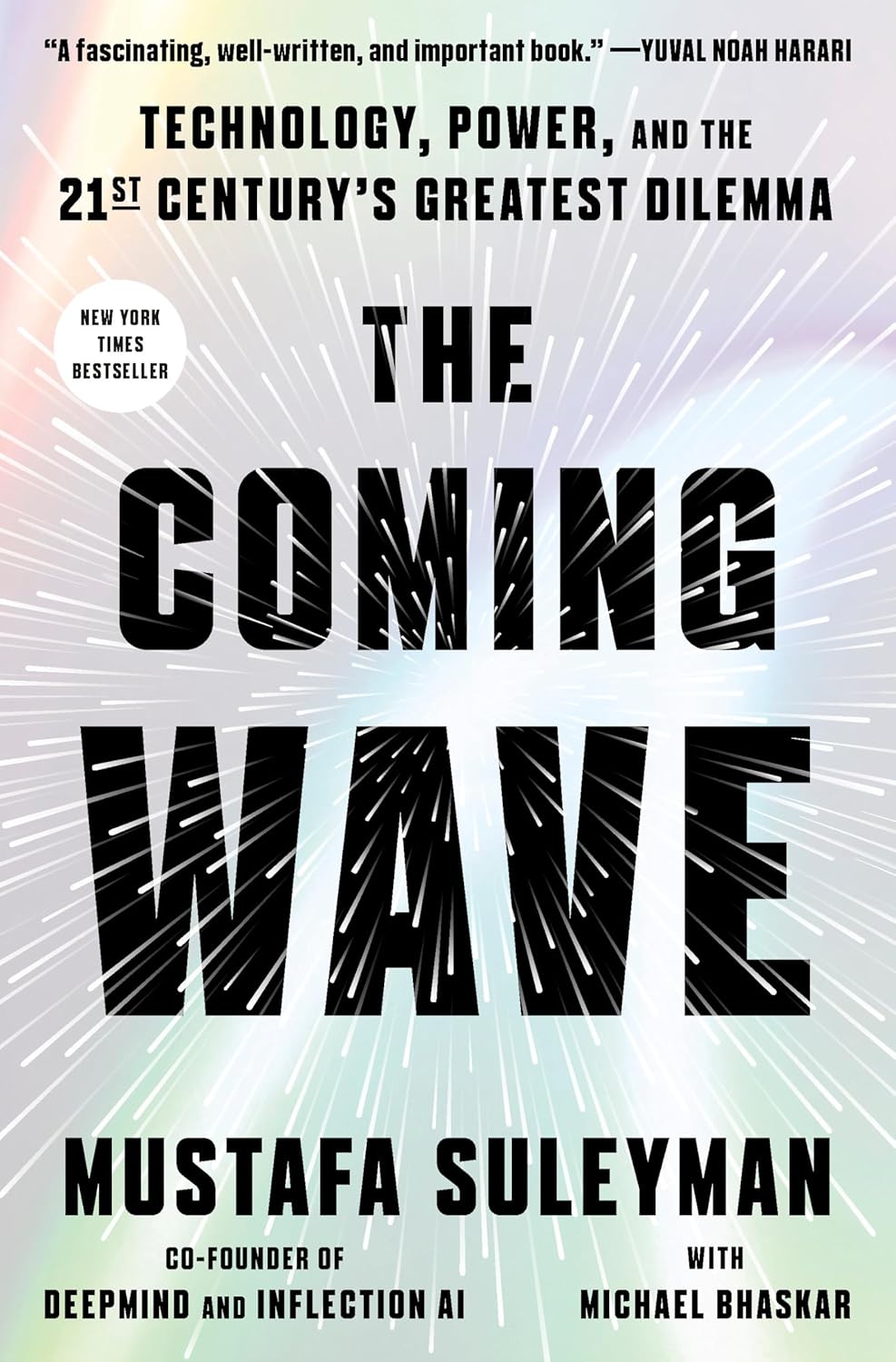
DeepMind co-founder on the dilemma of containing technologies that do not want to be contained.
As an Amazon Associate, Zendoric earns from qualifying purchases; the price does not change for you. · all our recommended books →
By Zendoric · July 28, 2026. This Thursday, July 30, Anthropic and the United States Department of Defense (DOD) appear before Judge Rita F. Lin, of the federal court for the Northern District of California, each asking her to rule in its favor on the ban Washington imposed on Claude models in February. Both parties have moved for summary judgment, the legal mechanism that allows a judge to resolve a case without a jury trial when the facts are not in dispute. According to Anthropic itself, the amount at stake is measured in billions of dollars.
The dispute dates back to February 27, when Defense Secretary Pete Hegseth designated Anthropic a 'supply-chain risk', a label that — in his own words — extended to 'any contractor, supplier or partner' doing business with the U.S. military. The decision came three days after a meeting between Hegseth and Anthropic chief executive Dario Amodei in which the secretary demanded that Claude allow 'all lawful uses' or face the ban. Amodei responded in a public post on February 26: 'some uses are simply outside what current technology can do safely and reliably'. A day later came the designation.
Judge Lin already ruled provisionally on March 26, temporarily blocking the ban. Her language was unusually forceful for a court order: she called the measure 'classic unlawful First Amendment retaliation' and wrote that 'nothing in existing law supports the Orwellian notion that an American company can be branded a potential adversary and saboteur of the U.S. for expressing disagreement with the government's contractual position'. As BankInfoSecurity reports, a former Trump administration official specializing in AI went so far as to write on social media that upholding the ban would amount to 'corporate murder'.
The Department of Defense insists that the administrative record is 'replete with national security concerns' unrelated to any retaliation, and points to an incident in which the Centers for Disease Control (CDC) tried to use Claude for infectious-disease prevention research and ran into what the Pentagon calls 'undisclosed limits'. Amodei, in a February 3 email, attributed the incident to the use of a commercial model and considered it 'essentially resolved'. Even so, government lawyers present it as evidence that Anthropic can surreptitiously 'poison' its models according to 'its current or future moral judgments' — the kind of risk they say the designation seeks to prevent. It bears underlining: this is the Pentagon's version, not a judicially established fact; the judge herself has already voiced serious doubts about it.
The commercial backdrop matters. In July 2025 Anthropic signed a two-year contract worth up to $200 million for military use of Claude, and months later, during negotiations to deploy the model on the Pentagon's GenAI.mil platform, it asked for guarantees that Claude would never be used for mass surveillance of U.S. citizens or for lethal autonomous weapons. This is not, therefore, a company reluctant to work with the military; it is a company that wants to set its own red lines even while selling to the military. The dispute is complicated by a parallel episode: after the launch of its most capable models, Fable 5 and Mythos 5, the government itself ordered access suspended for foreign users on national security and export-control grounds, a restriction it lifted on June 30 following an agreement with Anthropic on risk management.
Here is the paradox that really matters: the same government demanding that Anthropic accept 'all lawful uses' of Claude domestically — presumably including mass surveillance — is the one that, months later, ordered access to those same models restricted on national security grounds. That is not a coherent AI governance stance; it is the exercise of power by a customer that wants total control over a supplier built, precisely, on the promise of having limits. What is being decided on Thursday is not just a contract: it is whether Washington can turn exclusion from federal funds into a weapon to force an AI company to give up its own safety guardrails. If the Pentagon wins, the message for the entire industry will be clear: every ethical safeguard has a price, and that price is losing access to the largest buyer of technology on the planet.
The outcome of Thursday's hearing is unlikely to settle the matter. The Department of Defense has already appealed the March order to the Ninth Circuit Court of Appeals — litigation on hold in the meantime — and Anthropic is also pursuing a separate lawsuit in the D.C. Circuit over another supply-chain risk designation, this time under the Federal Acquisition Supply Chain Security Act. It fits a thesis we have been arguing at Zendoric: the short-term friction between governments and AI labs is not a passing obstacle, it is the terrain on which, case by case, it is negotiated who governs the most powerful technology of the moment. That a federal court is willing to call a retaliation against a company for defending safety limits 'Orwellian' is, in itself, an encouraging sign: it suggests that in the United States there are still institutional checks capable of curbing the use of procurement policy as covert censorship. That, after all, is the kind of evidence-based governance — rather than panic-driven or subservient — that makes it more likely that military AI will be developed with the safeguards needed so that the horizon of abundance is not built on dangerous shortcuts.
📚 Go deeper
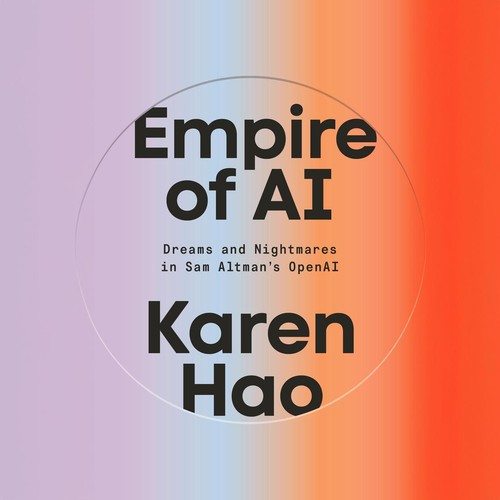
The definitive piece of investigative journalism on OpenAI: 260+ interviews, the clash between safety and speed, and the attempted firing of Sam Altma

AI as the latest chapter in the history of information networks, from gossip to the printing press to the algorithm.
As an Amazon Associate, Zendoric earns from qualifying purchases; the price does not change for you. · all our recommended books →
🔗 Related on Zendoric
- Punishing AI safeguards sets a costly precedent: 17 former senior officials back Anthropic against the Pentagon · 2026-10-24
- Anthropic's Two Red Lines Cost It the Pentagon — and Set a Precedent for AI in the Kill Chain · 2026-07-05
- The Pentagon bars Claude over its ethical guardrails as OpenAI admits failures reaching federal agencies · 2026-09-29