140,000 Tech Jobs Cut, $800 Billion in AI Spending: The Layoffs Are Real, the AI Alibi Is Shakier

🕒 Published on Zendoric: July 28, 2026 · 00:38
✨ AI-generated · how it's made
US tech companies have announced close to 140,000 cuts this year — over a third of all announced American layoffs — while the same firms pour record sums into AI. The juxtaposition is irresistible and partly misleading: the best data says heavy AI spenders are the ones hiring.
📚 Go deeper

The best starting book if you're not technical: a Wharton professor explains how to work WITH AI — when to delegate, when to supervise, when to keep i
As an Amazon Associate, Zendoric earns from qualifying purchases; the price does not change for you. · all our recommended books →
American tech companies have announced close to 140,000 job cuts so far this year, more than a third of all announced US layoffs, according to a Financial Times analysis of corporate filings and data from outplacement firm Challenger, Gray & Christmas, reported July 26. Nearly 50,000 of those came from Amazon, Oracle, Meta and Microsoft alone — roughly 6% of their corporate workforce. Those four, plus Alphabet, are projected to spend well over $800 billion on AI-related efforts this year.
The two numbers next to each other tell a clean story: companies are replacing people with machines and billing shareholders for it. The clean story is doing a lot of work it hasn't earned. As the FT notes, mass layoffs have been standard practice in Silicon Valley since the post-pandemic hiring binge ended, well before agents were deployable. And the broader labor market isn't cracking — US unemployment sits at 4.2%, low by any historical standard. What we're looking at is a sector recomposing itself, not an economy shedding workers.
The causality question is where this gets uncomfortable for executives. "The typical attitude of tech executives has been to say that AI allows us to gain efficiency rather than admit that they overhired," said Enrico Moretti, an economist at UC Berkeley, quoted in the report. "It's an easy way out." That is an accusation, not a proven fact — but it's a cheap explanation to test, and the incentive is obvious. Attributing cuts to automation reads as strategic foresight. Attributing them to a hiring mistake reads as bad management, and markets price the two differently. Block's earlier mass layoffs, which CEO Jack Dorsey tied to AI changing the company's employment needs, sit right on that line.
The counter-evidence is the most useful part of the story and the part that will travel least. Research from corporate card firm Ramp and workforce analytics firm Revelio Labs found that companies spending most on generative AI grew headcount 10.2% over the two years after adoption — gains the study attributes entirely to high-intensity spenders. Low-intensity adopters showed no statistically significant change. Within the heavy spenders, entry-level headcount grew 12%. That is close to the opposite of the automation narrative: the firms leaning hardest into AI are adding people, including juniors.
Even the loudest forecasters are softening. Anthropic CEO Dario Amodei said last year that AI could erase half of all entry-level roles; he now frames it as a fork rather than a verdict. Companies "can do the same thing with less resources, and that leads to things like layoffs, or they can do more with the same amount of resources," he told the Wall Street Journal. "But that requires creativity." That's the whole argument in two sentences. The technology sets the option; management picks.
Our reading: 140,000 people losing jobs is a real cost and we won't wave it away with productivity statistics — but the evidence points to capital reallocation, not automation, as the proximate cause. Money is moving from headcount to datacenters, and "AI did it" is the press-release version of a budget decision. That distinction matters for policy, because the two problems have different fixes. If it's automation, you need retraining and transition support. If it's over-hiring plus an $800 billion capex race, you need to ask what happens when the buildout stops and whether those jobs return. Both are worth worrying about; only one is currently being discussed.
The pattern we've tracked all year holds: AI is not deleting jobs so much as narrowing the entry door and shifting which skills carry value. The uncomfortable middle is that the same $800 billion funding these cuts is also building the compute that will eventually accelerate drug discovery and drop the cost of expertise toward zero. The transition is genuinely rough and unevenly distributed. The destination is still worth reaching. What we owe workers in between is honesty about which of the two is actually happening to them — and executives citing AI when they mean spreadsheet aren't providing it.
📚 Go deeper
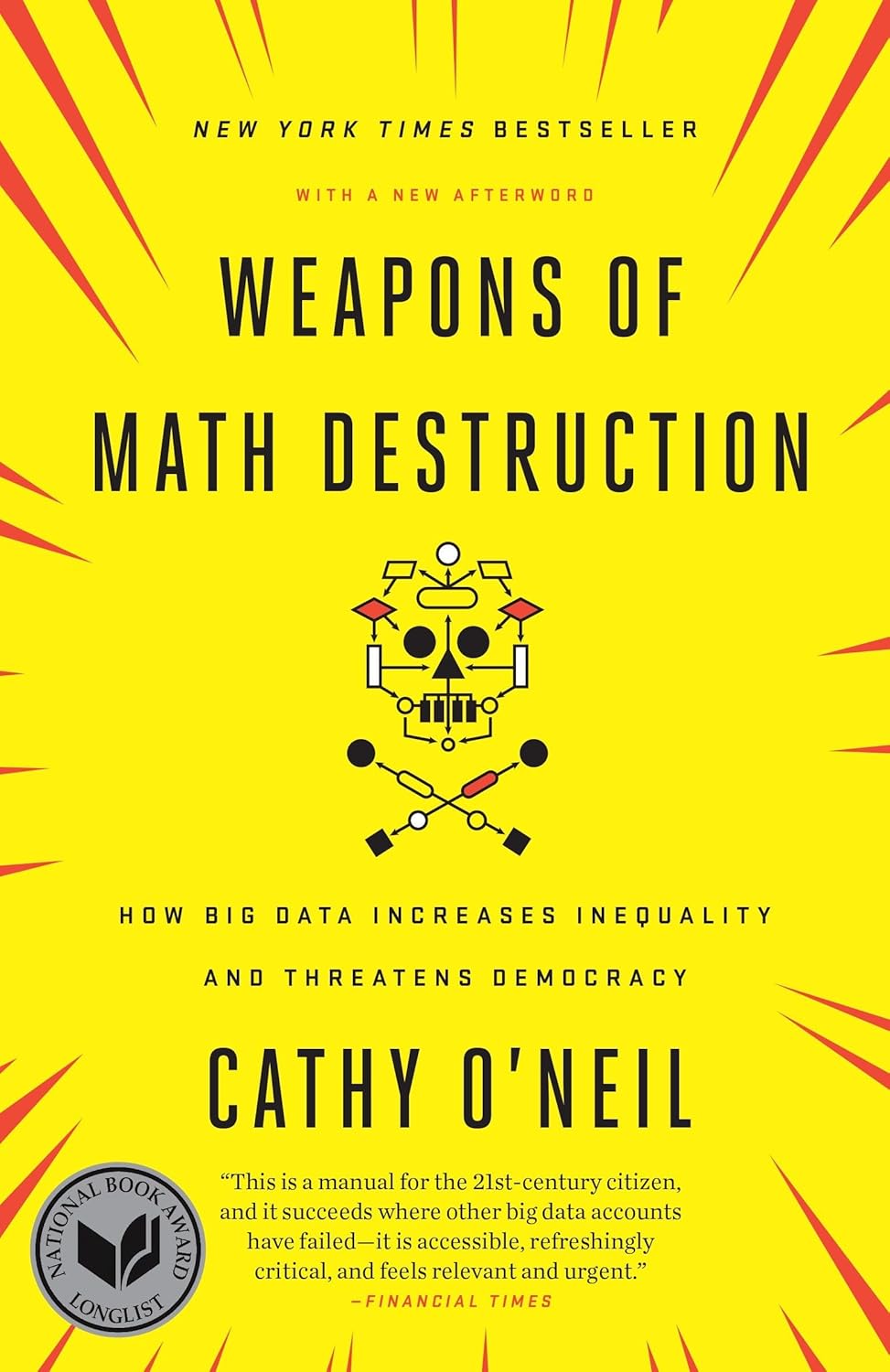
How opaque algorithms decide who gets credit, a job or parole — and why they tend to punish the same people.
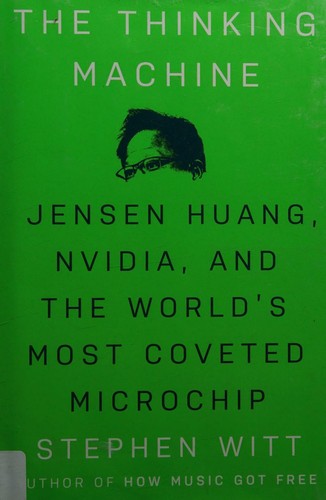
The story of NVIDIA and Jensen Huang: how a video-game card company ended up making the most coveted resource on the planet.
As an Amazon Associate, Zendoric earns from qualifying purchases; the price does not change for you. · all our recommended books →
🔗 Related on Zendoric
- 140,000 tech layoffs alongside $800B in AI spending: the story is capital reallocation, not machines · 2026-07-27
- Microsoft cuts thousands of jobs to fund its AI bet: the paradox of record spending · 2026-07-02
- 69% of Americans Want to Seize Half of AI Firms—The Backlash Is Now a Live Policy Threat · 2026-07-13