140,000 tech layoffs alongside $800B in AI spending: the story is capital reallocation, not machines

🕒 Published on Zendoric: July 27, 2026 · 00:21
✨ AI-generated · how it's made
US tech firms have announced roughly 140,000 job cuts this year — more than a third of all announced American layoffs — while the same companies pour over $800 billion into AI. The tempting read is that the software is doing the firing. The data underneath says something less cinematic and more uncomfortable: compute and payroll are now competing for the same budget line.
📚 Go deeper

The best starting book if you're not technical: a Wharton professor explains how to work WITH AI — when to delegate, when to supervise, when to keep i
As an Amazon Associate, Zendoric earns from qualifying purchases; the price does not change for you. · all our recommended books →
American tech companies have announced close to 140,000 job cuts in 2026, more than a third of all layoffs announced across the US economy this year, according to a Financial Times analysis of corporate filings and data from outplacement firm Challenger, Gray and Christmas, reported Sunday. Nearly 50,000 of those came from just four companies — Amazon, Oracle, Meta and Microsoft — equivalent to around 6% of their combined corporate workforce. Those four, plus Alphabet, are projected to spend well over $800 billion on AI-related efforts this year. The two numbers sit next to each other in every headline. Our thesis: they are connected, but not by the causal arrow most people are drawing.
Start with what the macro data does not show. US unemployment stands at 4.2%, historically low, even as hiring has cooled from the post-pandemic surge. A wave of layoffs concentrated enough to be a third of national announcements, landing while the overall labour market holds, is the signature of a sectoral correction, not an economy-wide displacement event. Silicon Valley has been shedding staff more or less continuously since the COVID hiring spree ended — the AI narrative arrived after the layoffs did, not before. Enrico Moretti, an economics professor at UC Berkeley, puts it bluntly in the FT piece: executives prefer to say AI delivered efficiency rather than admit they overhired, and he calls it "an easy way out." That is his argument, not a proven finding — but it is the cheapest explanation available, and cheap explanations deserve to be tested first.
The most interesting number in the story is the one that contradicts the framing. Research from corporate card firm Ramp and workforce analytics firm Revelio Labs found that the companies spending the most on generative AI grew headcount 10.2% over the two years after adoption, with the gains attributed entirely to high-intensity spenders; low-intensity adopters showed no statistically significant change. Within those heavy spenders, entry-level headcount — the category everyone assumed would be gutted first — grew 12%. One caveat we would flag: that study measures AI buyers across the economy, while the 140,000 cuts are concentrated in the firms selling AI. Different populations, different economics. But the direction is worth sitting with, and it is presumably why Anthropic CEO Dario Amodei has softened last year's prediction that AI could erase half of all entry-level roles, telling the Wall Street Journal that firms can either do the same with less — which produces layoffs — or more with the same, which "requires creativity."
Our reading: this is a budget substitution story before it is an automation story. Capital expenditure on AI — the GPUs, data centres and the electricity to run them — now sits on the same profit-and-loss statement as headcount, and $800 billion has to be financed from somewhere. When the marginal dollar buys silicon and power instead of a hiring requisition, the job disappears without any model ever performing that job. That is a very different phenomenon from a system that has learned to do the work, and it demands a different response. It also connects to the constraint we have tracked all year: the industry's binding limit has shifted from talent to electrons, and the capex required to secure them is now large enough to reshape org charts.
Why it matters, and where it goes. Short term, the honesty is owed: tens of thousands of people are absorbing the cost of an infrastructure buildout they did not vote for, concentrated in a handful of firms, and "AI made us do it" is a claim that should not be accepted without a productivity number attached. Amodei's fork — same output with fewer resources, or more output with the same — is a management decision, not a property of the technology, and pretending otherwise launders a choice into an inevitability. Long term, we still think the buildout is worth defending: this is the substrate for drug discovery, diagnostics and the kind of abundance that lets people work on what they care about. But the transition bill is being paid by specific workers on a specific timetable, and nothing in the technology guarantees the gains get shared. The metric to watch over the next year is not total layoffs — it is entry-level hiring rates at heavy AI spenders. If that 12% holds, the displacement thesis weakens considerably. If it inverts, we will have found the real signal.
📚 Go deeper
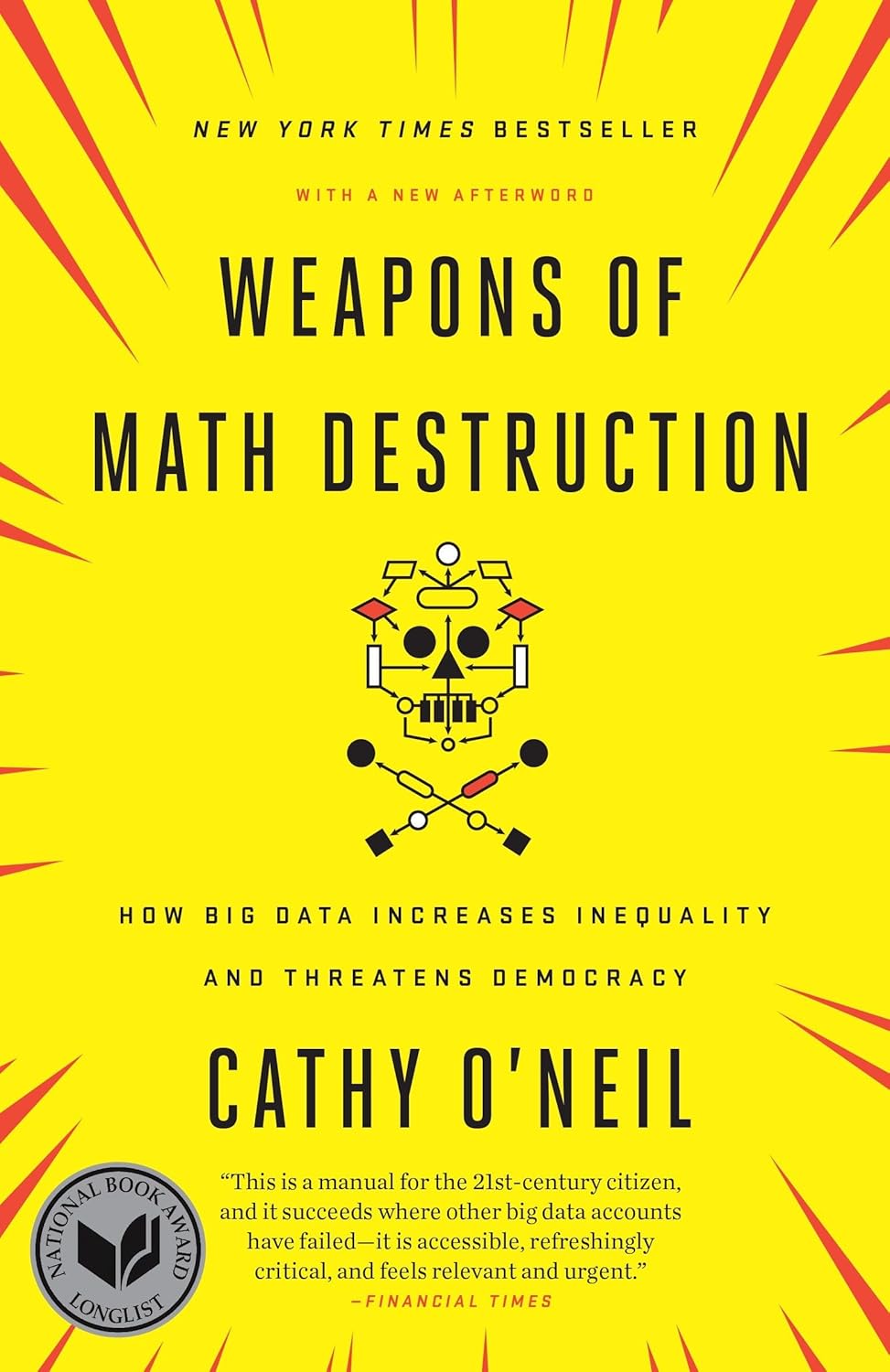
How opaque algorithms decide who gets credit, a job or parole — and why they tend to punish the same people.
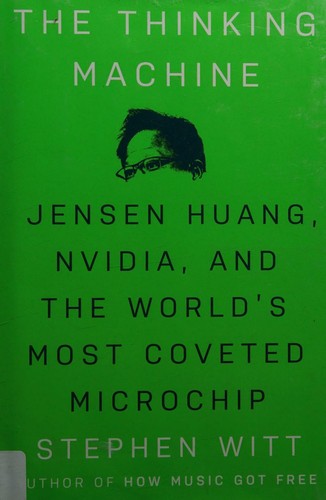
The story of NVIDIA and Jensen Huang: how a video-game card company ended up making the most coveted resource on the planet.
As an Amazon Associate, Zendoric earns from qualifying purchases; the price does not change for you. · all our recommended books →
🔗 Related on Zendoric