Agentic AI reaches Latin America's family-run small businesses: the challenge isn't the technology, it's governance

🕒 Published on Zendoric: July 28, 2026 · 00:38
✨ AI-generated · how it's made
AI agents able to audit cash flow, forecast demand and manage inventory are already reaching the family-run SMEs that dominate the Latin American economy, according to the IDB and ECLAC. The technology is cheap; what is scarce is the governance to delegate decisions to it without losing control of the business.
📚 Go deeper

The reference manual for building products on top of AI models: prompts, RAG, fine-tuning, agents, evaluation and deployment.
As an Amazon Associate, Zendoric earns from qualifying purchases; the price does not change for you. · all our recommended books →
By Zendoric · July 27, 2026.
A new generation of artificial intelligence agents is beginning to take hold in the largest and least digitalized segment of the Latin American economy: the family business. According to estimates from the Inter-American Development Bank (IDB) and the Economic Commission for Latin America and the Caribbean (ECLAC) cited in a July 2026 analysis, these organizations account for between 80% and 95% of the region's business fabric. In Mexico, Concanaco (Confederación de Cámaras Nacionales de Comercio, Servicios y Turismo) puts the figure as high as 90% of the country's economic units.
Unlike a chatbot, which only answers what it is asked, an agent is given a goal, breaks it down into tasks and operates directly on the company's systems —customer management (CRM), accounting, resource planning (ERP) or payment gateways— with a certain degree of autonomy. In practice it already serves to monitor cash flow, detect irregularities in invoicing, anticipate demand for a product or attend to customers outside business hours, and to cross-reference sales histories with inventory, thereby reducing both stockouts and capital tied up in the warehouse.
Zoho Corporation, with its so-called Zia Agents, is one of the companies operating in this market. "Creation and technology converge to empower human talent and the global economy," sums up Raju Vegesna, the company's chief evangelist. It is a marketing line that should be read for what it is —a vendor's promise— and not as a figure on adoption or results: the article itself provides no deployment or return numbers, and rests on a single commercial example.
What matters is not so much the vendor cited as the barrier that is starting to fall: until now, software capable of making decisions —not just recording data— was the preserve of the large corporation, with IT teams and budgets that the family-run SME does not have. In general, the sustained fall in the cost of AI inference is what allows that automation of management to stop being a privilege of scale. That is, in miniature, the logic of abundance we defend at Zendoric: a technology that until recently cost a fortune becomes accessible to 80%-95% of a region's companies, not just to its multinationals.
But the report itself rightly points to the other side of the equation: delegating decisions requires defining permissions, looking after data quality and maintaining oversight, and a governance error can hit the business's finances or its privacy. Here lies the asymmetry the article does not fully explore: a multinational can afford a compliance team and a security officer to keep watch over its agents; a family business with a handful of employees cannot. As sector context, it is the same gap we have been observing in other markets —the adoption of agents is running ahead of the ability to govern them— except that here the financial cushion to absorb a failure is far thinner.
Our reading is that this wave will benefit whoever sells "packaged governance" —permissions, limits and auditing configured out of the box— before it benefits whoever sells raw intelligence alone. And it confirms, once again, the pattern we have been noting on employment: the agent does not replace the owner of the family business, but it does change their work, which shifts from carrying out repetitive tasks to setting objectives, reviewing results and deciding how far the machine's autonomy goes. In the short term, that transition will demand a learning process that many family businesses —with no IT department of their own— have yet to resolve. In the medium and long term, if the technology delivers what it promises, it is exactly the kind of democratization —more management capacity within reach of more people, at a lower cost— that underpins our underlying thesis: an AI that spreads abundance not only among large corporations, but also to the small family business that makes up the bulk of the region's business fabric.
📚 Go deeper
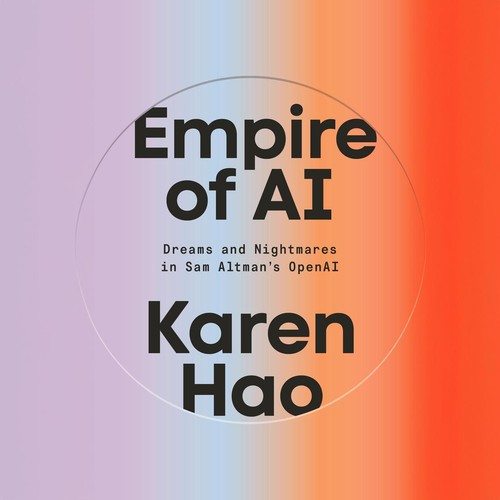
The definitive piece of investigative journalism on OpenAI: 260+ interviews, the clash between safety and speed, and the attempted firing of Sam Altma
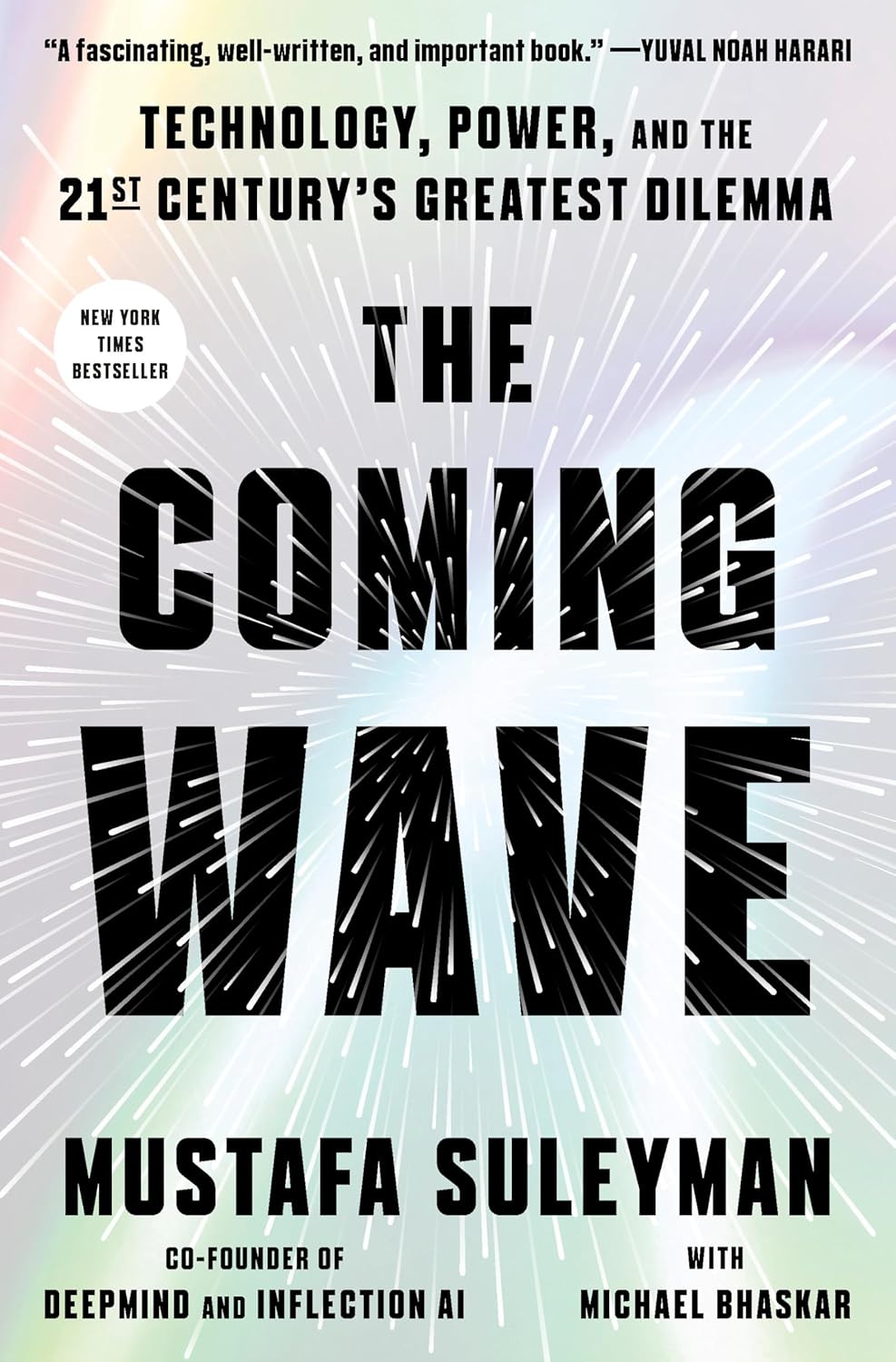
DeepMind co-founder on the dilemma of containing technologies that do not want to be contained.
As an Amazon Associate, Zendoric earns from qualifying purchases; the price does not change for you. · all our recommended books →
🔗 Related on Zendoric
- AI agents in marketing: the challenge isn't the technology, it's deciding what to delegate and how far · 2026-09-25
- Hotmart tests the abundance thesis: AI agents that sell and collect payments for the creator · 2026-07-02
- Nutanix bets on governing AI agents before token spending spirals out of control · 2026-07-04