Only 12% of companies know how to govern their AI agents: Google turns that gap into its edge over OpenAI and Anthropic

🕒 Published on Zendoric: July 20, 2026 · 00:19
✨ AI-generated · how it's made
96% of companies already deploy AI agents in production, but barely 12% say they can control them, according to an OutSystems survey of 1,900 IT leaders. Google responds with the Gemini Enterprise Agent Platform, governance built into the infrastructure rather than the application, just as OpenAI begins charging for each agent run.
📚 Go deeper
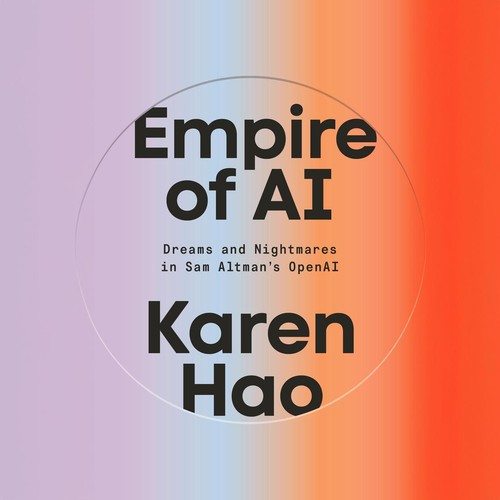
The definitive piece of investigative journalism on OpenAI: 260+ interviews, the clash between safety and speed, and the attempted firing of Sam Altma
As an Amazon Associate, Zendoric earns from qualifying purchases; the price does not change for you. · all our recommended books →
By Zendoric · July 20, 2026.
The figure that defines this moment in the enterprise AI market is not about performance, it's about control: 96% of organizations already have AI agents running in production, but only 12% say they have a centralized platform to govern them, according to an OutSystems survey of 1,900 IT leaders cited in the Tech Times article. Gartner, for its part, places agent adoption at the Peak of Inflated Expectations in its Hype Cycle 2026: only 17% of organizations have deployed them so far, but more than 60% plan to do so within two years, the most aggressive adoption curve the firm has ever recorded for an emerging technology.
Google is building its bet on that gap. Three months after unveiling the Gemini Enterprise Agent Platform at Cloud Next '26 (April 22), the declared successor to Vertex AI—Google has announced that all future product evolution will arrive under this new brand, closing out the Vertex AI line as such—the competitive landscape has moved fast. OpenAI shifted Workspace Agents to credit-based billing on July 6, closing the free trial window, and launched the ChatGPT Work package on the 9th. Anthropic extended Claude Cowork from desktop to web and mobile on July 7. In a matter of weeks, using AI agents in the enterprise has gone from being a cost-free experiment to a real budget line item, with real security exposures.
Google's thesis, and the angle that really matters here, is that the governance problem is not one of usage policies but of identity architecture. An agent with persistent access to a company's email, CRM or internal APIs is, in effect, a non-human employee acting at machine speed; traditional identity and access frameworks were designed for people who act sequentially and observably, not for that. OWASP, in its 2026 security guide for agentic applications, points precisely to goal hijacking, tool misuse and identity privilege abuse as the central threats of these autonomous systems.
Gemini Enterprise attacks that problem below the application layer, with three pieces: Agent Identity assigns a unique cryptographic identifier to each agent, so every API call or data access is signed and traceable to that identity; Agent Gateway acts as a single point of policy enforcement for agent-tool interactions, integrated with Google's Model Armor content protection system; and Agent Registry works as a centralized catalog to discover and audit all agents deployed across the organization, avoiding the "shadow AI" problem—agents running without IT visibility. The platform also holds ISO 42001 certification for AI management systems, which means an external, independent audit rather than a self-declared compliance claim, a nuance that distinguishes Google from competitors making the same security claims without audited backing.
The development kit underpinning all of this, the Agent Development Kit (ADK) 2.0, models agent orchestration as a graph—agents as nodes, decisions as edges—with three composition patterns (sequential, parallel and loop) that write their state to a shared object instead of calling each other directly. It's a design decision with a notable practical consequence: when a chain of agents fails—and it does fail—the graph model makes it possible to identify exactly which node broke and with what state, rather than having the failure propagate silently through a chain of callback functions. ADK 2.0 exports to OpenTelemetry natively, is open source under the Apache 2.0 license and supports Python, TypeScript, Go, Java and Kotlin.
Behind the software layer, Google adds a hardware argument that no platform competitor matches: the eighth-generation TPU 8i chip, with 288 GB of high-bandwidth memory and 384 MB of on-chip SRAM—triple the previous generation—designed specifically for low-latency inference on agent workloads, separate from the TPU 8t training chip. Google claims an 80% improvement in performance per dollar over the previous generation; it's worth noting that this figure comes from Google's own tests and has not been verified by independent auditors, something worth keeping in mind before taking it as a definitive comparison against the Nvidia GPUs used by Azure AI Foundry and AWS Bedrock AgentCore.
The rest of the board splits along specialization, not a single winner. Azure AI Foundry, with Agent 365, immediately inherits Entra ID identity policies for the tens of thousands of companies already installed in the Microsoft ecosystem, with a per-seat price (around $30 plus $15 for Agent 365) more predictable than variable consumption. AWS Bedrock AgentCore competes on breadth of models—Claude, Llama, Mistral, Cohere, Nova—under per-service IAM controls, without a unified control plane. Anthropic's Claude Cowork, with an enterprise tier at $100 per user per month, stands out in task execution for the individual worker—according to Anthropic's own data, more than 90% of 1.2 million analyzed Cowork sessions had nothing to do with software development—but delegates much of its governance to third parties. And OpenAI, after the shift to credits, turns agent usage into a FinOps problem—cloud cost control—as well as an engineering one: a typical GPT-5.5 run costs between 5 and 25 credits according to its own pricing.
Our read is that this fight confirms something we have been observing on other fronts of enterprise AI: trust and governance are becoming market infrastructure, not an optional marketing add-on. Just as health certifications or insurance audits are beginning to condition which AI can be used in which sector, here the cryptographic identity of each agent and the traceability of each call are shaping up to be the price of entry, not tomorrow's competitive advantage. Forrester estimates that 25% of enterprise AI spending forecast for 2026 will be deferred to 2027 as CFOs demand proof of return and security teams flag unresolved governance gaps; Gartner expects 40% of enterprise applications to incorporate specialized agents by the end of 2026, up from less than 5% in 2025. That combination—accelerated adoption and demand for control at once—is exactly the terrain where those who built the identity layer before they were asked for it get rewarded, and those improvising it now on the fly get penalized.
In the short term, this comes at a cost worth not glossing over: companies that had spent months using agents for free or with lax governance now face variable bills, the need to re-architect access control and, for those who choose Google's infrastructure, a potential dependence on its TPU ecosystem versus Nvidia's more widespread CUDA. None of these platforms yet solves the underlying problem on its own; what they do is shift it from usage policy to technical architecture, which is where it can actually be audited and corrected. If that identity and traceability layer matures at the pace adoption demands, mass agentic automation will be able to roll out without becoming the security disaster many fear; if it doesn't mature in time, the 88% of companies deploying today without being able to govern will keep piling up a risk that sooner or later charges its own bill.
📚 Go deeper
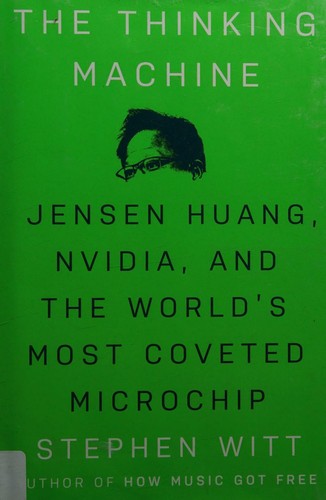
The story of NVIDIA and Jensen Huang: how a video-game card company ended up making the most coveted resource on the planet.
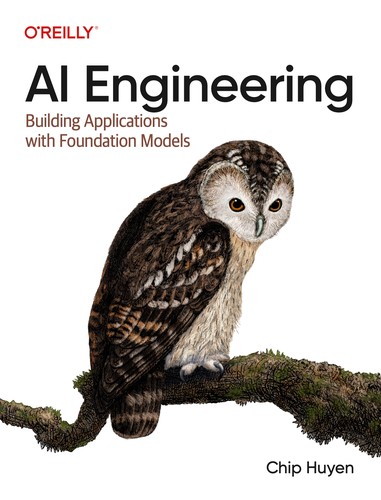
The reference manual for building products on top of AI models: prompts, RAG, fine-tuning, agents, evaluation and deployment.
As an Amazon Associate, Zendoric earns from qualifying purchases; the price does not change for you. · all our recommended books →
🔗 Related on Zendoric
- India deploys AI agents faster than it can govern them: the real risk isn't autonomy, but accountability · 2026-06-29
- Anthropic bills like infrastructure, not like an app: how it's gaining ground on OpenAI in the enterprise · 2026-07-09
- Coinbase lets its AI agents get paid in USDC without human intervention: the plumbing of machine money starts to be built · 2026-07-24