Opus 5 doesn't aim to beat Fable: Anthropic chooses to make AI cheaper against China's Kimi K3 push

🕒 Published on Zendoric: July 25, 2026 · 00:23
✨ AI-generated · how it's made
Anthropic is launching Opus 5, its flagship model for coding, with a different message than usual: it doesn't promise more intelligence, it promises nearly the same for half the price. The move comes just as China's Kimi K3 presses on cost.
📚 Go deeper
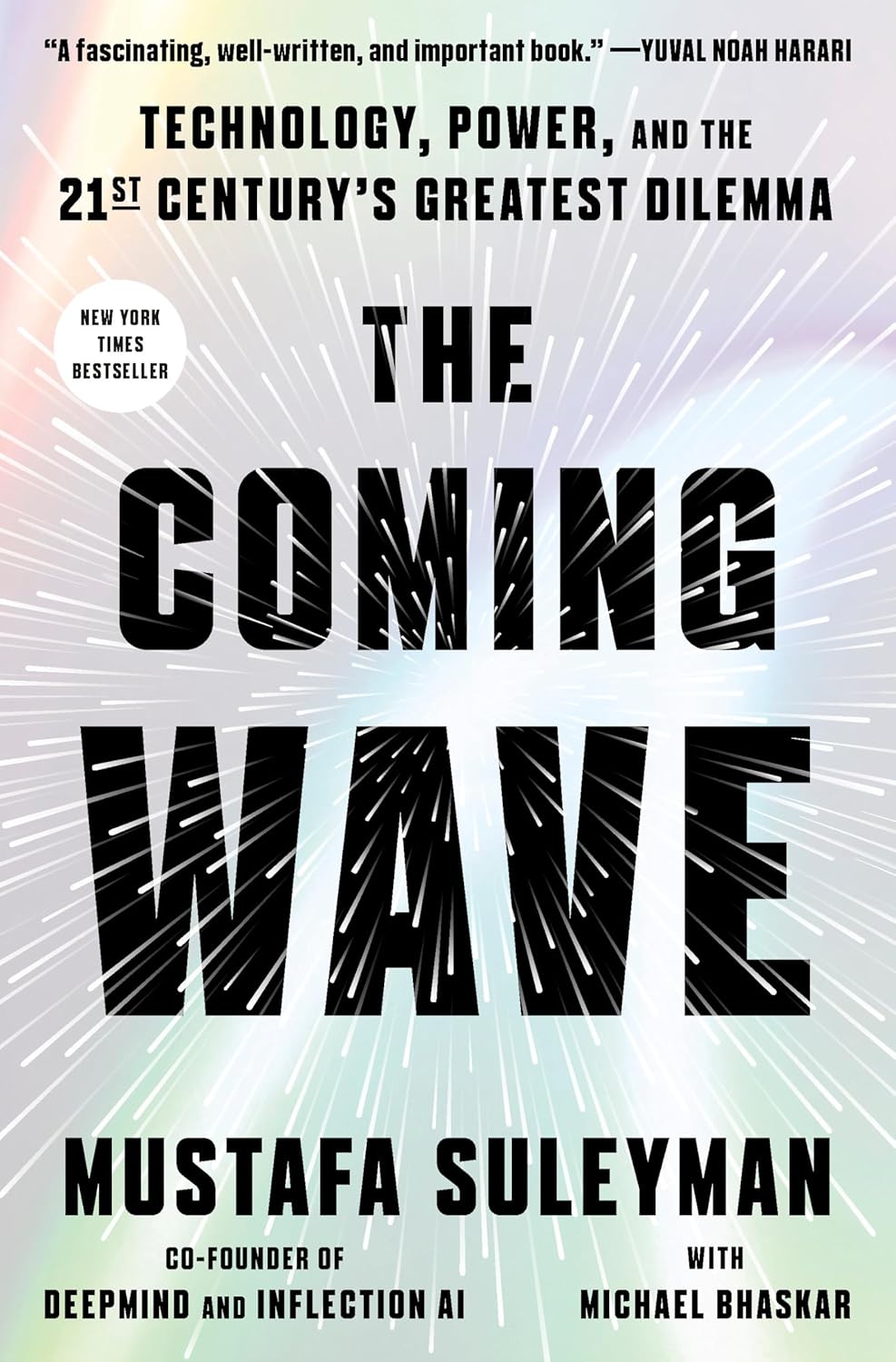
DeepMind co-founder on the dilemma of containing technologies that do not want to be contained.
As an Amazon Associate, Zendoric earns from qualifying purchases; the price does not change for you. · all our recommended books →
By Ars Technica · July 25, 2026. Anthropic has unveiled Opus 5, the update to its most widely used model for programming and software development tasks. According to Anthropic's own charts, in tests such as Frontier-Bench and DeepSWE (benchmarks that measure agentic coding capability), Opus 5 performs at a level similar to or slightly above Fable, one of the company's high-end programming models, and it beats its predecessor Opus 4.8 and OpenAI's GPT-5.6-Sol in virtually every category evaluated—always according to the data published by Anthropic.
What matters is not that performance jump, which Ars Technica describes as a modest improvement rather than a radical breakthrough, comparable to the usual increments between versions. What matters is the price: Opus 5 costs $5 per million input tokens and $25 per million output tokens (tokens are the smallest units of text a model processes, and their price determines the real cost of using it at scale), the same rate as its predecessor but notably below Fable. Anthropic explicitly sells this version as "nearly Fable at half the cost," as Ars Technica reports.
There is a deliberate trade-off behind those savings. Anthropic has decided not to train Opus 5 on the most advanced cybersecurity data that Fable and Mythos did receive. The company itself admits the model is reasonably good at detecting vulnerabilities, but acknowledges it falls "substantially behind Mythos 5" at exploiting those vulnerabilities—that is, at actually using them to attack a system. As a result, Opus 5 also does not carry over Fable's most controversial safeguards, such as retaining conversation data for 30 days for review in the event of a possible security incident. This should not be confused with a model that is intrinsically less safe for the user: it is a design decision that reduces offensive capability in exchange for less operational friction, and other coverage has summed it up more loosely as Opus 5 being Anthropic's "safest" model to date; that label should be read with nuance, because it refers to a cut in exploitation capabilities, not to additional guarantees for the end user.
The context explains why Anthropic has chosen this path. The original article notes that China's Kimi K3, an open-weight model (open-weight, meaning the model's parameters are published so anyone can run and modify it), already offers similar performance at $15 per million output tokens, even below Opus 5's new rate. Added to this is the rise of "model routers": systems, already in use by companies such as Cursor and Meta, that automatically select the cheapest model capable of solving each specific task, instead of always turning to the most powerful and expensive one available.
Our reading is that Opus 5 confirms something we have been pointing out for months at Zendoric: competition in AI has shifted from the benchmark scoreboard to the real economics of serving these models at scale. It is no longer enough to be the smartest; you also have to be the cheapest for the task the customer needs to solve, because the market itself—via model routers and open alternatives—is learning not to overpay for intelligence it doesn't use. It is the same dynamic we saw with Kimi K2.6 matching next-to-last Western generations: the U.S. advantage is no longer measured in generations of capability, but in months, and now also in dollars per million tokens.
For Anthropic this is both good and bad news. Good because it shows the company can offer a "good enough" product at a competitive price without entirely sacrificing its high end (Fable is still there for those who need the maximum). Bad because it implicitly acknowledges that the margin for justifying frontier prices is narrowing: if Anthropic does not keep lowering the cost per token or improving performance without raising prices, its own users will migrate toward open or local models as soon as those are "good enough" for everyday development tasks, which are the majority. This price pressure, far from being bad news at heart, is exactly the kind of dynamic that accelerates the abundance we champion as a long-term horizon: the more competition there is to offer capability at lower cost, the sooner AI stops being a frontier luxury and becomes accessible infrastructure for any team, in any country, with any budget.
📚 Go deeper
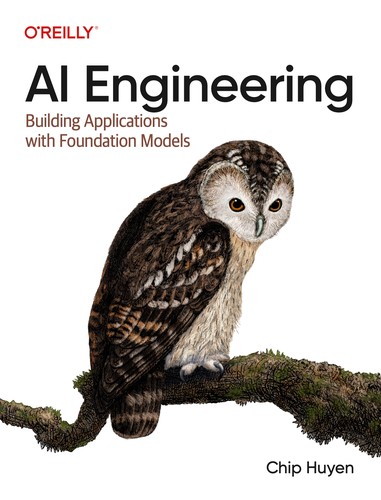
The reference manual for building products on top of AI models: prompts, RAG, fine-tuning, agents, evaluation and deployment.
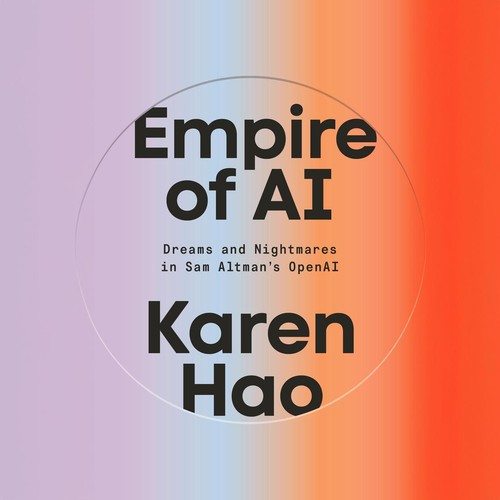
The definitive piece of investigative journalism on OpenAI: 260+ interviews, the clash between safety and speed, and the attempted firing of Sam Altma
As an Amazon Associate, Zendoric earns from qualifying purchases; the price does not change for you. · all our recommended books →
🔗 Related on Zendoric
- Opus 5: Anthropic makes its frontier intelligence cheaper and shields against dual-use risk after Mythos 5 · 2026-07-26
- Anthropic bills like infrastructure, not like an app: how it's gaining ground on OpenAI in the enterprise · 2026-07-09
- Claude Sonnet 5 makes agentic AI cheaper: the battle is no longer the benchmark, it's who integrates best · 2026-07-17