Anthropic bills like infrastructure, not like an app: how it's gaining ground on OpenAI in the enterprise

🕒 Published on Zendoric: July 9, 2026 · 00:21
✨ AI-generated · how it's made
Anthropic reportedly nearly doubled its quarterly revenue to $10.9 billion and posted its first operating profit, according to a report cited by Blockspace Media. The key isn't the hype: it's a different business model, built on APIs and AI coding, that is starting to pay off.
📚 Go deeper

The best starting book if you're not technical: a Wharton professor explains how to work WITH AI — when to delegate, when to supervise, when to keep i
As an Amazon Associate, Zendoric earns from qualifying purchases; the price does not change for you. · all our recommended books →
By Blockspace Media · July 8, 2026.
According to Blockspace Media, drawing on a report (which the outlet itself attributes to Semi Analysis), Anthropic's revenue reportedly grew 130% quarter-on-quarter in the second quarter to $10.9 billion, with a first operating profit of around $559 million and gross margins that reportedly climbed into the mid-60% range, compared with a negative margin of 94% in 2024. The report attributes that turnaround to the composition of revenue: between 75% and 85% of Anthropic's billings reportedly come from API, versus an OpenAI model leaning around 65% on consumer subscriptions. AI-assisted programming appears as the central engine: Claude Code would already account for more than 7% of commits on GitHub, and code use cases would explain 65% of the company's annual recurring revenue. The report itself speculates that, if Anthropic were to sustain a pace of around $15 billion in net new ARR per month, recurring revenue could approach $300 billion by the end of 2027 — the figure that would underpin a $6 trillion valuation, some 20 times revenue.
It is worth separating the data from the narrative. That Anthropic has gone from deeply negative margins to operating profit in a year and a half is a relevant and verifiable fact in the direction the report points to: the economics of large models are starting to look like a real business, not just R&D subsidized by capital rounds. The projection of $300 billion in ARR by 2027, by contrast, is an extrapolation that assumes a sustained growth pace over a year and a half without friction — something no business of this scale has ever achieved in a linear fashion. That it is the basis for a $6 trillion valuation says more about the speculative appetite of the moment than about accounting certainties.
What is structurally interesting is the difference in business model. Selling API tokens to companies that build their own products and agents is an infrastructure business: full price, a customer who integrates the model into its workflow and is hard to displace once integrated. Selling consumer subscriptions, by contrast, competes on attention and price in a market where the user switches apps with a click. If the figures the report cites are roughly correct, Anthropic would be capturing the stickiest, highest-margin segment of the market — the company automating internal processes — while OpenAI would be defending the most visible but also most volatile segment. This fits with something we had already been observing: the competitive axis in AI is shifting from the smartest model to the cost per token and to who controls the orchestration layer where the enterprise customer lives.
The Claude Code figure — more than 7% of GitHub commits and 65% of Anthropic's recurring revenue — deserves its own reading. It is confirmation, with market figures, of a thesis we already held about tech employment: generative AI is first eating the most routine and mechanical programming work, while shifting human value toward architecture, security review and systems integration. That this segment is also the one that bills the most for Anthropic is no coincidence: it is where the substitution of tasks by tokens is most direct and, therefore, where the AI provider can charge the highest price for the work it avoids.
Our reading is that this episode illustrates well the hard transition we anticipate in the short term: AI companies' revenues grow precisely because they replace or multiply the work of engineers, analysts and other technical profiles, and that pressure is not going to stop. But it also points to the other side of the thesis: an AI business that stops burning cash and begins to generate operating profit is a sign that the technology is maturing toward a phase of real, sustainable usefulness, not just promise. If that path continues — with more caution than the 2027 projection suggests — the surplus generated by the automation of code and other routine tasks is, ultimately, the same surplus that in the long term can fund the abundance of resources and the freeing of human time toward work with more judgment and purpose. The pending question, as always, is who captures that surplus while the transition takes place: the shareholders of AI companies, the customers who cut costs, or the workers whose jobs are automated first.
📚 Go deeper
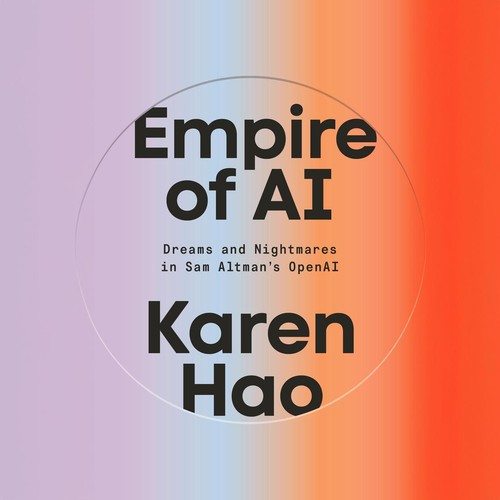
The definitive piece of investigative journalism on OpenAI: 260+ interviews, the clash between safety and speed, and the attempted firing of Sam Altma
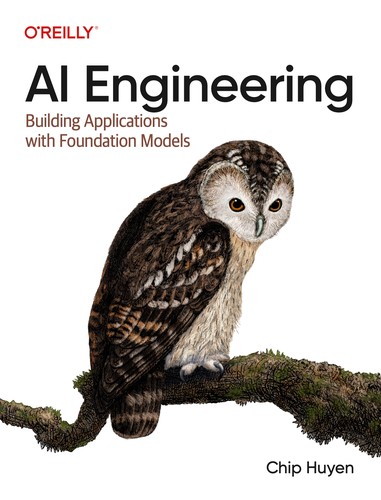
The reference manual for building products on top of AI models: prompts, RAG, fine-tuning, agents, evaluation and deployment.
As an Amazon Associate, Zendoric earns from qualifying purchases; the price does not change for you. · all our recommended books →
🔗 Related on Zendoric
- Only 12% of companies know how to govern their AI agents: Google turns that gap into its edge over OpenAI and Anthropic · 2026-07-20
- Alphabet's record profit is a mirage: AI burns through cash while its Anthropic bet soars on paper · 2026-07-24
- OpenAI cutting off Cursor turns model access into a revocable utility, not infrastructure · 2026-08-31