Microsoft and Mistral expand their strategic alliance to bring controllable frontier AI to enterprises and regulated industries
🕒 Published on Zendoric: July 24, 2026 · 00:29
✨ AI-generated · how it's made
Microsoft and Mistral announced on July 21, 2026, from Redmond and Paris, a significant expansion of their strategic alliance aimed at enabling enterprises and regulated industries to adopt frontier AI with greater choice, operational control and consistency.
📚 Go deeper
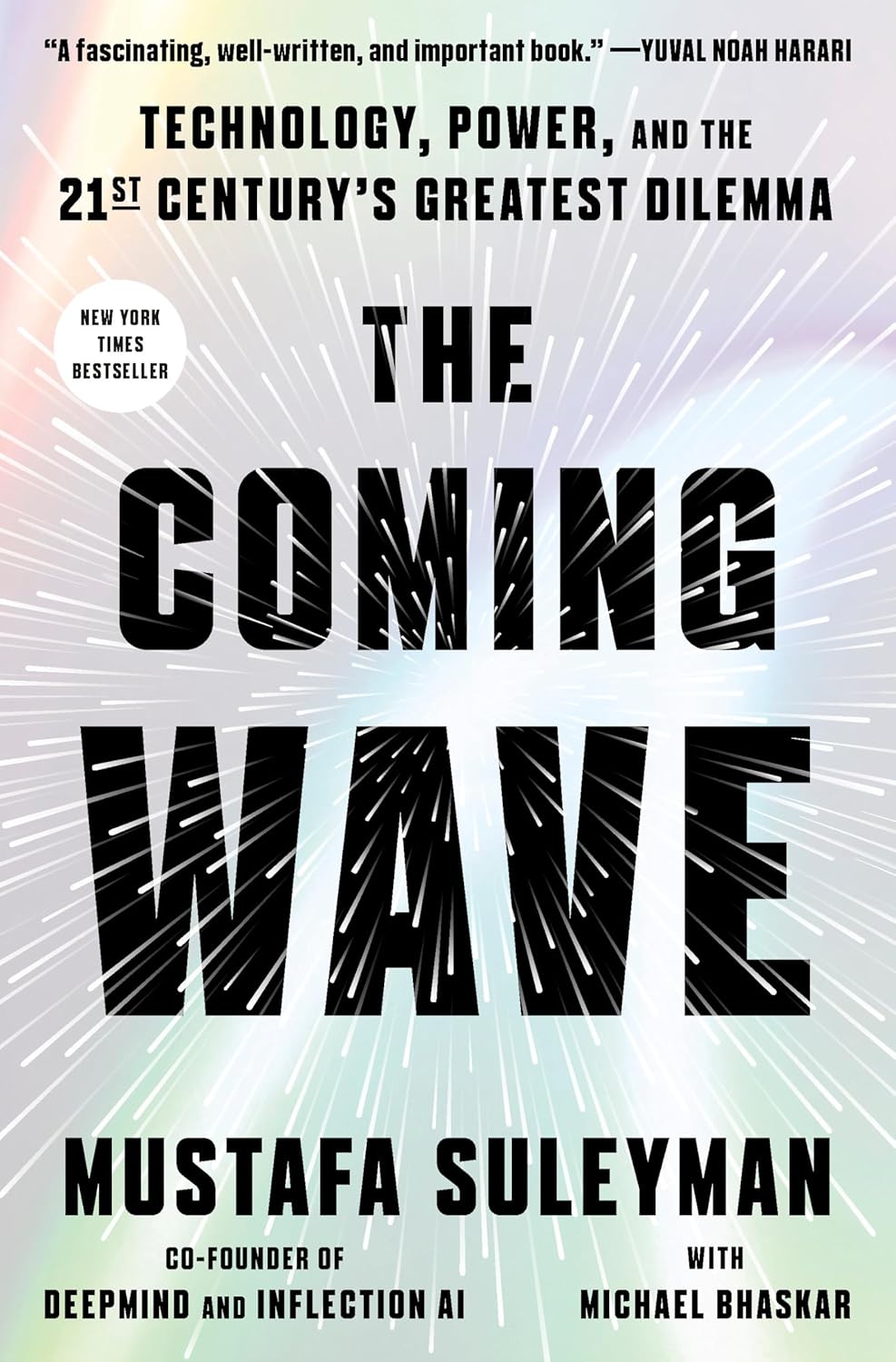
DeepMind co-founder on the dilemma of containing technologies that do not want to be contained.
As an Amazon Associate, Zendoric earns from qualifying purchases; the price does not change for you. · all our recommended books →
Microsoft and Mistral announced on July 21, 2026, from Redmond and Paris, a significant expansion of their strategic alliance aimed at enabling businesses and regulated industries to adopt frontier AI with greater choice, operational control and consistency. The agreement rests on three pillars: expansion of compute infrastructure in Europe, integration of Mistral's models into Microsoft's enterprise ecosystem, and a range of deployment options spanning from the public cloud to fully disconnected environments.
On the infrastructure front, Mistral is expanding its GPU capacity in Europe by drawing on thousands of the latest NVIDIA Vera Rubin GPUs, and Microsoft is committing to leverage part of that expanded capacity through a new multimillion-dollar agreement. This investment seeks to strengthen European AI infrastructure while helping Microsoft meet the growing demand for its cloud and AI services, and it falls within the 'European Digital Commitments' the company announced in 2025. Ian Buck, NVIDIA's vice president of hyperscale and high-performance computing, noted that agentic AI is driving unprecedented demand for high-performance, energy-efficient AI infrastructure, and that deploying Vera Rubin systems at this scale will give customers the computational foundation needed to build and operate the next generation of AI in Europe and beyond.
On the product front, the Mistral Medium 3.5 and OCR 4 models are already available in Microsoft Foundry, while Mistral Medium 3.5 has also been integrated into Microsoft Copilot Studio. Mistral Medium 3.5 brings an open-weight model into a managed Azure environment, allowing developers and companies to build, customize and deploy AI applications with sovereign deployment options and predictable cost scalability. OCR 4, for its part, is geared toward structured document processing flows and agentic workflows. In Copilot Studio, the addition of Medium 3.5 combines model flexibility with enterprise-grade governance, allowing teams to choose the most suitable model for each scenario without losing control over where and how data is processed.
A central element of the proposition is consistency across development and runtime environments: Microsoft Foundry and Foundry Local allow organizations to use the same models, tools, APIs and workflows both in the cloud and in Azure Local, reducing the need to redesign applications for each deployment scenario. On this basis, Azure and Azure Local offer three operating modes: cloud-hosted deployments for scale and immediate access to the platform's latest innovations; 'cloud-connected' environments, controlled by the customer but connected to Azure services when needed; and fully disconnected environments, designed to operate independently of external connectivity for especially sensitive missions or workloads.
According to the statement, this range of options is intended for specific sectors: critical infrastructure providers that need to maintain AI capabilities with resilience and service continuity; industrial and manufacturing organizations that analyze production and quality data locally for reasons of latency, intellectual property protection, export controls, cybersecurity and supply chain resilience; and healthcare organizations that require privacy, data residency and clinical continuity in their AI workflows.
Brad Smith, vice chair and president of Microsoft, stated that Europe should have access to the world's most capable AI without compromising control over its data, its operations or its digital future, and that integrating Mistral's European frontier models into Microsoft's sovereign cloud portfolio—enabling them in the public cloud, connected environments and fully disconnected environments—is a way of honoring the European digital commitments the company has made. For his part, Arthur Mensch, co-founder and CEO of Mistral, said the company's mission has always been to put frontier AI within reach of any organization while maintaining its control over the technology, and that thanks to Microsoft as a partner its models reach businesses and public institutions on a global scale through a trusted platform for the most demanding and regulated workloads.
As part of this expanded relationship, both companies will align a joint go-to-market plan and jointly pursue enterprise opportunities in Europe and globally. They will also accelerate customer adoption by funding proofs of concept (PoCs), offering Azure credits and organizing AI innovation workshops. The statement stresses that organizations in financial services, manufacturing, healthcare and other regulated sectors—where control and resilience are mandatory requirements—will be able to build AI applications in Microsoft Foundry and run them on Azure or Azure Local, using Mistral models in cloud, cloud-connected or fully disconnected environments.
Overall, the announcement consolidates a familiar Microsoft strategy—that of the 'Sovereign Cloud'—now combining it with a European frontier-model partner such as Mistral, in a move that seeks to respond to demand, especially in Europe, for advanced AI that does not force the ceding of control over data and critical infrastructure. The text does not detail exact figures for the multimillion-dollar investment, nor specific timelines for deploying the new Vera Rubin GPUs, so these aspects should be treated as indicative until more details are published.
📚 Go deeper
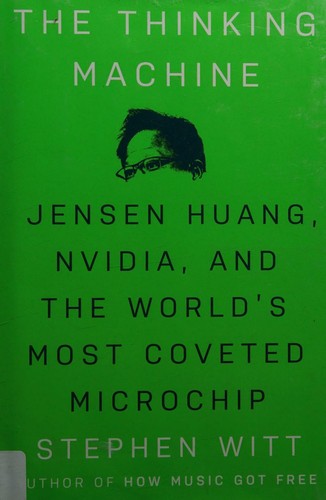
The story of NVIDIA and Jensen Huang: how a video-game card company ended up making the most coveted resource on the planet.
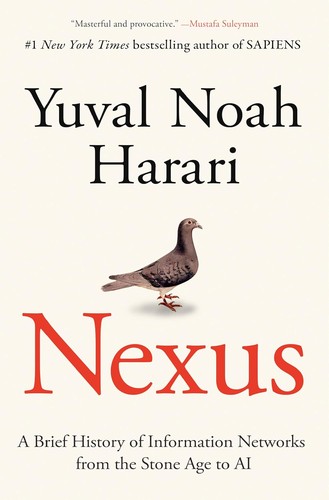
AI as the latest chapter in the history of information networks, from gossip to the printing press to the algorithm.
As an Amazon Associate, Zendoric earns from qualifying purchases; the price does not change for you. · all our recommended books →
🔗 Related on Zendoric
- Microsoft and Mistral expand their alliance to bring controllable frontier AI to enterprises and regulated sectors in Europe · 2026-07-23
- Kyndryl and AWS expand their alliance: the agentic AI race is no longer about the model, but about who governs it · 2026-07-12
- Microsoft expands its alliance with AMD: it will deploy the Helios rackscale and new "Venice" EPYC chips on Azure · 2026-07-22