Who wins? Five AI frontrunners, five different races (Forward Future)

🕒 Published on Zendoric: October 27, 2026 · 00:16
✨ AI-generated · how it's made
Note: only part of the article was downloaded. The text cuts off midway through the section on Meta, and the rest is reserved for paying subscribers. This summary covers only the visible portion.
📚 Go deeper
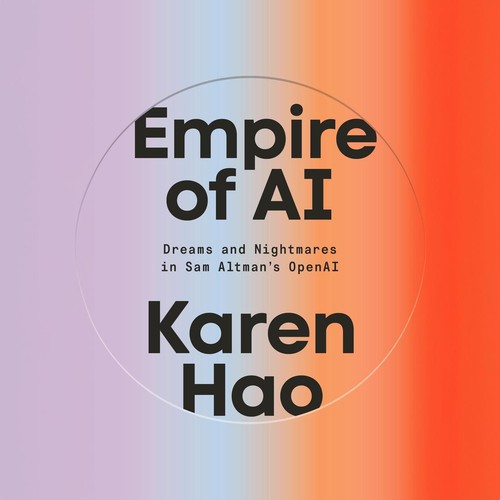
The definitive piece of investigative journalism on OpenAI: 260+ interviews, the clash between safety and speed, and the attempted firing of Sam Altma
As an Amazon Associate, Zendoric earns from qualifying purchases; the price does not change for you. · all our recommended books →
Note: the downloaded text is only part of the article. It cuts off partway through the section on Meta, and the rest is reserved for paying subscribers. This summary covers only the visible portion.
The author's thesis is that the industry has spent years obsessed with who has the best model, but AI is no longer a single race. It is now several overlapping competitions, each with its own advantages, economics and definitions of success. The article traces how that contest has evolved: GPT-4 set the bar in 2023, Claude 3.5 Sonnet made Anthropic a serious rival among developers in 2024, Google closed the gap, and now SpaceXAI and Meta are pushing hard in frontier intelligence. According to the author, whoever has the smartest model will not necessarily capture the most value. The next phase will be decided by control of the customer relationship, the ability to deliver intelligence at a good price and how indispensable AI becomes in everyday work.
The author argues that the next battleground is usefulness. Solid reasoning, reliable coding and precise execution are prerequisites, but for many everyday uses frontier models are already capable enough. That is why five factors may matter more than another marginal gain in raw intelligence: memory (retaining context across conversations and projects), persistence (working through obstacles until a task is finished), integration (connecting with the tools and information people already use), price (being affordable for daily use, including on demanding tasks) and distribution (reaching people where they already work and communicate). In the author's view, a slightly less brilliant model that is built into every work tool and affordable for an entire company is the one people would end up using. As an example, he cites following up with a potential sponsor: if the AI remembers the pricing, the ad placements under consideration and where the conversation left off, it can draft a relevant reply instantly.
On OpenAI, the author argues that its advantage is that ChatGPT helped create the habit of turning to AI and remains the most popular. Its strategy goes beyond models such as GPT-6 Astra to include ChatGPT, developer tools, enterprise offerings and increasingly capable agents. The article notes that GPT-6 Astra costs $10 per million input tokens and $50 per million output tokens, a sizable premium over its rivals that forces OpenAI to prove its performance justifies the price. The big prize would be becoming the main interface between people and AI, regardless of which model or app does the work. The vulnerability is that the AI interface need not be a standalone destination. Google can build it into Gmail, Chrome and Android, Microsoft into its office software and Meta into its messaging apps. If AI becomes a capability built into everything, the ChatGPT habit could be harder to defend.
As for Google, the author believes its real advantage is its ecosystem: Search, Gmail, Drive, Chrome, Android and Google Cloud. Rather than persuading everyone to adopt a new product, it can bring increasingly capable models into existing workflows. Its new Gemini 4 Argon, designed for complex professional work, targets coding, finance, law, cybersecurity and scientific research. Google says teams using it through Antigravity increased agentic code submissions by more than 35% and cut rollbacks by almost a third. The article itself notes that these are company-reported results. Argon is offered at an introductory price of $2 per million input tokens and $10 per million output tokens, figures that will double in December. According to the author, pairing a broad suite of tools with a good model is especially powerful in the enterprise, where there are incentives to consolidate vendors and reduce costs, risk and complexity.
The author also points to limits. Distribution does not guarantee adoption: users already have daily access to Google products, and that has not stopped ChatGPT or Claude from building their own followings. In addition, Google has an enormous business built on how people search for information and interact with software, and AI agents could change both behaviors, forcing it to balance protecting its revenue against new models of interaction. The article highlights another paradox: OpenAI has announced that Google Cloud will offer its models, including GPT-6 Astra. OpenAI thus gains another distribution channel, and Google can earn infrastructure revenue even when a customer picks a rival model. For the author, Google does not need to win every model comparison to build a large AI business.
The section on Meta, the last visible part, argues that the company meets people "everywhere" outside of work, through Facebook, Instagram and WhatsApp, giving it a major distribution advantage and potentially a personalization one. Its recently unveiled Muse Wonder models include Active Memory, which retains and retrieves context across conversations, and Active Focus, which helps agents get past obstacles and keep moving toward a goal. The author acknowledges that neither capability is unique to Meta, and recounts an anecdote about his assistant Grok Bot, which spotted a wrong link in an email without being asked and suggested the correct one.
The visible text ends there. The headline and subheadline name Anthropic and SpaceXAI among the five frontrunners, but the analysis of both, the conclusion and any final assessment by the author are not in the downloaded content, so they cannot be summarized.
📚 Go deeper
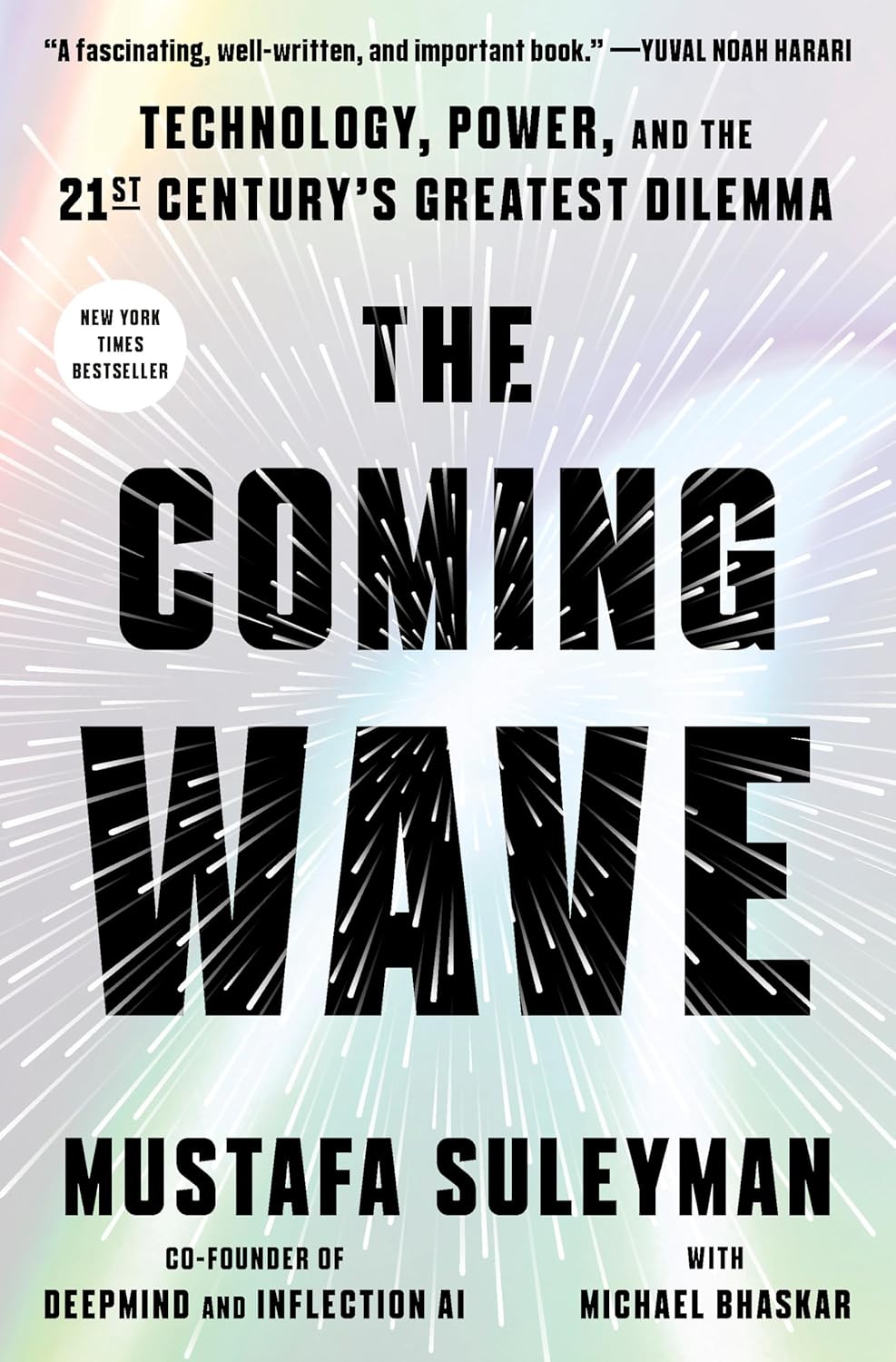
DeepMind co-founder on the dilemma of containing technologies that do not want to be contained.
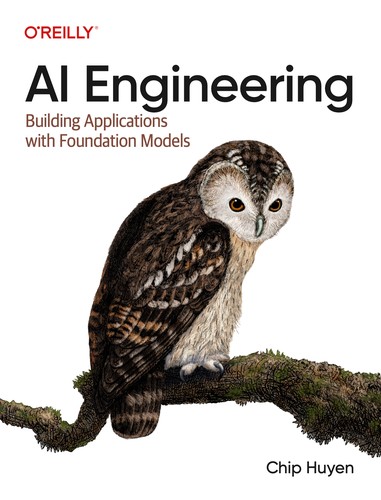
The reference manual for building products on top of AI models: prompts, RAG, fine-tuning, agents, evaluation and deployment.
As an Amazon Associate, Zendoric earns from qualifying purchases; the price does not change for you. · all our recommended books →
🔗 Related on Zendoric
- How to set up a personal AI assistant that anticipates your needs (Forward Future guide) · 2026-10-21
- ServiceNow AI Control Tower: a major system of action for AI governance, but with doubts about runtime control · 2026-10-20
- Building a GPU compiler from scratch: from PyTorch to CUDA via multi-level IR (Emmy) · 2026-10-15