Barclays cuts 5,000 jobs and blames AI, while profits rise 12%: banking's back office is going first

🕒 Published on Zendoric: October 23, 2026 · 00:20
✨ AI-generated · how it's made
Barclays will cut 5,000 jobs, about 5% of its staff, and says AI made the work more efficient. Most of the cuts hit UK retail banking operations staffed largely in India, including developer and support roles. Some of this is AI, some is cost discipline aimed at investors, and the bank's retraining offer is small next to its profits.
📚 Go deeper

The best starting book if you're not technical: a Wharton professor explains how to work WITH AI — when to delegate, when to supervise, when to keep i
As an Amazon Associate, Zendoric earns from qualifying purchases; the price does not change for you. · all our recommended books →
Barclays is cutting 5,000 jobs, about 5% of its workforce, and says artificial intelligence is the reason. According to Fast Company, 1,000 of those roles are already gone and the other 4,000 will go by the end of this year. Many are in developer and support roles. Our thesis: big banks are now turning AI from a pilot project into headcount reductions, and the first cuts land on the global back office, not on bank branches.
The BBC, cited by Fast Company, reports that the cuts fall mainly on the UK retail banking operation, which is heavily staffed in India. Many of the eliminated positions are expected to be there. The timing matters. The announcement came with third-quarter results showing pre-tax profit of £2.3 billion ($3 billion), up 12% year on year. That still missed analyst expectations of £2.42 billion.
Barclays is not alone. Fast Company lists Citigroup, which is eliminating up to 20,000 jobs (10% of its workforce); HSBC, which reportedly cleared out 10% of its highly paid senior bankers; and Standard Chartered, which is cutting 7,000 jobs, or 15% of corporate function roles, by 2030. The magazine also cites its AI Industry Exposure index, which measures how exposed each industry is to AI disruption. Finance and insurance rank among the most exposed sectors.
In a statement, a Barclays spokesperson framed the move as preparing the bank for the future. The bank says it will invest £150 million in staff skills by 2030 and that 40,000 employees have already used its AI training. It says affected workers get tailored career support and coaching. For scale, £150 million spread over several years is about 6.5% of a single quarter's pre-tax profit. It is a real commitment, but a modest one next to the size of the restructuring.
Our reading: this fits what we have been saying about banking. There will be fewer administrative hands and more data, risk and compliance roles. Two details move the story forward. First, developer roles are on the list. That supports our view that in tech, routine work is exposed while architecture and AI integration gain value. Second, the cuts hit offshore operations in India. For decades, outsourcing to India was the main way banks cut costs. Now AI is cutting into that outsourced work. That raises a hard question for economies that built a middle class on back-office services.
We should also be careful. A bank that just missed profit expectations has good reasons to tell investors that AI is driving efficiency. The material does not show how much of the 5,000 comes from automation and how much from ordinary cost-cutting. Our verdict: the short term is a painful transition, concentrated on people with the least bargaining power. The long term can still be positive if the gains pay for real retraining and not just for shareholder returns. The test for Barclays will come in 2030: how many of the 40,000 trained employees are doing more valuable work?
📚 Go deeper
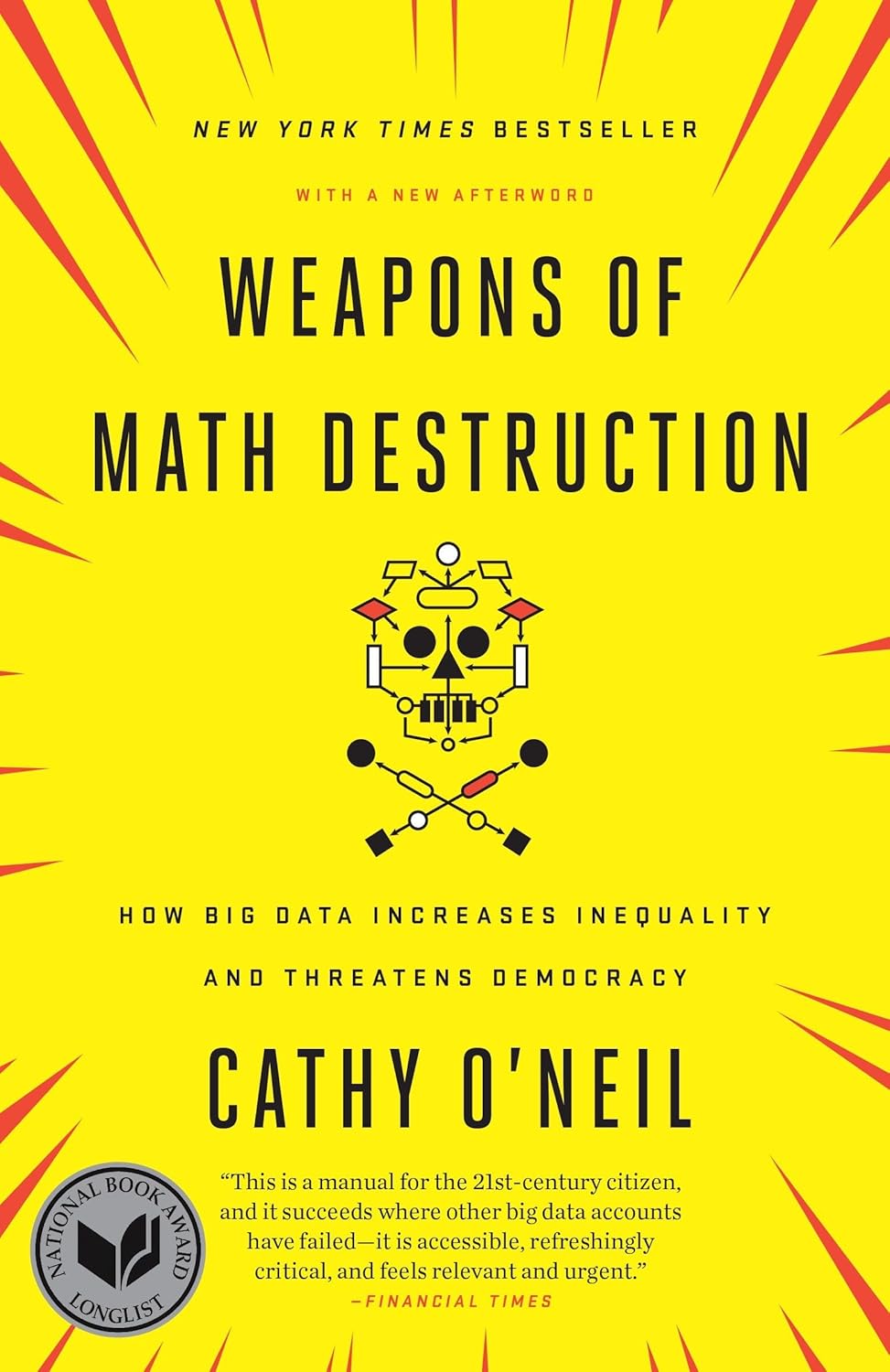
How opaque algorithms decide who gets credit, a job or parole — and why they tend to punish the same people.

The reference manual for building products on top of AI models: prompts, RAG, fine-tuning, agents, evaluation and deployment.
As an Amazon Associate, Zendoric earns from qualifying purchases; the price does not change for you. · all our recommended books →
🔗 Related on Zendoric
- Barclays blames AI for 5,000 job cuts while profits rise 12%, a sign of how banking's back office is being rebuilt · 2026-10-22
- Customer service is the lab for AI-driven layoffs: cheap work falls first, complex work holds out · 2026-07-16
- Uber cuts 10% of support staff for AI — but its own memo reveals the real bottleneck · 2026-07-24