An AI that needs no extra tests: how La Trobe sharpens relapse risk in stage II colorectal cancer

🕒 Published on Zendoric: July 29, 2026 · 00:34
✨ AI-generated · how it's made
A team at La Trobe University validates SÉMIL, a system that cross-references pathology images with their clinical reports to better predict which stage II colorectal cancer patients will relapse after surgery, with no need for biopsies or new tests.
📚 Go deeper
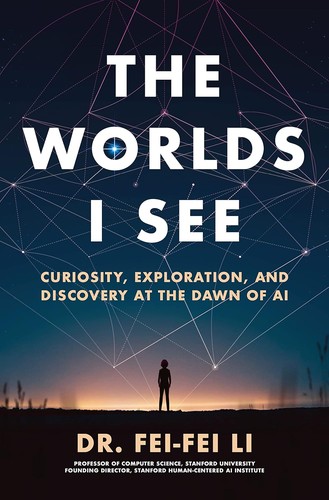
The memoir of the creator of ImageNet, the scientist who made the deep learning revolution in vision possible.
As an Amazon Associate, Zendoric earns from qualifying purchases; the price does not change for you. · all our recommended books →
By Zendoric · July 28, 2026.
A team at La Trobe University (Australia) has developed SÉMIL (Semantically-Enhanced Multiple Instance Learning), an artificial intelligence system that predicts the risk of relapse in patients with stage II colorectal cancer — localised tumours with no lymph node involvement or distant metastasis, but with a recurrence risk that varies widely from one patient to another. The work, published in Gastroenterology, analysed more than 1,600 pathology slides and validated the model in 1,220 patients across three independent cohorts from different Australian institutions, according to the study's own authors.
What sets SÉMIL apart is not the data it uses, but how it uses it. Rather than requiring new biomarkers or additional tissue sampling, the model learns from two sources every hospital already generates routinely: digitised images of pathology slides and the written descriptions the pathologist produces when analysing them. That "semantic" integration — cross-referencing image and clinical text — allows the algorithm to interpret the tumour's features without losing the context provided by the specialist's professional language.
Technically, the system relies on multiple instance learning, a technique designed for the enormous images typical of digital pathology: instead of requiring every microscopic fragment to be labelled by hand, the model learns from the sample as a whole and needs only one global label per case. With that, SÉMIL assesses in particular the tumour's so-called "invasive front", the edge where cancer cells penetrate healthy tissue; an area research considers key to predicting relapse but which, according to the study itself, pathologists label with little consistency among themselves because the growth patterns are subtle and partly subjective.
The practical outcome is a classification of each tumour as high or low risk, used to decide treatment after surgery. It is a decision with real weight: current Australian clinical guidelines reserve adjuvant chemotherapy for high-risk stage II patients, so sharpening that boundary means, in theory, giving chemotherapy to those who truly need it and sparing its side effects for those who would not benefit. The researchers themselves are clear about the limits of their tool: the system adds "an additional layer of information" for the clinician, it does not replace their judgement, and the model produced its most accurate estimates precisely when its assessments matched those of expert pathologists.
Overall, much of medical AI has spent years promising leaps like this and stumbling at validation: models that work well in the hospital where they were born and lose accuracy as soon as they are tested at another centre, with a different scanner, a different protocol, a different population. That SÉMIL has been tested in three independent cohorts — not only on the set it was trained on — is the part that really matters: it is the difference between a proof of concept and a tool with some real chance of reaching clinical practice. It remains, however, a retrospective validation on already existing data; the missing step, and not a minor one, is to demonstrate in a prospective trial that using SÉMIL to decide on chemotherapy actually changes patient outcomes, and to obtain the regulatory approval needed for that.
What interests us most about this case, beyond colorectal cancer, is the underlying pattern: improving precision medicine does not require inventing a new test or an exotic biomarker; sometimes it is enough to extract more effectively the signal already lying dormant in any hospital's pathology archives. It is a cheap and scalable route — it does not require buying sequencers or redesigning the clinical workflow, only reprocessing with AI what is already being digitised — and it fits the underlying thesis we hold at Zendoric about AI in healthcare: the path to taming diseases such as cancer runs not only through new drugs, but through squeezing more intelligence out of the clinical data we already generate by the million every year. The pathologist, for now, does not disappear from the equation; they gain an assistant that helps them decide with greater certainty precisely at the margin where the human eye errs most.
📚 Go deeper
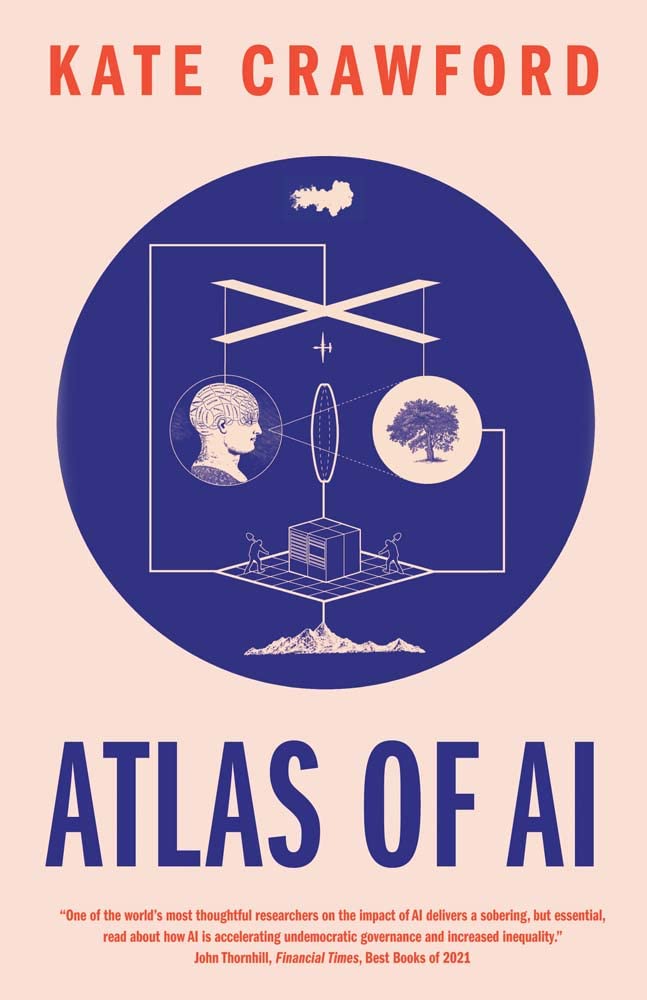
AI as an extractive industry: the lithium, the energy, the underpaid data-labeling work and the bodies behind the cloud.

The only novel on the list, by a Nobel laureate: an artificial friend observes humans with a blend of lucidity and innocence no essay achieves.
As an Amazon Associate, Zendoric earns from qualifying purchases; the price does not change for you. · all our recommended books →
🔗 Related on Zendoric
- An AI reads routine breast biopsies and predicts relapse almost as well as genomic tests costing thousands of dollars · 2026-07-10
- UCLA Health bets on AI for cancer detection: another sign that precision medicine is no longer just a promise · 2026-06-26
- Dogs, sensors and an AI that translates their sense of smell: India's bet on cheap cancer screening, still unvalidated · 2026-09-10