Microsoft launches MAI-Cyber-1-Flash, its first AI model for cybersecurity, integrated into MDASH

🕒 Published on Zendoric: July 29, 2026 · 00:34
✨ AI-generated · how it's made
Microsoft has unveiled MAI-Cyber-1-Flash, its first artificial intelligence model designed specifically for cybersecurity, which is integrated into MDASH, the company's multi-agent system for identifying and remediating vulnerabilities.
📚 Go deeper
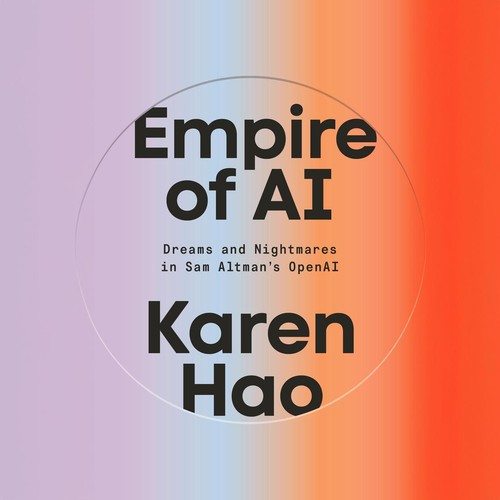
The definitive piece of investigative journalism on OpenAI: 260+ interviews, the clash between safety and speed, and the attempted firing of Sam Altma
As an Amazon Associate, Zendoric earns from qualifying purchases; the price does not change for you. · all our recommended books →
Microsoft has unveiled MAI-Cyber-1-Flash, its first artificial intelligence model designed specifically for cybersecurity, which is integrated into MDASH, the company's multi-agent system for identifying and remediating vulnerabilities. The announcement, signed by Mustafa Suleyman and Hayete Gallot and published on 27 July 2026 on the official Microsoft AI blog, is presented under the banner of delivering 'world-class security at half the cost' of the market's leading models.
The article frames this launch against a backdrop of growing threats: according to Microsoft, advances in AI not only improve defenses but also empower attackers, who now have increasingly sophisticated capabilities to comb through enormous volumes of code in search of a single exploitable vulnerability. The company argues that, as the cost of finding a flaw plummets, the old security model based on occasional scans and deferred patching becomes obsolete, which would justify the need for AI models dedicated to this purpose.
On performance, Microsoft claims that MAI-Cyber-1-Flash outperforms rival models — mentioned as Mythos, Gemini and GPT — on CyberGym, which it describes as 'the gold standard' for evaluating systems' ability to reason over large codebases and find real vulnerabilities. According to figures provided by the company, the combined MDASH plus MAI-Cyber-1-Flash system reaches 96% on CyberGym, twelve points above Mythos, and all with a 50% cost saving compared with Microsoft's previous MDASH offering, which combined GPT-5.4, 5.4 mini and 5.3 codex.
The logic behind this efficiency is a tiered routing strategy: MAI-Cyber-1-Flash, described as a compact, code-focused model derived from the MAI-Thinking-1 family, handles up to 90% of security tasks, while MDASH reserves the largest and most expensive models in its catalog — in this case GPT-5.4 — for the 10% of exceptionally difficult tasks that genuinely require them. Microsoft sums up its value proposition in three pillars: the model itself (trained from scratch in-house), the data (which the company calls its 'deepest advantage,' citing decades of proprietary security systems, trillions of daily signals across identity, endpoints, cloud and network, and a history of real exploits and remediations) and the agent harness, that is, MDASH, tuned by security experts and made up of more than 100 agents that use multiple leading models to find, validate and remediate vulnerabilities.
Alongside the model, Microsoft also announces the launch of Perception, an agentic security system that brings teams of agents to various security workflows within MDASH, with the goal of continuously monitoring, patching and closing new threat vectors. The company says Perception will soon incorporate MAI-Cyber-1-Flash for more security workflows, beyond detecting vulnerabilities in software.
On trust and governance, Microsoft details that, as this is its first model dedicated to cybersecurity, it has subjected MAI-Cyber-1-Flash to safety-oriented calibration by design, to evaluations by its internal AI Red Team, to automated and expert-led adversarial testing, and to an independent third-party assessment. At the product level, MDASH offers customers enterprise-grade controls such as role-based access, tenant isolation, encryption, auditability and sandboxed execution environments with no internet access.
The text also situates this launch within a broader narrative about Microsoft's approach to cybersecurity as a 'live reinforcement learning loop': the company says it observes the detection and defense cycle end to end, from vulnerabilities managed by the Microsoft Security Response Center to attacks and defenses across identity, endpoints, cloud, data, browser and applications, drawing on what it describes as more than 100 trillion daily security signals and operational data from 1.6 million customers. According to Microsoft, this ability to connect actions with outcomes — what was exploitable, what was contained, what actually worked — feeds a proprietary reinforcement loop (MAI) that, the company says, will allow its cybersecurity models to improve continuously.
This announcement should be read with the usual caution applied to corporate communications of this kind: the performance figures (96% on CyberGym, the 12-point lead over Mythos, the 50% cost saving) come directly from Microsoft and are presented without detailed methodology or independent verification visible in the article itself, so they should be understood as promotional claims by the company rather than externally audited results. Even so, the move is significant because it confirms the trend among major cloud and AI providers — in this case Microsoft, alongside its broader MAI family of models (which includes image, voice, reasoning, code and transcription models) — to build specialized, cheaper models ('Flash') for high-volume tasks, reserving larger and costlier models for the most complex cases, a strategy we can expect to see replicated by other players in the AI-based cybersecurity sector.
📚 Go deeper
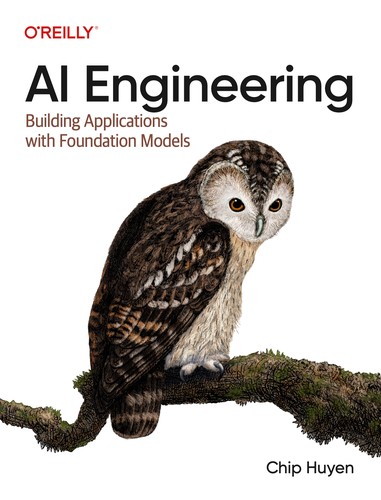
The reference manual for building products on top of AI models: prompts, RAG, fine-tuning, agents, evaluation and deployment.
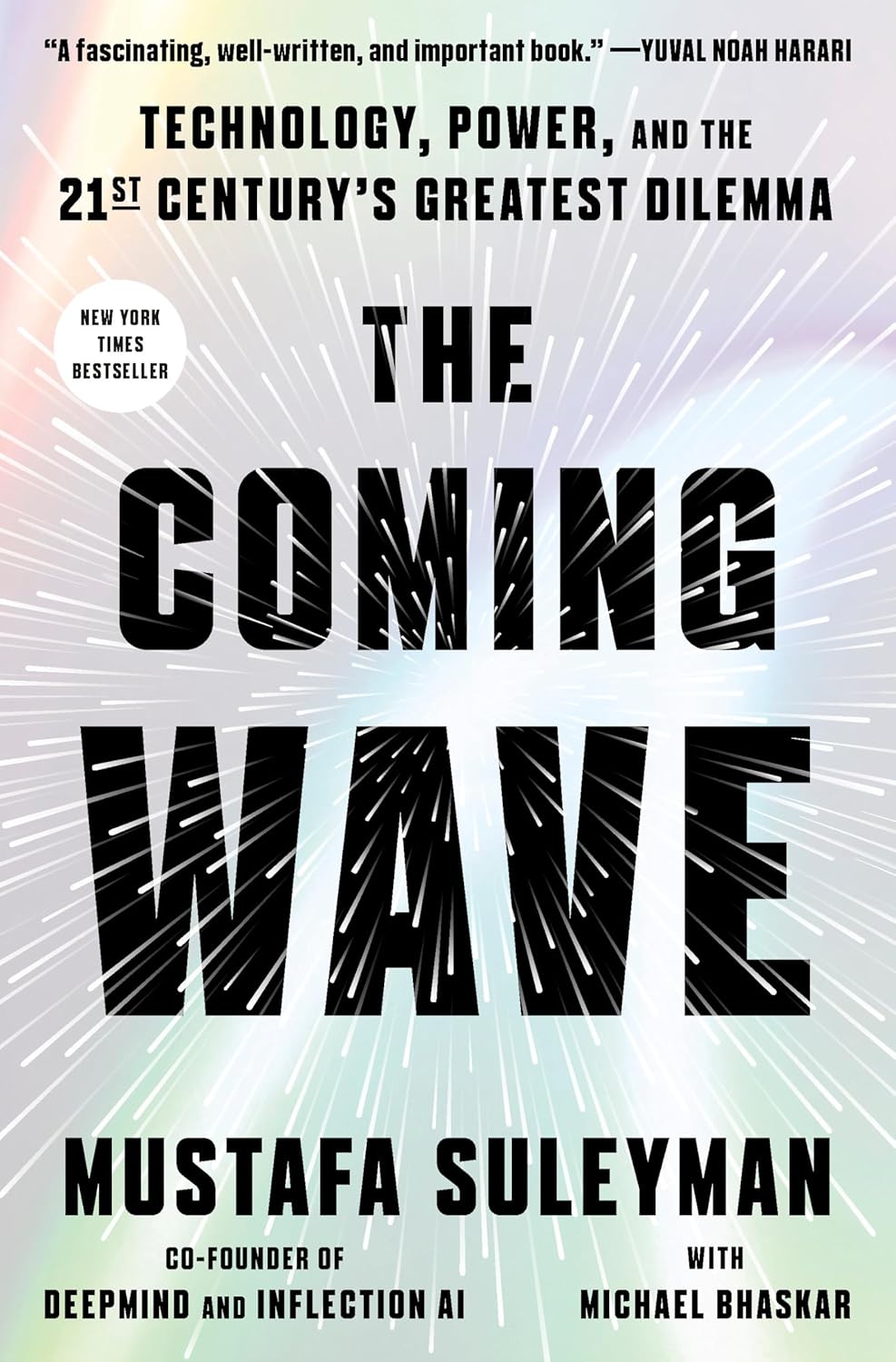
DeepMind co-founder on the dilemma of containing technologies that do not want to be contained.
As an Amazon Associate, Zendoric earns from qualifying purchases; the price does not change for you. · all our recommended books →
🔗 Related on Zendoric
- Google launches Gemini 3.5 Flash Cyber, a lightweight model to find and patch vulnerabilities at scale · 2026-07-24
- Google launches Gemini 3.8 Flash and 3.8 Flash Cyber, its most powerful models for agentic coding and cyber defense · 2026-09-04
- Thinking Machines, Mira Murati's lab, launches Inkling: an open model with 975 billion parameters · 2026-07-17