Myriad Genetics rebuilt its AI after costs soared: from 10 minutes to 20 seconds per medical document

🕒 Published on Zendoric: July 28, 2026 · 00:38
✨ AI-generated · how it's made
Myriad Genetics, a Salt Lake City genetic testing specialist, built its own AI for insurance paperwork and it proved so expensive that the company had to rebuild it with AWS. Almost three years later, it processes each document in 20 seconds instead of 10 minutes: the lesson matters as much as the number.
📚 Go deeper

The only novel on the list, by a Nobel laureate: an artificial friend observes humans with a blend of lucidity and innocence no essay achieves.
As an Amazon Associate, Zendoric earns from qualifying purchases; the price does not change for you. · all our recommended books →
By Zendoric · July 28, 2026.
Myriad Genetics, the Salt Lake City-based molecular diagnostics company that processes close to 1.5 million diagnostic tests a year — hereditary cancer, prenatal screening, tumor profiling and response to psychiatric drugs — has finished completely rebuilding its artificial intelligence platform for handling the paperwork that precedes and follows every test. As Martyna Shallenberg, Myriad's senior director of software engineering, told Business Insider, the new system, named Image Genius and developed with Amazon Web Services (AWS), has cut the processing time for each document from an average of 10 minutes to 20 seconds.
That is no small matter in a business where the money takes time to arrive. Shallenberg explains that a company like Myriad can take up to 18 months to be paid in full for a test, because of the complexity of the insurance claims process known as revenue cycle management. Before that, every request needs a prior authorization: the physician has to obtain the insurer's approval, sometimes within hours of the sample being taken, or the insurer may deny coverage and delay patient care, or cost Myriad revenue.
The first version of Image Genius, built in 2024 with the consultancy PwC on top of two AWS services — Amazon Textract, to extract text from scanned documents, and Amazon Comprehend, a natural language processing (NLP) service to identify clinical notes, pathology reports and insurance data — crashed into its own success. As Myriad's then CTO, Kevin Haas, told Business Insider, the system demanded constant maintenance given the volume of "millions of samples" and did not always distinguish a request form from the doctor's medical notes, "the hardest part of the process", according to Shallenberg. The entire first quarter of 2025 went into fine-tuning prompts and adding training data; the result, Shallenberg says, was not worth what it cost: Amazon Comprehend turned out to be "very expensive" to operate at Myriad's scale.
The solution was not more engineering on the same service, but a change of architecture. Myriad turned to the AWS Generative AI Innovation Center — a team of AWS scientists and AI experts that helps customers take projects from idea to deployment — and rebuilt Image Genius on Amazon Bedrock, the AWS platform that provides access to foundation models from various providers (Anthropic, OpenAI) and to Amazon's own Nova family. That flexibility, AWS global chief medical officer Rowland Illing told Business Insider, allowed Myriad to test several models and choose the most suitable one in terms of speed, accuracy and cost. "Model choice is really important", Illing summed up.
The system, relaunched in the first quarter of 2026, is already running in Myriad's women's health division: according to the company, it has saved some 300 hours of work a month across close to 9,000 prior authorizations. Expansion to oncology and mental health will come in 2027. Leading that next phase is Raj Jampa, Myriad's new CTO since June 2026 (previously at Agilent Technologies, Exact Sciences and Genomic Health), whose stated goal is to extend automation to eligibility verification, claims submission, denial management and appeals.
Our reading: the value of this case lies not in the "20 seconds" figure — striking, but anecdotal — but in the nearly three-year, two-attempt road it took to get there. Myriad did not fail for lack of ambition, or of budget, with PwC and AWS involved from the outset; it failed because it bet on a specialized, closed AI service that became unsustainable as the volume of data grew, and it only worked once it migrated to an architecture that treats the model as an interchangeable part rather than a fixed commitment. It is the same lesson we keep seeing in other enterprise AI deployments: the bottleneck is rarely how much a token costs, but how much it costs to maintain, retrain and adapt a closed system when reality — millions of heterogeneous documents — does not fit the expected pattern.
There is a second, more fundamental reading. This is exactly the kind of administrative friction — insurance paperwork, prior authorizations, 18-month payment cycles — that consumes healthcare resources without delivering health to anyone. Automating it does not replace Myriad's staff at a stroke: the company itself talks about hours saved, not layoffs, although the source does not detail what is done with the freed-up time. It is the pattern we have already seen in other administrative sectors: AI does not eliminate the job, it redefines which part of the work deserves a human. If this automation becomes widespread in medical diagnostics — where delays in payment and in authorization can translate into real delays in patient care — the benefit is not merely accounting: it brings one step closer that long-term promise of a healthcare system that spends less time on paperwork and more on caring.
It is worth keeping the short-term caveat in view: it has taken almost three years, a discarded first system and a complete change of architecture to reach a single division of a business with several lines. Production AI in a sector as regulated as healthcare is not a switch you flip; it is a construction site, expensive and slow before it becomes cheap and fast. Anyone selling the opposite has not had to rebuild their own Image Genius.
📚 Go deeper
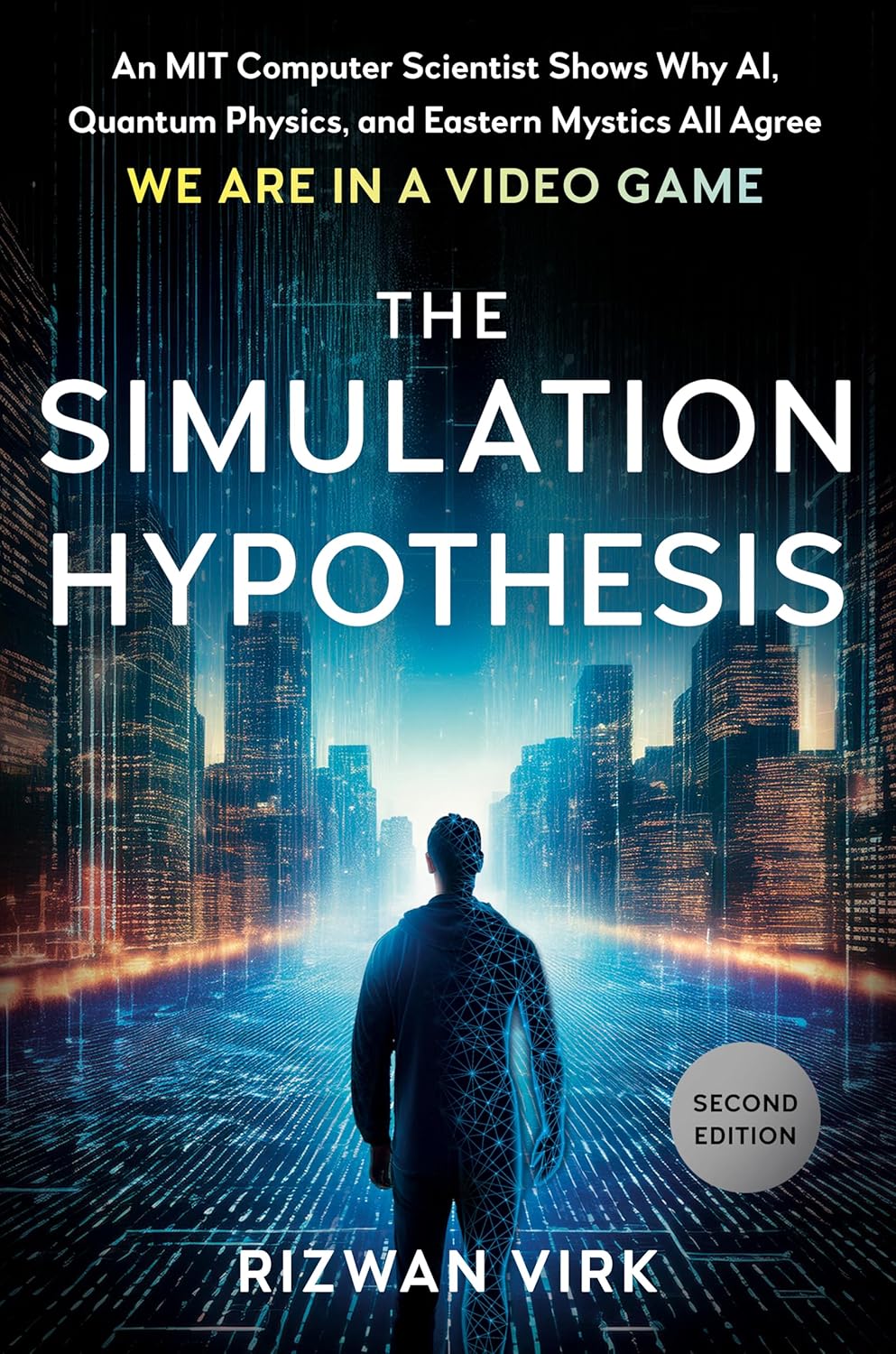
An MIT computer scientist connects AI, quantum physics and video games to take an uncomfortable question seriously: what if we live in a simulation? M
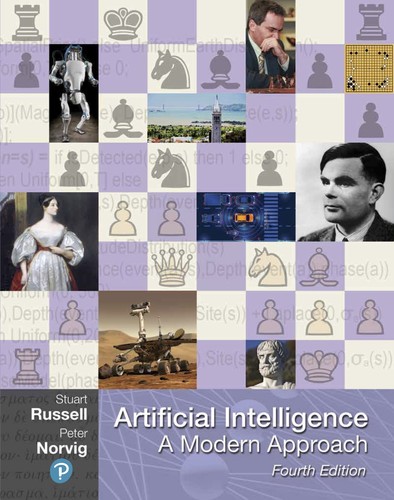
THE AI textbook: used by 1,500+ universities.
As an Amazon Associate, Zendoric earns from qualifying purchases; the price does not change for you. · all our recommended books →
🔗 Related on Zendoric
- Three seconds of audio is now enough: AI voice fraud is the near-term harm we can actually govern · 2026-09-02
- Three seconds of audio is enough: AI voice fraud's flaw is that every defense arrives after the money is gone · 2026-07-28
- Three seconds of audio is all it takes: AI voice fraud wins because the safeguards are built to arrive too late · 2026-09-01