Three young Spaniards build an AI verifier that would rather not answer than invent a source

🕒 Published on Zendoric: July 26, 2026 · 00:23
✨ AI-generated · how it's made
Malen Aguirre, Mencía González-Haba and Luis Bravo, of the company Logixs, have developed Trustbrief, a tool born at a SEDIA hackathon that made it all the way to the UN in New York. Its design inverts AI's usual logic: if it can't find a verified source, it would rather not answer.
📚 Go deeper
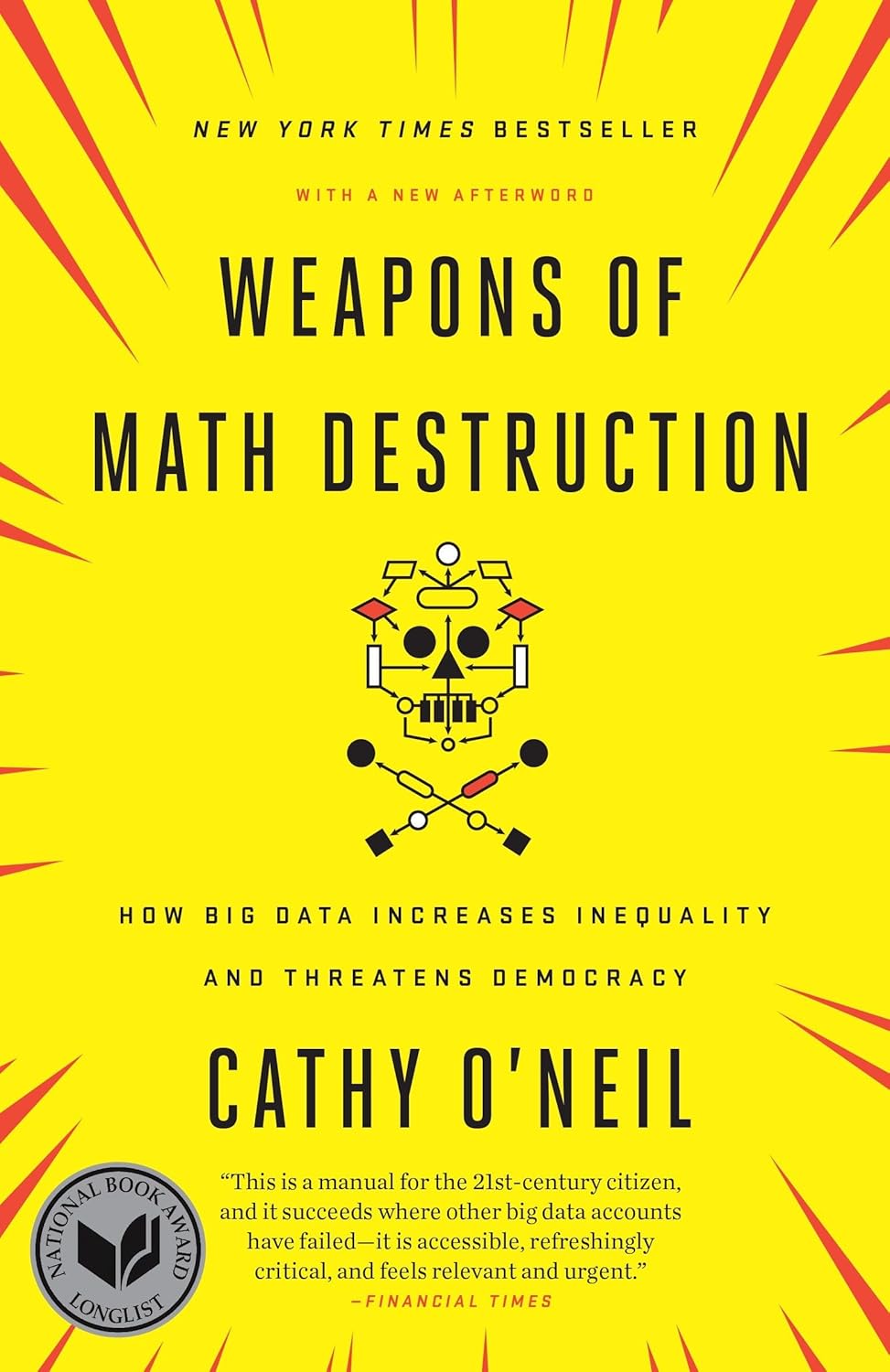
How opaque algorithms decide who gets credit, a job or parole — and why they tend to punish the same people.
As an Amazon Associate, Zendoric earns from qualifying purchases; the price does not change for you. · all our recommended books →
By Zendoric · July 26, 2026.
Three young Spanish professionals —Malen Aguirre, Mencía González-Haba and Luis Bravo, of the company Logixs— have developed Trustbrief, a tool that checks whether a quote, a data point or a regulatory article actually exists in the source it claims to cite, before accepting it as valid for the user. They told the story on COPE's program "Lo que viene", with José Ángel Cuadrado. The project was born after winning first prize at a hackathon organized by the Government of Spain through SEDIA (Secretariat of State for Digitalization and Artificial Intelligence) in Zaragoza, a prize that took the team to present their work at UN headquarters in New York, at a gathering with participants between the ages of 12 and 40 from different countries.
Trustbrief's logic, still in the development phase according to its own creators, is simple to explain and unusual in the sector: instead of optimizing to always answer, it optimizes to stay silent when there is no certainty. The system looks for an internal consensus on whether a quote or a data point truly belongs to a specific report or document and, if the sources do not agree or it cannot find the information, it offers no answer. To achieve this, as Malen Aguirre has explained, the model draws exclusively on three databases: one from UNICEF, one European and another from the UN that will be available in September. It is, in practice, a strict version of what the industry knows as RAG (retrieval-augmented generation): restricting the model's answers to a closed, verifiable set of documents, instead of letting it answer with what it "remembers" from its training.
The problem Trustbrief is trying to solve is no small matter. Luis Bravo was blunt: "AI is very powerful, it is very good, but it gets things wrong a lot". As he pointed out, especially when it comes to regulation, "almost always, in 70% of cases it makes up articles, it makes up citations" when a model is asked about legal or regulatory texts. The figure is an estimate by the project's own creators, not a peer-reviewed academic study, but it points to a well-documented pattern in the sector: generative models tend to "hallucinate" —inventing data with the same confidence with which they give a correct one— precisely in the areas where accuracy matters most, such as law, medicine or journalism.
Malen Aguirre put the focus on another side effect, less technical and more generational: the new generations, used to instant answers, are "losing that part of cross-checking, of verifying, of having their own judgment". It is a concern that connects with something we had already been observing in the debate on AI and education: value does not disappear from the classroom, it shifts toward whoever is able to orchestrate the tool and question what it produces, not toward whoever simply copies its answer. A verifier like Trustbrief does not replace that judgment; at best it trains it, because it forces the source of the answer to be shown instead of hidden behind an artificial authority.
There is one line from Luis Bravo that captures the project's spirit better than any headline: "we command the AI, we govern it, not it us". It is, almost word for word, the principle that is starting to take hold in the highest-risk AI deployments, from the nuclear button to the military fighter jet: the machine proposes, but a human —or, in this case, a set of human-verified sources— keeps the last word. That this logic comes from a hackathon and not from a regulatory committee is itself significant: AI governance does not always have to come down from Brussels or Washington; it can also rise up from a group of young people who decide, without anyone asking them to, to set limits on their own tool.
It is worth keeping a sense of scale. Trustbrief is, as of today, a prototype out of a hackathon, with no public user figures, no independent audit of its accuracy rate and with source coverage still limited to three databases. Adapting it to a sector such as education, as Mencía González-Haba suggests, would in theory require only changing the verification sources, but in practice it means building and maintaining reliable reference libraries for each discipline, work that is far less flashy than training a model and considerably more expensive to sustain over time.
Even with that caution, the case points to something we find relevant beyond this particular piece. If AI-generated disinformation is, as its own creators acknowledge, a real short-term problem —it erodes trust in information and, as they themselves warn, the judgment of those who consume it—, the most promising response is not to slow the development of the technology, but to build on top of it a verification layer as rigorous as the AI itself is powerful. That is, ultimately, the pattern underpinning our long-term thesis: the same systems that today amplify falsehoods are also the most effective tool for fighting them, provided someone —in this case, three young people who started at a hackathon in Zaragoza— bothers to rein them in.
📚 Go deeper
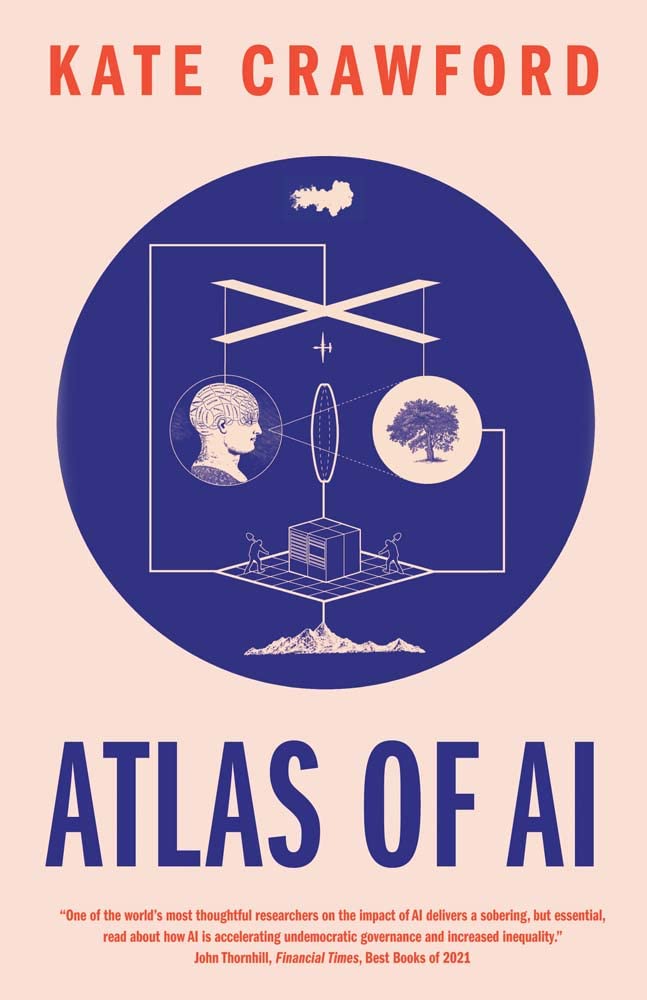
AI as an extractive industry: the lithium, the energy, the underpaid data-labeling work and the bodies behind the cloud.
The best starting book if you're not technical: a Wharton professor explains how to work WITH AI — when to delegate, when to supervise, when to keep i
As an Amazon Associate, Zendoric earns from qualifying purchases; the price does not change for you. · all our recommended books →
🔗 Related on Zendoric
- University students build an AI that teaches instead of answering: the nuance that matters in the classroom · 2026-09-08
- IPN students build AI to anticipate wildfires: citizen monitoring as a green shield · 2026-06-29
- Brain: a WebAssembly agent runtime betting on isolation as the answer to agentic AI's security failures · 2026-09-03