Cancer survivors in Washington launch an AI platform for oncology patients: the story, with few verifiable details

🕒 Published on Zendoric: July 26, 2026 · 00:23
✨ AI-generated · how it's made
A group of cancer survivors with roots in Washington state and technology backgrounds has developed an AI platform designed to help other cancer patients, according to KIRO 7. The original article is not accessible from outside the U.S. and details on the technology and its scope are, for now, scarce.
📚 Go deeper

The best starting book if you're not technical: a Wharton professor explains how to work WITH AI — when to delegate, when to supervise, when to keep i
As an Amazon Associate, Zendoric earns from qualifying purchases; the price does not change for you. · all our recommended books →
By Zendoric · July 25, 2026. The original source of this story, KIRO 7 News Seattle, blocks access from outside the United States, so we are working solely with what the feed's own headline offers: a group of cancer survivors, with roots in Washington and experience in technology, has built an artificial intelligence platform aimed at helping other cancer patients. The available material contains no names of the founders, no product name, no specific functionality (diagnosis guidance? emotional support? navigating the healthcare system? treatment tracking?), no user numbers, no funding and no hospital or institution it might be linked to.
We prefer to be honest about this limitation rather than invent details that are not confirmed. What we can say solidly is the pattern it represents: people who have been through the disease and decide to apply their technical experience to solve a problem they lived through first-hand. It is an increasingly common founder profile at the intersection of health and AI, with a motivation different from that of purely commercial startups.
Broadly speaking, AI applied to oncology has been growing in several directions: clinical decision support tools for oncologists, conversational assistants that help patients understand complex diagnoses and medical reports, symptom triage systems, and platforms that ease coordination between specialists, insurers and patients during long, fragmented treatments. Most of these initiatives do not replace the oncologist, but rather reduce the administrative and comprehension friction that patients face in an often bewildering healthcare system.
This particular piece fits the underlying thesis we defend at Zendoric: AI applied to health has the potential to bring us, over the long term, closer to oncology care that is earlier, more personalized and less distressing for the patient, on the path toward substantially reducing the burden of cancer as a disease. But that horizon is built with concrete, audited products with measurable results, not just with good intentions. Without access to the full article, we cannot assess whether this platform offers something verifiably new or whether it is, as often happens, a personal triumph story wrapped in the fashionable AI label. We will follow the topic if more verifiable information emerges.
📚 Go deeper

The reference manual for building products on top of AI models: prompts, RAG, fine-tuning, agents, evaluation and deployment.
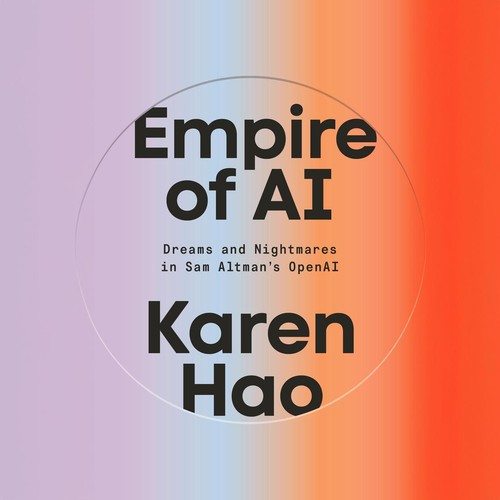
The definitive piece of investigative journalism on OpenAI: 260+ interviews, the clash between safety and speed, and the attempted firing of Sam Altma
As an Amazon Associate, Zendoric earns from qualifying purchases; the price does not change for you. · all our recommended books →
🔗 Related on Zendoric