How local AI ecosystems are rewriting the global assistant race

🕒 Published on Zendoric: July 26, 2026 · 00:23
✨ AI-generated · how it's made
The newsletter resumes its "Global AI Affairs" series in the wake of Sensor Tower's State of AI 2026 report, with the central argument that global AI assistant rankings show clearly which product has the biggest audience, but very little about which ones can turn a query into a booking, a purchase,…
📚 Go deeper
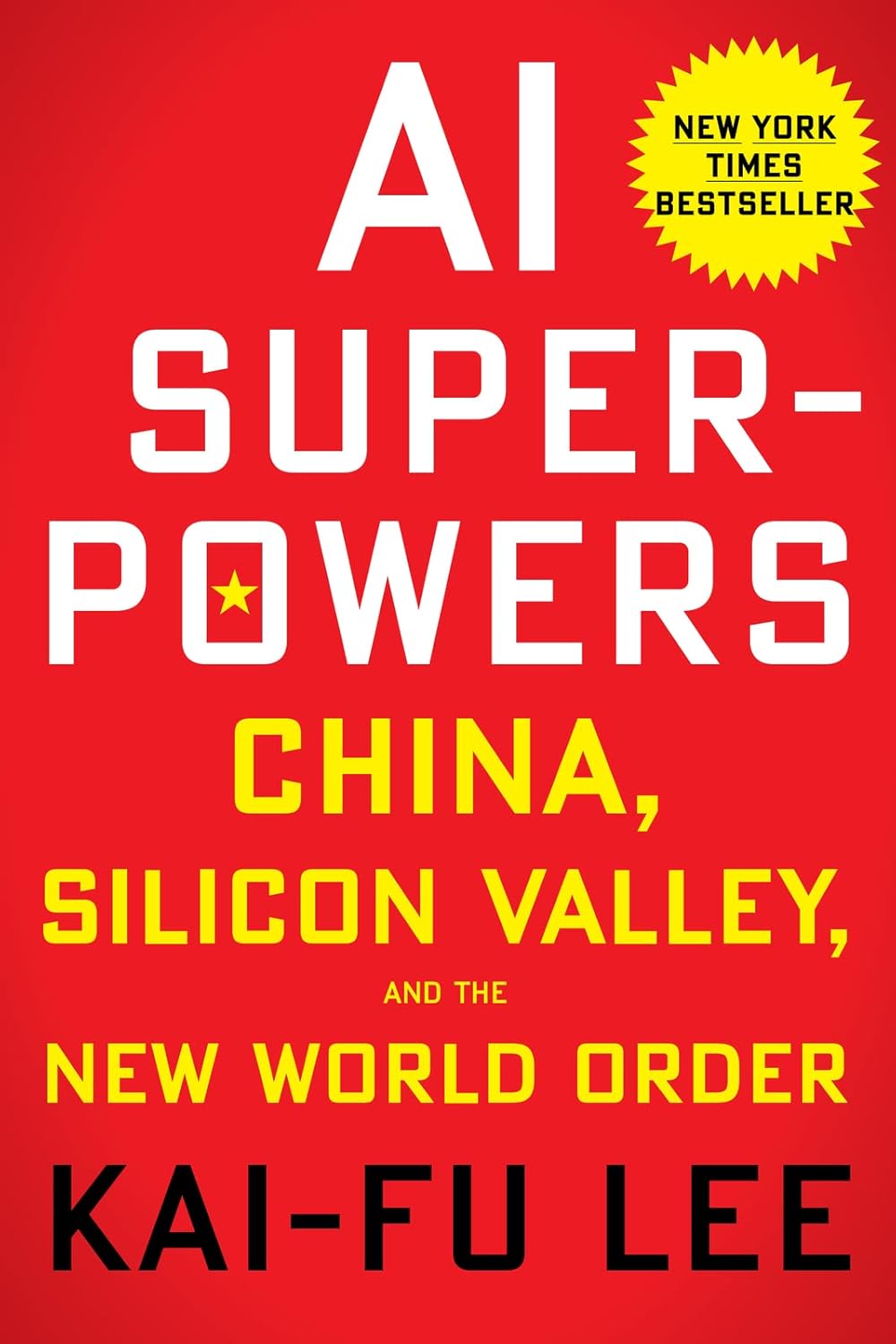
China vs.
As an Amazon Associate, Zendoric earns from qualifying purchases; the price does not change for you. · all our recommended books →
By Turing Post · July 25, 2026.
The newsletter picks up its "Global AI Affairs" series in the wake of Sensor Tower's State of AI 2026 report, with the central argument that global AI assistant rankings show clearly which product has the largest audience, but very little about which ones are capable of turning a query into a booking, a purchase, a route or a payment. To illustrate the point, the article examines the cases of Naver (South Korea), Yandex Alice AI (Russia) and China's major platforms (Alibaba, ByteDance, Baidu, Tencent), set against the case of India, which shows that mass AI adoption does not necessarily imply the existence of a dominant local ecosystem.
According to the Sensor Tower data cited, in May ChatGPT accounted for 46% of the audience across the 25 markets analyzed, followed by Gemini with 28% and Claude with 10%. In the first quarter of 2026, these three assistant apps captured 89% of all time spent in the category. The report also notes that this concentration is starting to loosen: users switch between assistants depending on the task (coding, research, image generation, shopping or everyday questions). Gemini's growth rests on Android and its integration into the rest of Google's products, while Claude has grown especially in coding, research and professional workflows.
The piece argues that these are already ecosystem effects: users do not choose an assistant by comparing the underlying models alone, but through devices, search engines, work tools, existing accounts and services they already use. Global rankings work best when the competitors are standalone products distributed through the same app stores and websites, but the comparison gets complicated when the assistant is embedded within a broader domestic platform. Naver's assistant is connected to Korean search, maps, shopping, places and bookings; Alice AI operates inside Yandex's ecosystem of search, transport, delivery, commerce, media and devices; in China, the assistants from Alibaba, ByteDance, Baidu and Tencent are connected to ecosystems spanning commerce, payments, social networks, content and logistics. India, by contrast, shows a different pattern: its AI capabilities are spread across startups such as Sarvam and Krutrim, public infrastructure, telecom operators, payment networks, global platforms and regional-language services, without concentrating in a single dominant local ecosystem.
On that basis, the article proposes distinguishing three layers of competition that tend to get conflated in public debate: the model layer (the capability of the underlying system, measured with benchmarks, cost, latency, context length), the assistant layer (actual product usage, measured in users, sessions, retention, time spent, revenue) and the ecosystem layer (what the assistant can actually access and complete: search coverage, local data, tools, merchants, payments, bookings, delivery, identity). A powerful model does not automatically guarantee the most useful assistant, especially when a task depends on local inventory, maps, payments or an existing account. Global rankings are most reliable at the assistant layer; Sensor Tower's own report acknowledges, for instance, that its China figures cover iOS and Google Play but exclude third-party Android stores, so they capture only part of the domestic market.
The email introduces the concept of "transactional AI": an assistant capable of connecting information with execution. A conventional assistant can recommend a restaurant; a transactional one can identify an available table, show the location, make the booking and add the route. It can compare products and move to payment, find a service provider and schedule an appointment, plan a trip and book the transport, or locate an item, confirm stock, apply a discount and arrange delivery. The model supplies the language, the reasoning and the planning; the ecosystem supplies the rest: merchants, inventory, maps, identity, payment systems, customer history and permissions to carry out actions.
As evidence of this direction among global platforms, the piece cites Sensor Tower data: Amazon sessions using its shopping assistant Rufus maintained conversion rates above 40% in the first quarter of 2026, compared with roughly 20% in sessions without Rufus. Walmart, for its part, has said that users of its Sparky assistant have an average order value roughly 35% higher than other shoppers. The text itself qualifies that these figures do not prove causation — people with higher purchase intent might simply use shopping assistants more — but they do explain why platforms are wiring AI directly into commercial activity, turning the assistant into one more interface onto the underlying platform.
The email then dwells in more detail on South Korea as the clearest example of this dynamic: according to InternetTrend, Naver held a 63.8% share of Korean web search in March 2026, against 28.7% for Google (the text itself warns that these estimates vary by measurement service and should not be taken as a universal figure). The argument is that this position is sustained by years of accumulated Korean-language blogs, community posts, shopping reviews, place information, maps, bookings, payments and merchant relationships: local data that, according to the article, global models cannot easily reproduce.
📚 Go deeper

The reference manual for building products on top of AI models: prompts, RAG, fine-tuning, agents, evaluation and deployment.

Semiconductors as the oil of the 21st century: history, espionage, and why an island of 23 million people underpins the entire AI economy.
As an Amazon Associate, Zendoric earns from qualifying purchases; the price does not change for you. · all our recommended books →
🔗 Related on Zendoric
- When a decree shuts off an API: the Legion case exposes the fragility of building on a single AI provider · 2026-06-24
- An AI financial assistant born in Tandil exposes the real path of adoption: local niches, not global giants · 2026-07-05
- Ohio requires its school districts to have an AI policy, but the video doesn't reveal the substance of the debate · 2026-07-08