The U.S. legislates AI literacy in the classroom while cutting the office meant to enforce it

🕒 Published on Zendoric: July 26, 2026 · 00:23
✨ AI-generated · how it's made
The U.S. House Education Committee approved ten bills, among them an AI literacy measure for K-12 education. But, according to the committee's own Democrats, much of what it allows was already legal, while the Administration is eliminating the office meant to carry it out.
📚 Go deeper
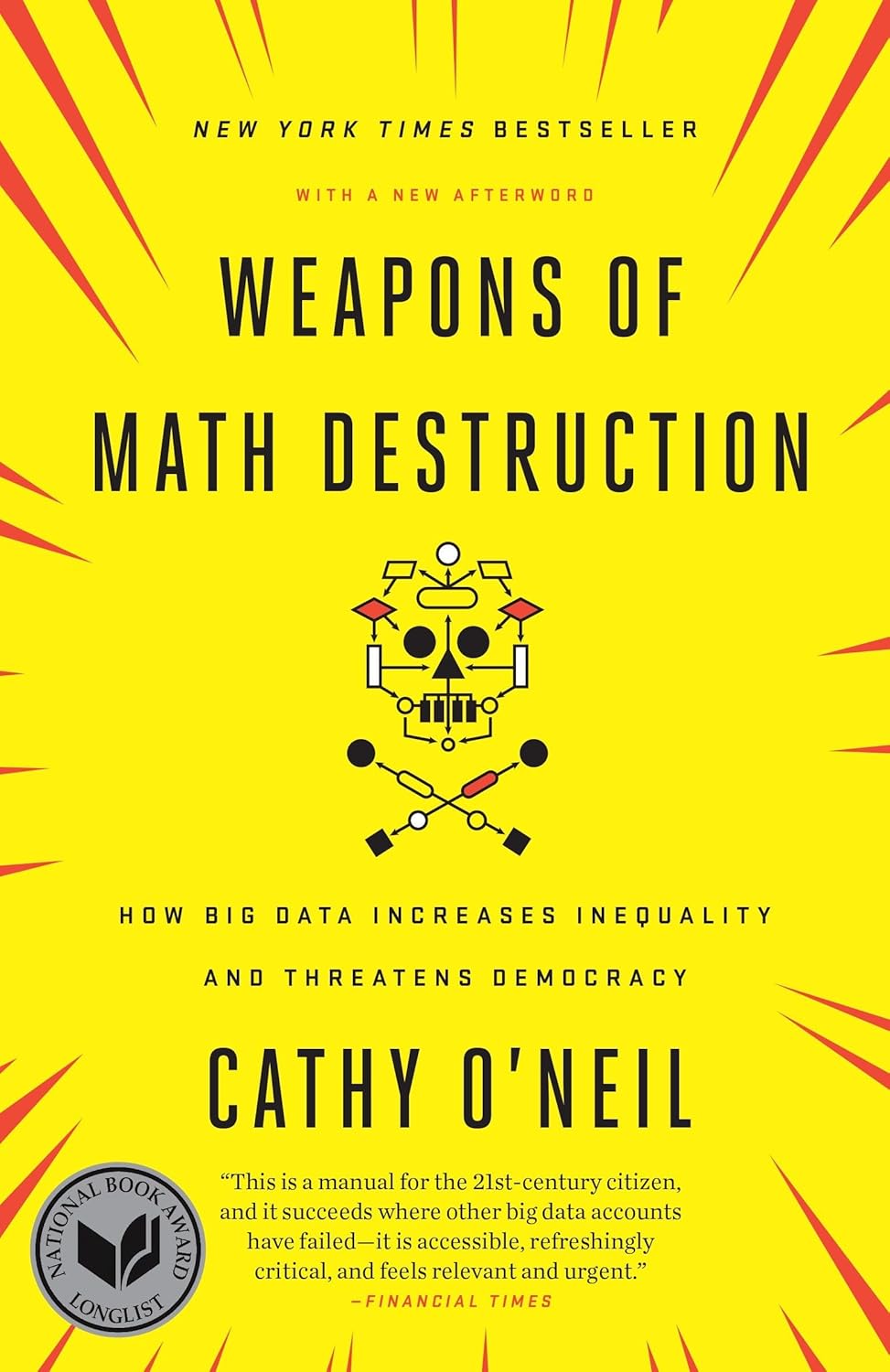
How opaque algorithms decide who gets credit, a job or parole — and why they tend to punish the same people.
As an Amazon Associate, Zendoric earns from qualifying purchases; the price does not change for you. · all our recommended books →
By Zendoric · July 26, 2026.
The US House Committee on Education and the Workforce approved on July 21, in a markup session (the procedure in which a committee reviews and votes on amendments before sending a bill to the floor), a package of ten bills combining education, labor policy and artificial intelligence. The votes split largely along party lines, according to Legis1.
Of the ten bills, one relates directly to AI: H.R. 8747, the K-12 AI Literacy and Readiness Act of 2026 (covering education from preschool through high school). The text makes it easier for schools to use federal funds for artificial intelligence education.
The bill arrives with White House backing. In April 2025, Donald Trump signed the executive order "Advancing Artificial Intelligence Education for American Youth," which created a task force to identify federal funding and expand AI instruction in primary and secondary education. The committee's chairman, Republican Tim Walberg, argued that the ten measures seek, among other goals, to "ensure that students and teachers can use AI safely in the classroom."
Here is the nuance that almost slips by amid the rest of the package: Democrat Bobby Scott, the committee's ranking member, noted during the debate that federal law already allows those Title IV-A funds to be used for AI education. In other words, much of what H.R. 8747 "enables" was already enabled. Democrats went further and questioned how the Administration's rhetoric on AI literacy squares with its own decision to eliminate the Office of Educational Technology, the federal body that coordinated precisely that kind of program. An amendment to H.R. 8747 from Representative Jahana Hayes (Democrat of Connecticut) was rejected by voice vote, with the original article giving no details of its content.
The rest of the package is considerably more combative. It includes the Title IX Clarification Act (H.R. 8781), which would codify that Title IX's ban on sex discrimination — the law governing gender equality in federally funded education — refers to biological sex, and the Parents Opt-in Protection Act (H.R. 4986), which tightens parental consent for school surveys. The latter drew formal opposition from organizations such as the Human Rights Campaign and the National Women's Law Center Action Fund, while the Title IX overhaul was criticized by Representative Mark Takano, chair of the Congressional Equality Caucus, who accused Republicans of spending the committee's time "undermining" that law instead of lowering the cost of living. Only two of the ten bills — one on school physical education and another barring people convicted of sex crimes against minors from leading unions — won unanimous approval, 33 to 0.
All the bills must still clear the House floor and then the Senate — controlled by Democrats, according to Legis1 — where significant opposition is expected to the Title IX and parental consent measures. The committee closed the markup just before the House entered a five-week recess, leaving the timetable up in the air.
Our take is that the AI portion of this package is, above all, a low-cost political gesture. It is easy to vote in favor of "artificial intelligence literacy" precisely because, by the Democrats' own argument, it barely changes what was already legal. The bill's value lies more in the signal it sends than in the new capacity it creates.
And that is where the tension that truly deserves attention lies: real AI literacy is not achieved merely by granting permission to spend money that could already be spent. It requires curriculum, sustained teacher training and a federal infrastructure to coordinate those programs across thousands of districts with wildly unequal resources. That was precisely the role of the Office of Educational Technology, the very body the Administration has decided to eliminate. Passing an "AI readiness" law while dismantling the agency meant to carry it out is not necessarily contradictory — the task may fall to other agencies — but it is a sign that the real priority may lie more in the headline than in the implementation.
This connects with something we have already noted in analyzing AI's impact on education: the long-term value does not lie in AI entering the classroom by decree, but in whether teachers receive the tools and training to orchestrate it as an augmented tutor, rather than enduring it as an imposition without resources. If the United States wants the next generation to arrive prepared for the labor market AI is redrawing, the gap between rich and poor districts in real implementation capacity — not the lack of framework laws — will be the indicator genuinely worth watching over the coming school years.
📚 Go deeper

The best starting book if you're not technical: a Wharton professor explains how to work WITH AI — when to delegate, when to supervise, when to keep i

Algorithms in justice, medicine, cars and art, explained with British humor and mathematical honesty.
As an Amazon Associate, Zendoric earns from qualifying purchases; the price does not change for you. · all our recommended books →
🔗 Related on Zendoric
- First preventive brake on a frontier model: why the GPT-5.6 case marks a before and after · 2026-06-27
- Costa Rica tops 50% AI adoption in manufacturing, but the wave has yet to reach the factory floor · 2026-09-08
- A North Dakota teacher joins Mark Cuban's AI fellowship, amid the legal vacuum in U.S. classrooms · 2026-09-15