Whose work is AI-made art? An essay challenges the assumption that 'it isn't yours'
🕒 Published on Zendoric: July 25, 2026 · 00:23
✨ AI-generated · how it's made
An essay published on the personal blog xlii.space attacks an increasingly common argument: that legal uncertainty over generative AI is enough to deny someone authorship of what they create with it. The text connects to a deeper debate the AI industry has yet to resolve: what counts as human creation when a model is involved.
📚 Go deeper
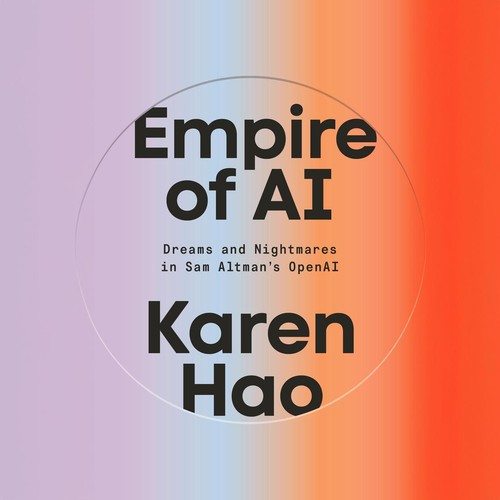
The definitive piece of investigative journalism on OpenAI: 260+ interviews, the clash between safety and speed, and the attempted firing of Sam Altma
As an Amazon Associate, Zendoric earns from qualifying purchases; the price does not change for you. · all our recommended books →
By xlii.space · July 24, 2026.
Przemysław Alexander Kamiński, who writes as "xlii," published on July 24 on his personal blog an essay titled "Falsities of LLM Negationists" that attacks an argument he says is repeated every time someone presents work done with the help of a language model: "we don't know if it's yours," "it might be public domain," "there could be a rights holder somewhere." His thesis is that this framing, presented as prudence, actually functions as a confiscation by default: merely raising a doubt is enough for a person's authorship to be dismissed, without anyone identifying an infringed work or another real author.
The argument rests on two analogies. A photograph of the Eiffel Tower does not cease to be the photographer's property because the tower is in the public domain: the framing, the light and the moment are theirs. And a musician who arranges pieces by Bach or Chopin, all free of copyright, can hold a legitimate copyright over the arrangement even though not a single note is original. Unprotected source material does not mean the final composition lacks an author. Kamiński carries that logic over to generative AI: that a model was trained on protected material, or that part of the output may overlap with the public domain, does not answer the real question, which is what the person who spent weeks shaping the final result decided, selected, corrected and discarded.
Broadly, this debate does not originate in a personal blog: the U.S. Copyright Office and several courts have spent years trying to set the threshold of "sufficient human contribution" in AI-assisted works, and the prevailing criterion so far has been to assess case by case the creative control exercised by the person, not to dismiss authorship merely because a model was involved. What this essay does is precisely name a rhetorical shortcut that already circulates in forums, on social media and —one can expect— in real disputes: treating uncertainty about the copyright of an output as if it were evidence that the human contributed nothing.
Our reading is that this kind of legal friction is exactly the kind of short-term problem that must be named plainly, because it carries a real cost and is already here: as long as there is no stable criterion for what counts as AI-assisted authorship, the ones who lose most are not the big rights holders —publishers, record labels, image banks— but the individual creator who uses these tools to produce something of their own and finds that their contribution is presumed irrelevant before it is even examined. It is the same asymmetry we see on other AI fronts: regulatory and legal uncertainty tends to penalize first the smallest actor, the one least able to litigate, not the largest.
Over the medium and long term, however, we believe the reasonable —and likely— path is the one the essay itself calls for: judging authorship by the real creative control exercised over the result, not by the mere presence of a model in the process. A framework like that is not only fairer; it is the one that allows AI to fulfill its promise of creative abundance, giving more people —not just studios and publishers with lawyers— the ability to produce work of their own and protect it. That this criterion be built on evidence and case by case, and not on generalized suspicion, should be as much a requirement in the courts as it is when discussing risks to safety or employment: real prudence examines the contribution, it does not replace it with a presumption of guilt.
📚 Go deeper
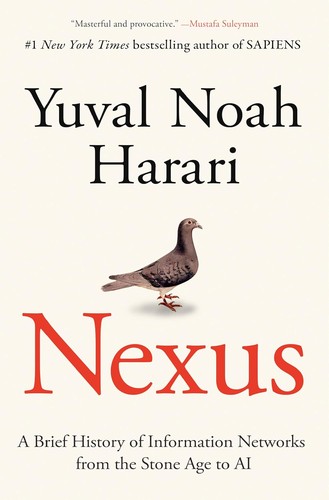
AI as the latest chapter in the history of information networks, from gossip to the printing press to the algorithm.
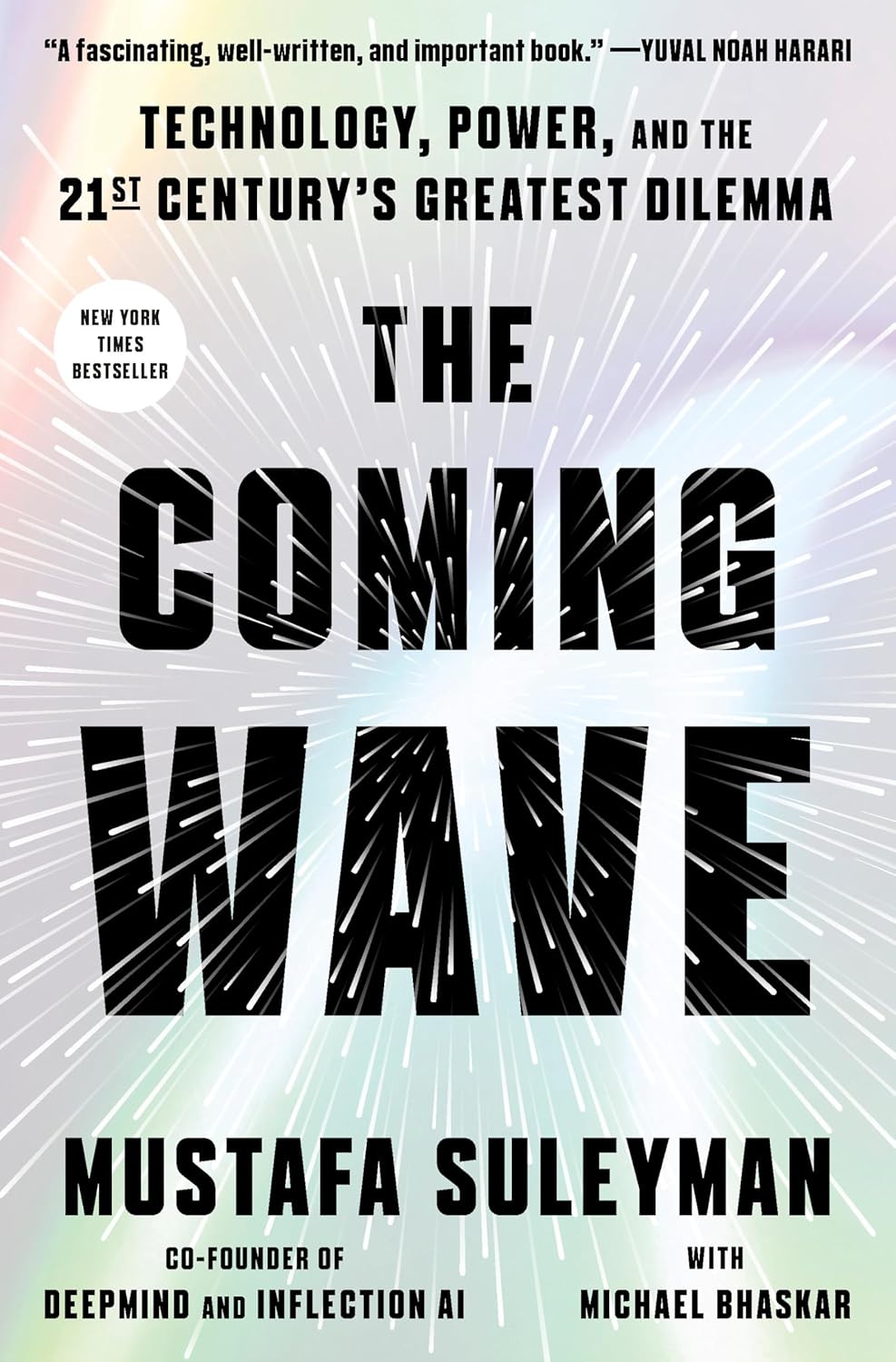
DeepMind co-founder on the dilemma of containing technologies that do not want to be contained.
As an Amazon Associate, Zendoric earns from qualifying purchases; the price does not change for you. · all our recommended books →
🔗 Related on Zendoric
- Who signs the idea? UAM raises the authorship debate the creative industry can't postpone · 2026-07-17
- An Anthropic researcher resigns and warns of a 'reckless' race toward superintelligence · 2026-09-10
- The flop of Tyga's AI-made album reveals generative music's real fight: authorship, not sound · 2026-09-14