The U.S. accuses Moonshot of 'distilling' Anthropic's model to create Kimi K3, but the timeline doesn't add up

🕒 Published on Zendoric: July 23, 2026 · 00:24
✨ AI-generated · how it's made
The U.S. Treasury threatens sanctions on Moonshot after accusing it of stealing Anthropic's intellectual property to train Kimi K3. The problem: Fable, the model allegedly copied, has only been available to the public for three weeks.
📚 Go deeper

Semiconductors as the oil of the 21st century: history, espionage, and why an island of 23 million people underpins the entire AI economy.
As an Amazon Associate, Zendoric earns from qualifying purchases; the price does not change for you. · all our recommended books →
By Zendoric · July 22, 2026.
U.S. Treasury Secretary Scott Bessent warned on Wednesday that Washington could impose sanctions and designations on the Entity List—the blacklist that blocks a company's access to U.S. technology and markets—against Chinese AI companies. The reason: hours earlier, Michael Kratsios, the White House's science and technology policy chief, accused the Chinese startup Moonshot of having "distilled" Anthropic's Fable model on an industrial scale to build its new Kimi K3.
Distillation is a common training technique: a small model learns to imitate the responses of a larger one and thus inherits part of its capability at lower cost. It is a legitimate and widespread practice across the industry, but it becomes an infringement when done without authorization against a competitor's closed model, extracting its intellectual property through the back door. Bessent summed it up on X: "open source is not open season on American intellectual property," and warned that "covert, industrial-scale distillation attacks" that cross that line will have a response.
Kratsios went further and added a second accusation, this one tied to hardware: according to him, Moonshot allegedly acquired Nvidia GB300 servers—the most advanced tier of the Blackwell generation, whose sale to Chinese companies is prohibited by U.S. export controls—and gained access to GB300 units in Thailand, probably to train its models. If confirmed, it would open a different front: no longer about intellectual property, but about direct violation of semiconductor export control rules.
The detail that weakens the central accusation is the timeline. Fable, Anthropic's model, has only been publicly available since July 1. Moonshot launched Kimi K3—with open weights, meaning the model is downloadable and modifiable by anyone—last week. Several experts cited in the original coverage doubt that in such a short time a model as sophisticated as K3 could be developed "primarily" by distilling Fable's outputs. The accusation, as framed, does not add up well on timing.
There is also an interest worth noting: among those who advocate restricting or banning the use of Chinese open models in the U.S. is Dean Ball, a former White House AI adviser and now head of Strategic Futures at OpenAI—that is, an executive at a direct competitor of Moonshot in the race for the open model. That is no reason to dismiss the argument, but it is reason to read it in the context of who is making it and who benefits.
Our reading is that this episode reveals more about the anxiety of U.S. labs than about a case of industrial espionage that has already been proven. Kimi K3, like Kimi K2, DeepSeek or GLM before it, has once again demonstrated frontier capabilities with open weights and at a fraction of the training cost that Anthropic, OpenAI or Google handle. That directly challenges the underlying argument sustaining the capital arms race in Silicon Valley: if a Chinese open model matches or comes close to the frontier while spending far less, why would it be necessary to keep investing tens of billions in training the next closed model? Accusing someone of intellectual property theft is also, to be honest, a way of explaining that leap without admitting that the technological advantage is narrowing on the rival's own merit.
This fits with something we had already been observing: chip export controls have spent two years trying to hold China back and, in practice, have pushed it to innovate in efficiency and to seek alternative routes to hardware access—hence the complaint about the GB300s in Thailand. The response is now hardening toward direct sanctions against specific companies, a more aggressive instrument than generic export control, and probably a foretaste of more friction of this kind as Chinese open models keep closely tracking—or occasionally surpassing—Western closed ones.
It is worth carefully separating two planes, and for now neither is settled: the accusation of intellectual property infringement, which as we have seen has a serious calendar problem and which Moonshot has neither confirmed nor denied according to TechCrunch; and the accusation of violating hardware export controls, which is more verifiable but which also does not yet have public evidence. Treating either as a proven fact would be a reporting error. What is a consolidated fact, and that is the real backdrop of the story, is that the open frontier—with or without distillation involved—is advancing faster than Washington and its flagship labs would like to admit, and that the political response to that pressure is migrating from chip controls to direct sanctions against companies. That front, more than the specific chapter of Moonshot and Fable, is the one that deserves close attention in the coming months.
📚 Go deeper

The story of NVIDIA and Jensen Huang: how a video-game card company ended up making the most coveted resource on the planet.
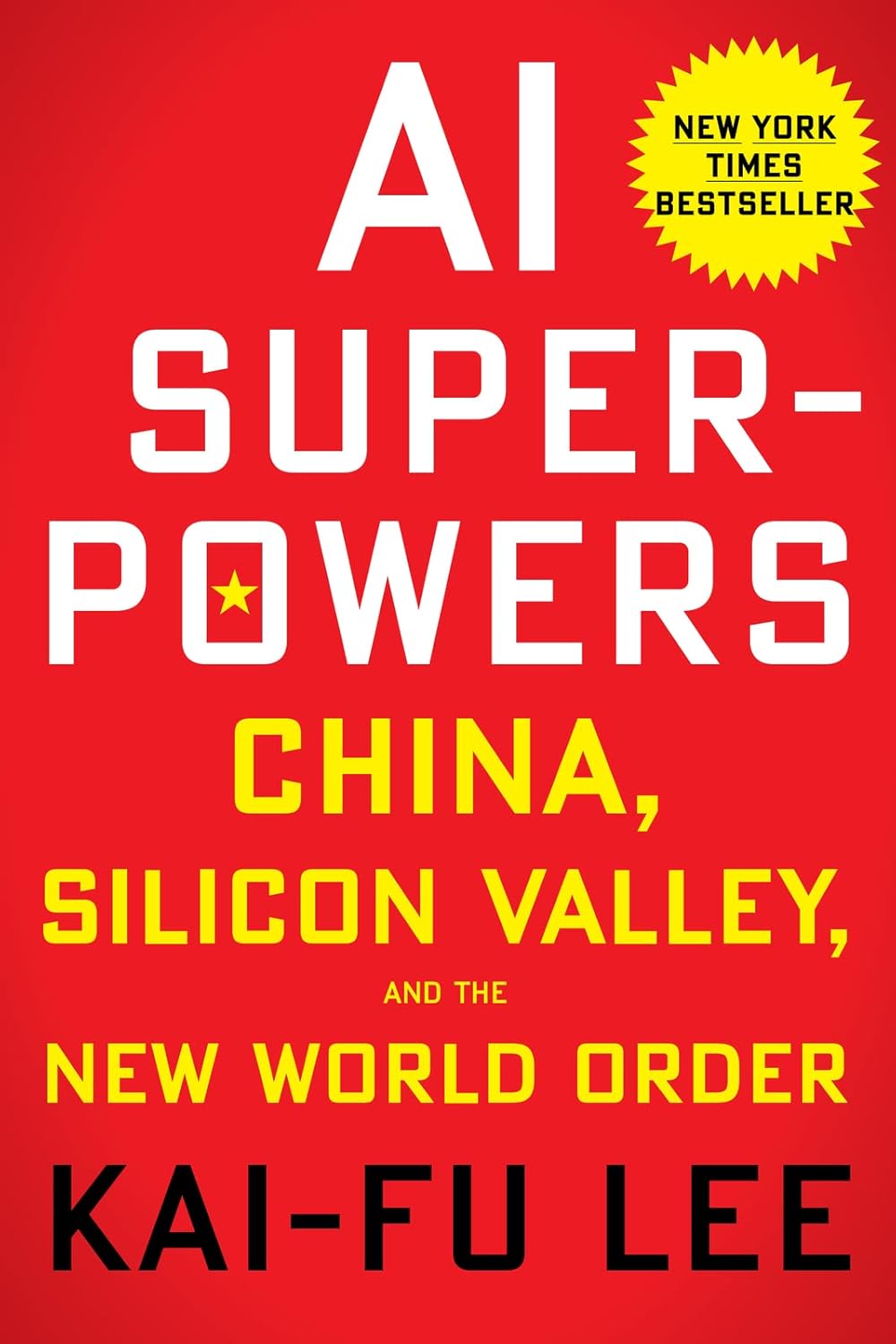
China vs.
As an Amazon Associate, Zendoric earns from qualifying purchases; the price does not change for you. · all our recommended books →
🔗 Related on Zendoric
- U.S. Treasury threatens sanctions against China's Moonshot over alleged distillation of Anthropic's Fable model · 2026-07-24
- Anthropic accuses Moonshot of distilling its models to train Kimi K3 · 2026-07-19
- Claude Fable 5: when 'safer' translates into 'less useful' and the market makes Anthropic pay for it · 2026-07-03