The 'AI 2040' report promises 50% GDP growth in one year: the figure that sinks its credibility
🕒 Published on Zendoric: July 23, 2026 · 00:24
✨ AI-generated · how it's made
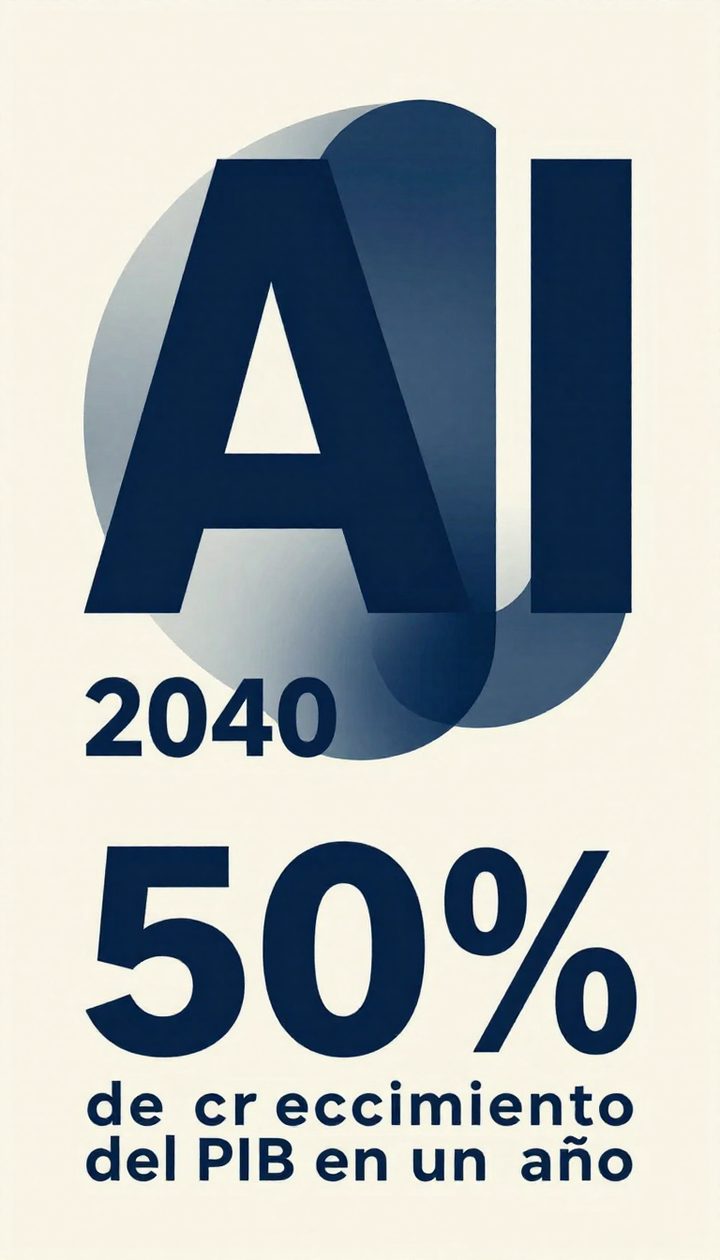
The successor to 'AI 2027' proposes curbing superintelligence until 2040 through a U.S.-China pact, but it calculates 50% GDP growth in 2032 and 100% annually through 2037. An AEI analyst dismantles those numbers and casts doubt on the entire scenario behind them.
📚 Go deeper
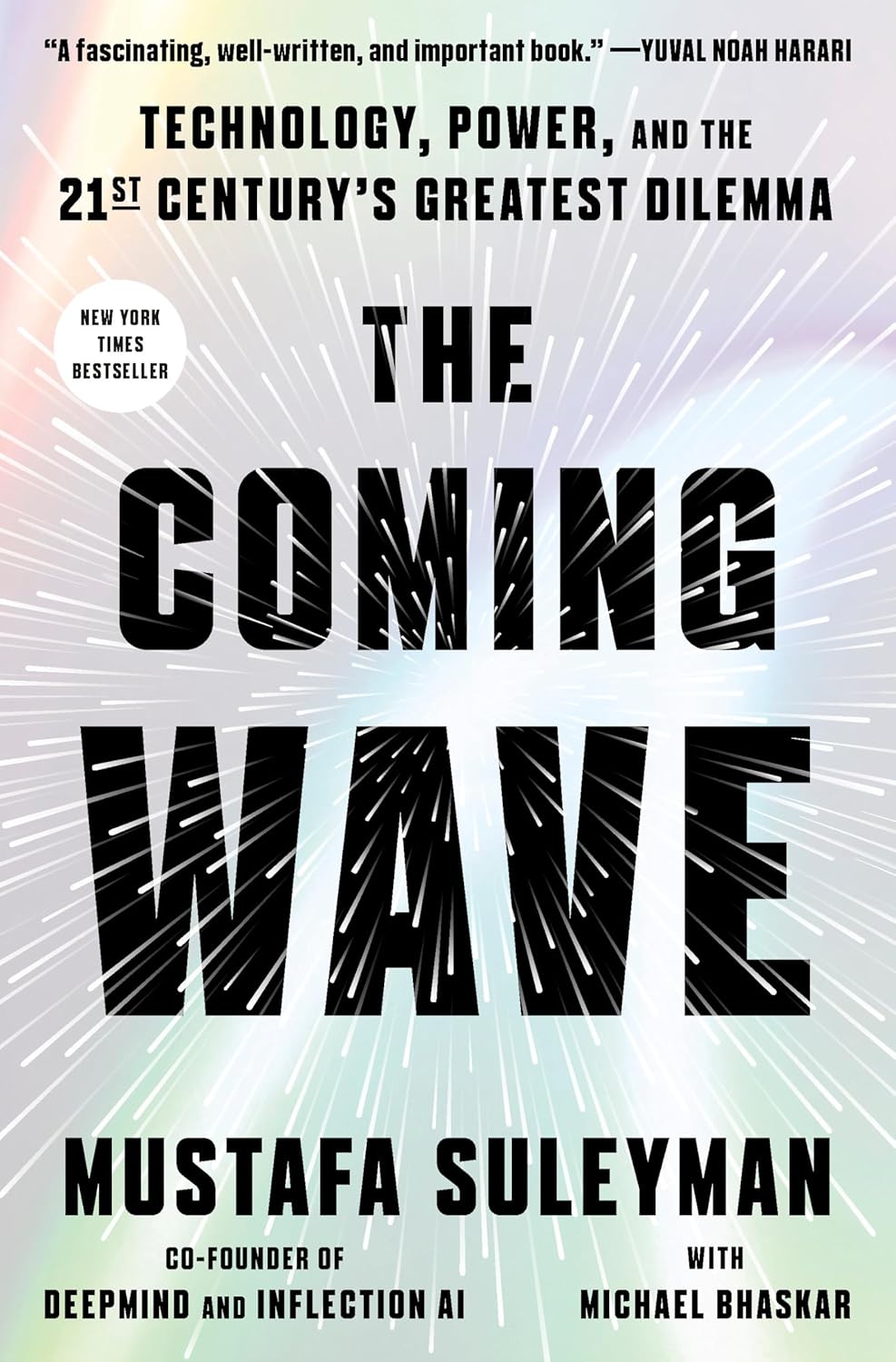
DeepMind co-founder on the dilemma of containing technologies that do not want to be contained.
As an Amazon Associate, Zendoric earns from qualifying purchases; the price does not change for you. · all our recommended books →
By AEI · July 22, 2026.
The AI Futures Project, the group led by former OpenAI researcher Daniel Kokotajlo that in 2025 published the influential scenario 'AI 2027,' has released its sequel: 'AI 2040.' If the first report laid out two endings for the race toward artificial superintelligence (ASI)—a bioweapon that "kills all of humanity" or a corporate-government committee that controls ASI and opens "an astonishing new era"—the new document proposes how to avoid both outcomes.
Its preferred recipe, dubbed "Plan A," consists of an international agreement between the United States and China that replaces the current opaque race with coordinated, verifiable development: public research, the entry of dozens of companies to the technological frontier, and what the report itself calls "a regime of mutually assured destruction of compute," that is, a deliberate pause. The report weighs two other routes—Plan D, a race with minimal regulation, and Plan S, a total halt to development—but makes clear that Plan A is its bet.
Analyst James Pethokoukis, of the American Enterprise Institute (AEI), does not question the technical mechanism—in fact he admits he does not feel qualified to assess whether superintelligence will arrive soon. His objection is economic, and it cuts to the bone of the figures 'AI 2040' uses to justify the need for Plan A. According to the report itself, in the Plan A scenario the year 2032 would bring "controlled explosive growth": real GDP would grow by around 50% that year, with tens of millions of AI agents performing more cognitive work than the entire U.S. workforce combined. Between 2032 and 2037, average growth would be around 100% per year. And in the unrestricted scenario—the one Plan A seeks to avoid—the report itself acknowledges, with declared uncertainty, an economic doubling time of one month by around 2033, that is, more than 1,000-fold growth in a single year. The labor force participation rate, meanwhile, would fall to just 12% by the end of the decade.
Pethokoukis contrasts those figures with the benchmark work in this area: a 2021 Open Philanthropy report by researcher Tom Davidson, which modeled a scenario of 30% global growth, already considered extreme by Northwestern economist Benjamin Jones, one of its reviewers. If 30% annual growth generated serious objections—doubling living standards every two years, replacing factories, energy grids and supply chains without pause, and still avoiding a massive social backlash—then 50% or 100% multiplies them. As a sign that not even today's automation, far more modest, generates social consensus, Pethokoukis cites a recent Rhode Island law requiring supermarkets to keep one human cashier for every three self-checkout lanes.
The political backdrop is no small matter: 'AI 2027' itself had already made inroads in Washington. Vice President JD Vance acknowledged on a podcast that the topic "worries" him because he "read the article," and The Washington Post recently described both of 'AI 2027's' outcomes as "apocalypse" scenarios. These worldbuilding exercises are not academic papers of limited circulation: they feed directly into the debate over how to regulate AI at the highest level of the executive branch.
This is where it is worth separating two discussions that 'AI 2040' blends together. One is whether superintelligence is a real possibility and whether it is worth designing governance mechanisms to manage the risk of an uncontrolled U.S.-China race; that question, in our view, remains legitimate and deserves an answer based on evidence, not on panic or blind faith. The other is whether the economic machinery the report uses to paint the world Plan A would govern is plausible; and there the answer, with the data on the table, is no. A GDP that doubles every two years, factories and energy grids replaced without friction, and a labor participation rate that sinks to 12% without political upheaval, is not a projection: it is science fiction with a spreadsheet.
This connects with something we have been maintaining: generative and agentic AI will indeed radically transform work and the economy, and in the long run the plausible destination is abundance, not scarcity. But the path there does not skip the constraints of the physical world—capital, infrastructure, energy, time for institutional adaptation—no matter how much the software improves overnight. The productivity leaps of the industrial revolution or of the internet were measured in decades, not quarters; there is no reason to assume that robotics and AI agents rewrite that social physics in one stroke, still less that they do so without generating the same social resistance we already see today over something as modest as supermarket self-checkout.
The underlying risk, and this is what worries us most about the episode, is that an excess of implausible arithmetic in the "good" part of the scenario contaminates the serious argument that does deserve attention: that the race toward ever more capable systems needs safety guardrails and verifiable international coordination. If the messenger hands easy ammunition—a growth figure no serious economist would defend—to those who want to dismiss any call for regulatory prudence as alarmism, the whole conversation is lost, not just the paper. The lesson for the sector and for regulators is the same one we repeat with every inflated new benchmark or every tailor-made demo: demonstrated capability must be separated from narrative aspiration, also—and perhaps above all—when the narrative is presented with the apparent rigor of an economic model.
📚 Go deeper

The only novel on the list, by a Nobel laureate: an artificial friend observes humans with a blend of lucidity and innocence no essay achieves.
An MIT computer scientist connects AI, quantum physics and video games to take an uncomfortable question seriously: what if we live in a simulation? M
As an Amazon Associate, Zendoric earns from qualifying purchases; the price does not change for you. · all our recommended books →
🔗 Related on Zendoric
- When the 'surveillance market' is actually ICU monitoring: the AI that really does save lives · 2026-07-06
- Anthropic's $16.8B quarter suggests AI demand is now showing up in revenue, but the company's own numbers need an outside check · 2026-10-15
- Of 'open weights' and unbeatable prices: how Chinese AI is advancing across the Global South while the West debates · 2026-06-26