Uber ties layoffs to AI for the first time — but the memo reveals the real bottleneck isn't the tech

🕒 Published on Zendoric: July 23, 2026 · 00:24
✨ AI-generated · how it's made
Uber cut 10% of its customer-service operations team, citing a push to "embrace AI" — its first layoffs explicitly linked to AI efficiency. Yet the internal memo admits the company can't scale AI on top of fragmented processes, which tells you what's actually driving the cuts.
📚 Go deeper

The best starting book if you're not technical: a Wharton professor explains how to work WITH AI — when to delegate, when to supervise, when to keep i
As an Amazon Associate, Zendoric earns from qualifying purchases; the price does not change for you. · all our recommended books →
The facts first. Uber has cut roughly 10% of jobs in its community operations (customer service) team, according to a Bloomberg report cited by NDTV Profit. An Uber spokesperson framed the move as an effort "to simplify operations, strengthen in-person collaboration, and continue to embrace AI." Remote workers on the team were also told to relocate to a hub office under a return-to-office mandate. It is the second round of cuts in under two months, and — notably — the first time Uber has explicitly linked layoffs to an AI efficiency push.
The context matters. Uber joins Block and Oracle among firms citing AI as a reason for recent cuts, part of a broader wave the article pegs at roughly 100,000 tech jobs gone in five months. In June, Uber trimmed 23% of its "people" division (under 1% of its 34,000 staff) as a new president took over. In May it said it would slow hiring due to internal AI use — yet it still lists more than 500 open roles, including engineers for robotaxi partnerships. So this is not a company shrinking. It is a company reshaping where headcount sits.
The most revealing line isn't the AI slogan — it's the diagnosis underneath it. VP of global community operations Megha Yethatika wrote that the organization "has become too complex and siloed" and that while the team has made strides with AI, "we cannot scale frontier technology on top of fragmented processes." Read that carefully. The bottleneck she names is organizational, not algorithmic. AI is the stated destination; simplification is the actual project.
This fits a pattern we've tracked closely. Companies increasingly reach for "AI" as the headline explanation for cuts that are equally about cost discipline, over-hiring corrections, and RTO-driven attrition. Bundling a relocation mandate into the same announcement is a tell: some of this shrinkage happens through people who won't move, not through software that replaces them. And customer-service operations are precisely the exposed back-office function our sector analysis flags — high-volume, process-heavy, script-driven work where current AI genuinely does displace routine tasks.
Our reading. The short-term pain is real and shouldn't be sugarcoated: support agents are among the most automatable roles, and these jobs are unlikely to return in their old form. But the memo also punctures the tidy "AI took the jobs" narrative. Uber is admitting that AI only pays off once the underlying processes are clean — meaning the near-term value comes from reorganization, with automation layered on afterward. That's a more honest, and more useful, way to understand this moment. The durable lesson for workers isn't that AI erases customer service; it's that the routine tier compresses while the roles that survive move toward judgment, escalation, and orchestrating the tools. The long arc still points toward abundance — but only if the transition is managed with more candor than a one-line spokesperson quote provides.
📚 Go deeper
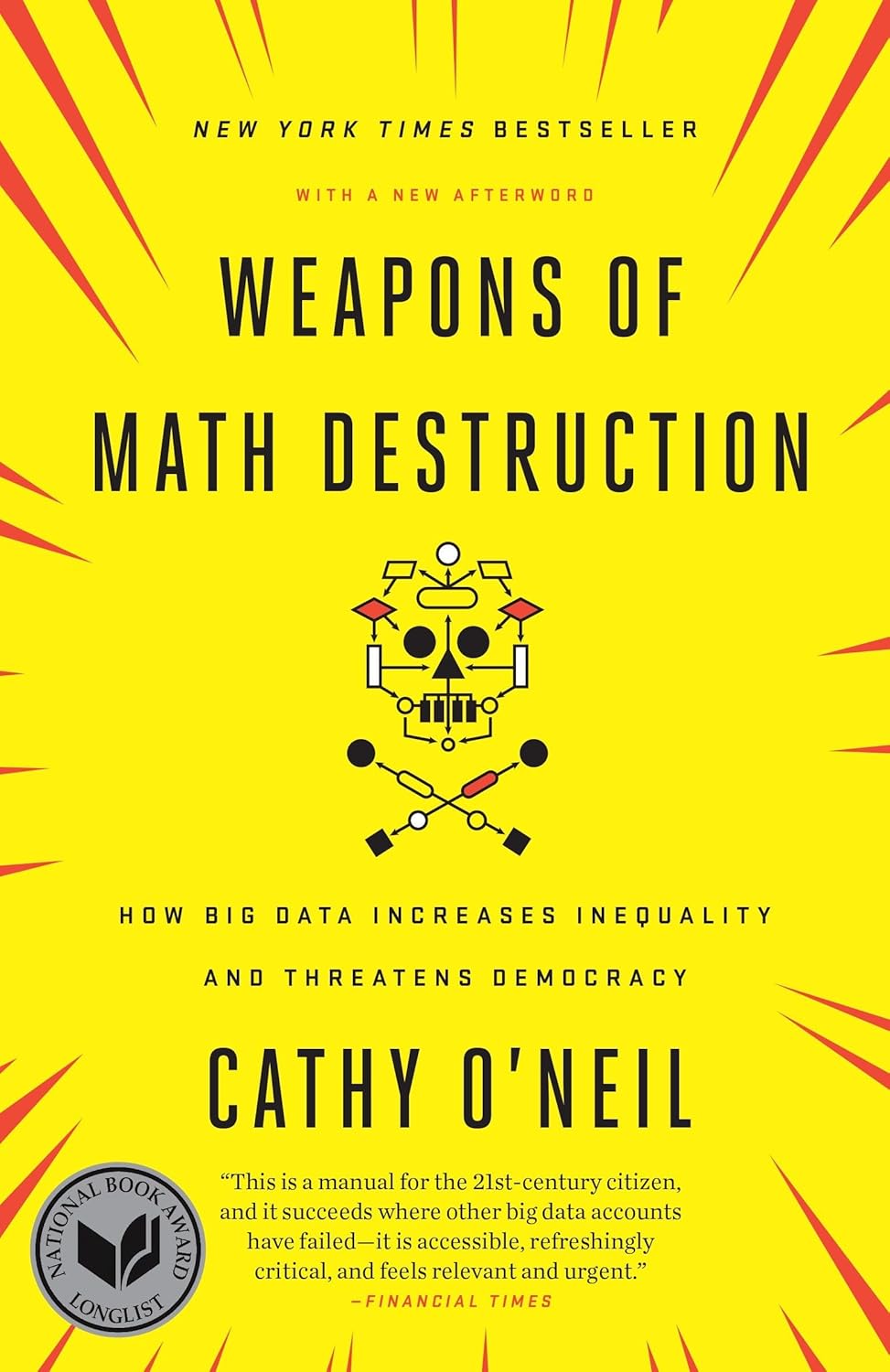
How opaque algorithms decide who gets credit, a job or parole — and why they tend to punish the same people.

The reference manual for building products on top of AI models: prompts, RAG, fine-tuning, agents, evaluation and deployment.
As an Amazon Associate, Zendoric earns from qualifying purchases; the price does not change for you. · all our recommended books →
🔗 Related on Zendoric