Tempus pays 1.5 billion for Personalis: AI cancer diagnostics enters its consolidation phase

🕒 Published on Zendoric: July 23, 2026 · 00:24
✨ AI-generated · how it's made
Tempus AI is acquiring Personalis for about 1.5 billion dollars, according to TheStreet, adding residual disease detection capabilities to the market's largest tumor genomic profiling. The deal foreshadows a race to control oncology data before AI turns it into the most valuable asset in precision medicine.
📚 Go deeper

The best starting book if you're not technical: a Wharton professor explains how to work WITH AI — when to delegate, when to supervise, when to keep i
As an Amazon Associate, Zendoric earns from qualifying purchases; the price does not change for you. · all our recommended books →
By Zendoric · July 22, 2026.
Tempus AI (TEM) has agreed to acquire Personalis (PSNL) for approximately 1.5 billion dollars, as reported by TheStreet. The deal brings together two companies competing in the same field: AI-assisted genomic cancer analysis, with Tempus as a large-scale tumor profiler and Personalis specializing in minimal residual disease (MRD) tests, the technology that detects traces of cancer left after treatment, before it reappears clinically.
The technical detail matters because it explains the price. MRD detection has become one of the most coveted segments of cancer diagnostics: it makes it possible to decide whether a patient needs additional chemotherapy or can avoid it, with the resulting savings in suffering and healthcare spending. Companies such as Natera, Guardant Health and Exact Sciences have been vying for that market for years with liquid biopsy tests, and Tempus's entry with financial muscle and its own AI platform changes the competitive board.
Tempus's business model has always been to accumulate clinical and genomic data to train algorithms that help choose personalized treatments. Buying Personalis is not just adding an MRD product: it is adding the volume of longitudinal cancer patient data that this technology generates, the real fuel of any medical AI model aspiring to predict relapses accurately. In a sector where the algorithm is worth only as much as the data feeding it, mergers of this kind are, at bottom, mergers of databases.
Broadly speaking, AI-assisted cancer diagnostics has been in a consolidation phase for two years: the startups that proved their models worked in clinical trials are now seeking scale, and scale is bought. It is a dynamic we have already seen in other verticals of AI applied to health: first, scattered innovation proliferates; then capital concentrates the winners. The obvious risk is that fewer players with more market power could raise the price of tests that currently compete against each other downward, something insurers and public health systems will watch closely.
Our reading is that this deal fits the underlying thesis on AI and medicine: in the short term there will be friction —complex integrations, possible reduction in competition, regulatory doubts about combined tests—, but the long-term direction remains the right one. The more quality genomic data is concentrated on platforms capable of learning from it, the closer we will be to detecting cancer at the residual stage becoming routine rather than a privilege. The consolidation that worries investors in the short term is, ultimately, the mechanism by which precision medicine stops being an expensive niche and starts to look like basic healthcare infrastructure.
📚 Go deeper
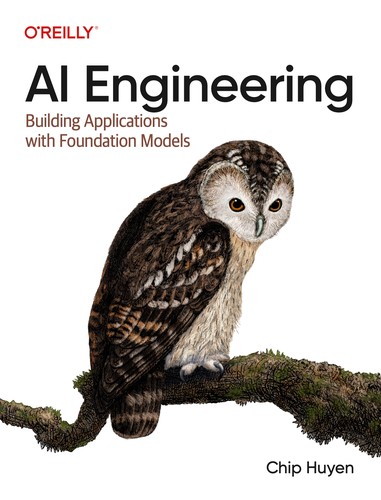
The reference manual for building products on top of AI models: prompts, RAG, fine-tuning, agents, evaluation and deployment.
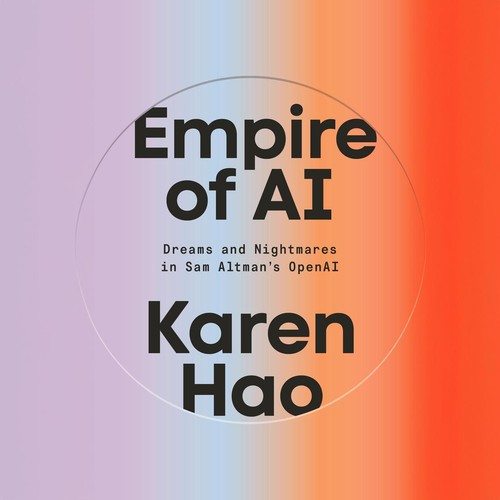
The definitive piece of investigative journalism on OpenAI: 260+ interviews, the clash between safety and speed, and the attempted firing of Sam Altma
As an Amazon Associate, Zendoric earns from qualifying purchases; the price does not change for you. · all our recommended books →
🔗 Related on Zendoric
- Tempus AI pays $1.5 billion for Personalis: it buys the cancer test it already sold exclusively · 2026-07-21
- UCLA Health bets on AI for cancer detection: another sign that precision medicine is no longer just a promise · 2026-06-26
- Tempus brings AI to oncology: models trained on petabytes of clinical data, with the (still unproven) promise of lowering mortality · 2026-09-09