Chris Best (Substack) on 'AI slop,' its detection and what still counts as thinking
🕒 Published on Zendoric: July 23, 2026 · 00:24
✨ AI-generated · how it's made
Nate opens the article with a personal reflection: after watching Christopher Nolan's 'The Odyssey,' he noted how people were still arguing on X about the meaning of the story nearly three thousand years after the poem took shape.
📚 Go deeper
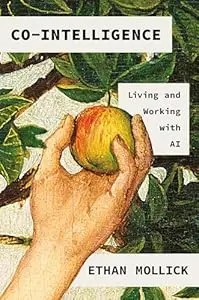
The best starting book if you're not technical: a Wharton professor explains how to work WITH AI — when to delegate, when to supervise, when to keep i
As an Amazon Associate, Zendoric earns from qualifying purchases; the price does not change for you. · all our recommended books →
By Nate from Nate's Substack · July 22, 2026.
Nate opens the article with a personal reflection: after watching Christopher Nolan's 'The Odyssey,' he noticed how people kept arguing on X about the meaning of the story nearly three thousand years after the poem took shape. For him, the fact that stories still refuse to settle into a single meaning, and that each generation finds something different in them, is the mark of writing that endures. He connects this to his own experience: having grown up abroad, even in conflict zones, makes the story of someone returning from war in search of home feel close to him.
From there, Nate argues that the pieces he is proudest of are those that started a conversation he could not have had alone, rather than those that simply 'got it right.' He cites as an example his piece 'Open Brain,' which he published with the intention that people could build their own memory system with AI, and which sparked a bigger conversation than expected about whether that AI-created memory should belong to the person or to the provider that stores it.
The core of the article is his argument that AI can help people 'say what they really mean,' and that beautifying words is the least interesting thing it does. He describes his own workflow: sometimes he starts from a thesis he already has clear, talks about it for ten or fifteen minutes, hands the transcript to a model, and works with it to turn speech into prose without losing the idea, able to detect when the model worsens the thinking because he already knows what he wanted to say. Other times he has several loose threads without a finished thesis, and he asks Codex to dialogue with him—like hitting a ball against a wall—pointing out the uncertainties, so that what the model returns gives him something to push against: an interpretation that seems too easy, two claims that don't fit together, or a part of the argument he had almost ignored and that turns out to be the one that matters most to him.
He cites two references to support the idea that AI can add real value to human thinking, whether in groups or individually: a field experiment with 791 professionals at Procter & Gamble, in which people using AI matched the performance of two-person teams without AI, and where both R&D specialists and commercial staff produced proposals more balanced between the technical and the commercial. He also mentions the 'Habermas Machine' experiments, in which members of small groups first stated their own opinions, then read and critiqued a model-generated synthesis before the model revised it, and participants generally preferred the result over syntheses made by non-professional human mediators. For Nate, what matters is the order: people form their own opinion before the model speaks, and then get another chance to challenge what it produces, although he acknowledges that this order does not guarantee deeper understanding, since a balanced proposal can be bland and a fluent synthesis can make a real disagreement look resolved.
From there he introduces the article's central problem: fluent prose does not let you tell whether there was truly a thought process behind it. Here he brings in the conversation he had with Chris Best, co-founder of Substack, who poses the other extreme of the spectrum: asking Claude for a thousand viral posts, error-free, and publishing whatever comes out. One of them might contain a good idea or even start a valuable conversation, but the publisher would have delegated the first acts of reading and interpretation to others. That is why Chris describes language generated at that scale as a 'denial-of-service attack' against the public square: the reader has to do all the work the publisher skipped, deciding whether there is a real idea, whether it is true, and whether anyone will be there to respond if they reply.
For Nate, 'slop' (mass-generated junk content) begins precisely there: asking for another person's attention without having first confronted the material yourself. He argues that the number of hours invested cannot measure whether someone really 'showed up' to the idea: a good editor can transform a piece with a single question, while a bad argument can survive a month of prompt tweaking. What matters, he says, is whether someone chose the thought and is willing to answer for it once it enters the world.
He mentions Substack's new integration with Pangram, which lets readers check how much of an eligible post or Note appears to be human-written or AI-assisted. He acknowledges its usefulness in comment threads, where it can matter a great deal to know whether you are arguing with a person or with a generated text that the account's own author never even read. But he stresses the tool's limit: Pangram cannot know whether someone truly meant what the text says, because writing is no longer a sign of effort (and it was never a reliable sign of thought). He closes on a personal note: if Pangram were run over his own article, it would flag it as 'AI-assisted,' something that should surprise no one, but he insists that the thoughts, the arguments, and the meaning are his; AI only helps him get them out, usually after fighting with it quite a bit.
📚 Go deeper
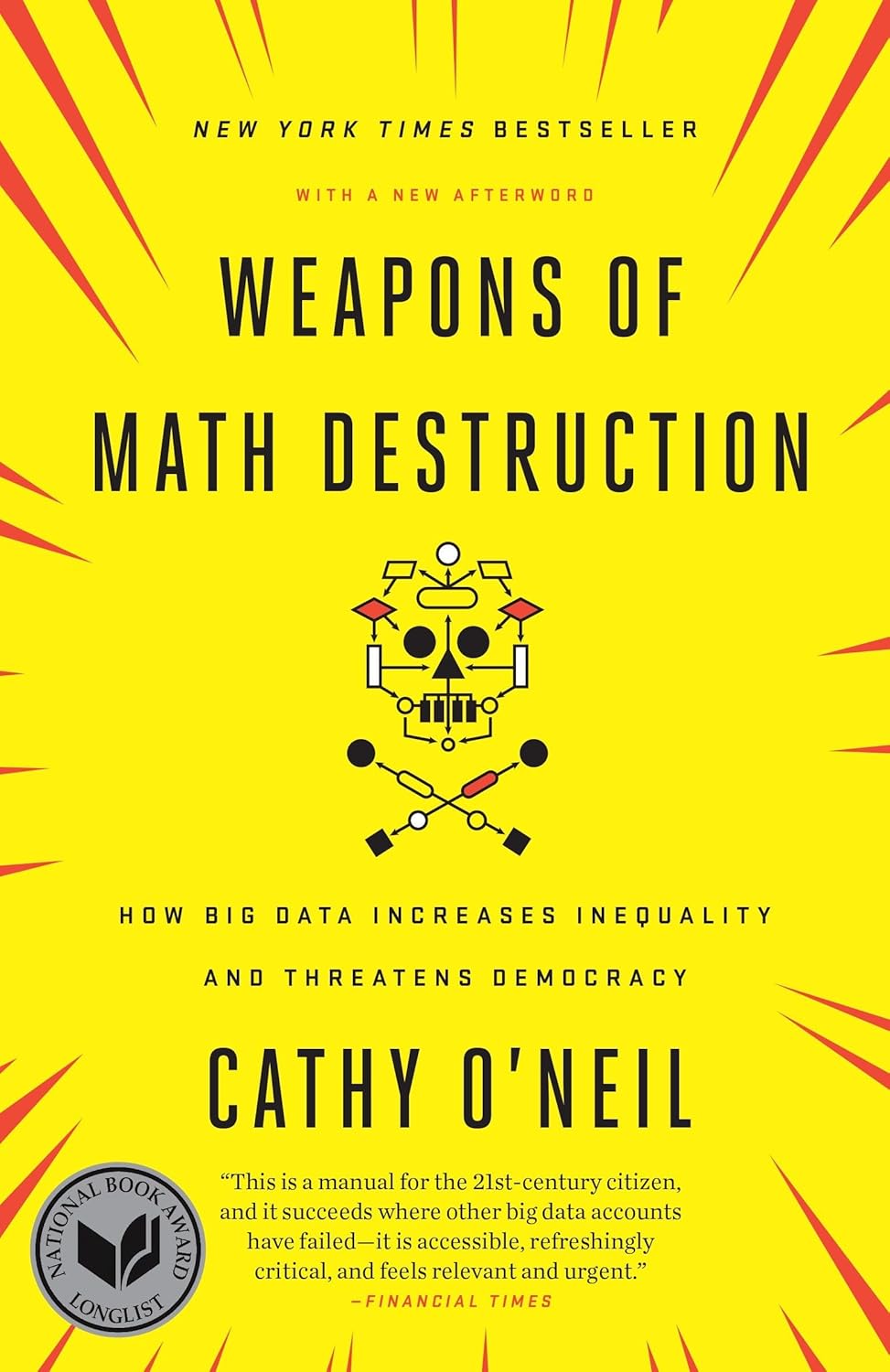
How opaque algorithms decide who gets credit, a job or parole — and why they tend to punish the same people.

AI as the latest chapter in the history of information networks, from gossip to the printing press to the algorithm.
As an Amazon Associate, Zendoric earns from qualifying purchases; the price does not change for you. · all our recommended books →
🔗 Related on Zendoric
- Utah State receives 600,000 dollars from the NSF to find out whether AI is undoing the engineers it trains · 2026-07-23
- Three seconds of audio is enough: AI voice fraud's flaw is that every defense arrives after the money is gone · 2026-07-28
- Three seconds of audio is all it takes: AI voice fraud wins because the safeguards are built to arrive too late · 2026-09-01