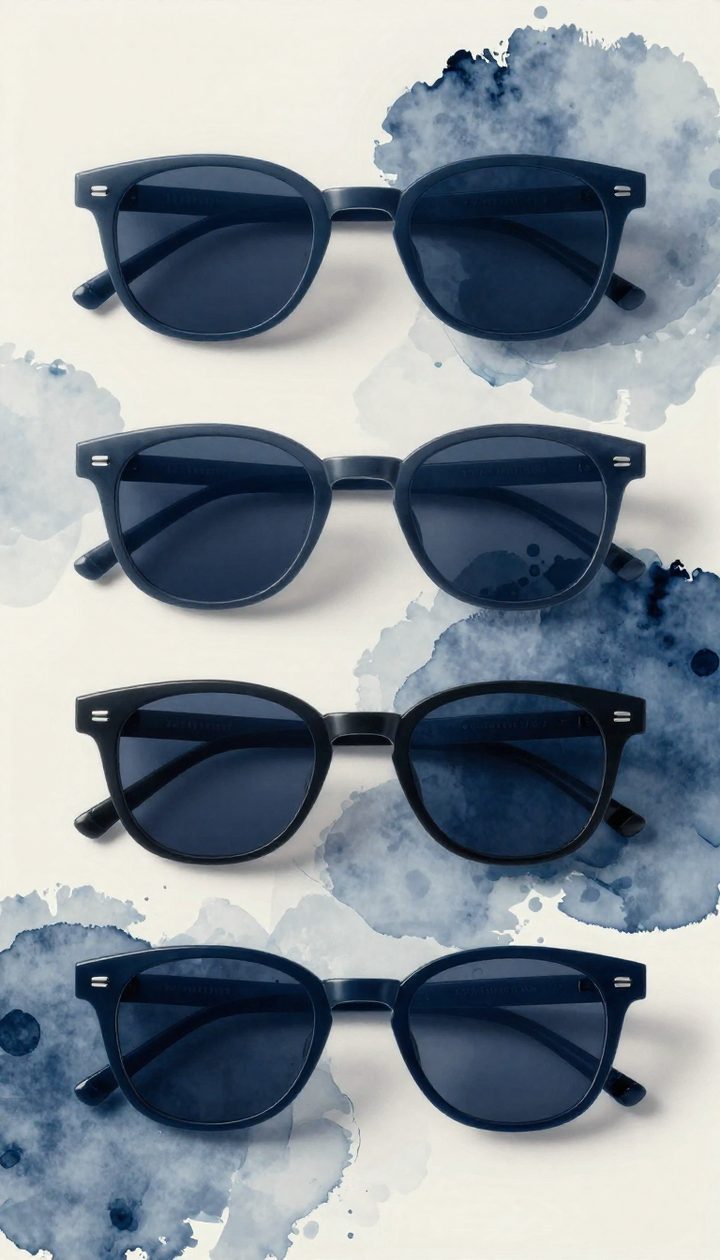
Glasses with four Chinese AIs for cheating on exams: academic fraud is no longer visible to the naked eye
🕒 Published on Zendoric: July 23, 2026 · 00:24
✨ AI-generated · how it's made
A student was caught in Guangzhou cheating with the Leqi glasses, which integrate DeepSeek, Qwen, GLM and Doubao to photograph questions and return the answer instantly. The case, viral on Chinese social media, uncovers a rental market for these devices and a problem that academic monitoring is not ready to solve.
📚 Go deeper

Semiconductors as the oil of the 21st century: history, espionage, and why an island of 23 million people underpins the entire AI economy.
As an Amazon Associate, Zendoric earns from qualifying purchases; the price does not change for you. · all our recommended books →
By Periodismo.com · July 22, 2026.
On July 1, a student surnamed Lin was caught cheating on an exam at South China Agricultural University in Guangzhou. He wasn't using a paper cheat sheet or a hidden phone: he was wearing Leqi glasses, a smart eyewear model that integrates four large language models —DeepSeek, Tongyi Qianwen (Alibaba), Zhipu (GLM) and Doubao (ByteDance)— capable of reading a photographed question and returning the answer in seconds, without having to say a word. Proctoring staff spotted it ten minutes into the test because of a green flash projected onto the lenses each time the device captured an image.
The mechanism was simple: pressing the frame near the temple photographed the exam paper, and the system returned the solution visually on the lens itself. Lin tried to cover the light-emitting diode that gives away each capture, but it wasn't enough. After the discovery, the case went viral on Chinese social media, where other students began sharing low-cost workarounds —opaque stickers to cover the LED— and advertising the rental of this equipment from 200 yuan (about 25 euros), along with manuals to set them up in silent mode and low brightness. According to the article itself, fraud with this type of device is recurring in provinces such as Hubei, Henan and Beijing, pointing to an already widespread phenomenon rather than an isolated case.
What matters here is not that a student tried to cheat —that is as old as exams themselves— but the speed at which frontier AI capability has trickled down to the most everyday consumer hardware. The four models built into the Leqi glasses are not a lab experiment: they are the same systems —DeepSeek, Qwen, GLM— that we follow closely in this space as the spearhead of Chinese open-weight models against the West. Seeing them packaged into glasses rented for 200 yuan is the most tangible proof that the gap between "frontier model" and "everyday object capable of solving a university exam in real time" has almost entirely closed.
This puts educational institutions before a structural problem, not a cosmetic one. The current response —manually screening students with thick-framed glasses, as the article notes— is a stopgap measure competing against an adversary that improves every quarter. Lin Che, a product manager specializing in smart lenses quoted in the piece, sums it up bluntly: before long these glasses will be "almost indistinguishable" from conventional ones. If that happens, the telltale diode that saves proctors today will disappear, and visual detection will cease to be an option. It is the same pattern we already see in other areas of friction with generative AI: controls designed for a single moment (the exam, the identity check, the verification of a document) fail because fraud no longer happens in that instant, but continuously and ever more invisibly.
In the short term, this is a serious problem and it must be said without mincing words: it devalues the worth of a degree obtained under dubious conditions, erodes trust in standardized assessment —the university entrance exam in China, the gaokao and its offshoots, is a social filter with enormous life-changing weight— and forces constant defensive spending on detection that will probably always be one step behind the hardware. Mass assessment systems, designed for an era without pocket AI, need to be rethought: fewer photographable closed-ended questions and more oral, process- or project-based assessment, something already beginning to be discussed at Western universities for the same reason.
But it is worth not stopping at the surface scab of the fraud. The same technology that today makes it possible to cheat on an exam is the one that, properly channeled, can become a personal tutor available to anyone with a 200-yuan device: instant answers to questions, tailored explanations, access to expert knowledge without the cost of a private teacher. This is the underlying paradox of AI applied to education: the very capability that threatens the integrity of the traditional exam is the one that, if institutions stop measuring memorization and start measuring judgment, points toward a more personalized and accessible education for everyone, not just for those who can afford tutoring. The challenge is not to ban the glasses; it is to stop assessing what a language model already solves better than most humans.
📚 Go deeper

The only novel on the list, by a Nobel laureate: an artificial friend observes humans with a blend of lucidity and innocence no essay achieves.
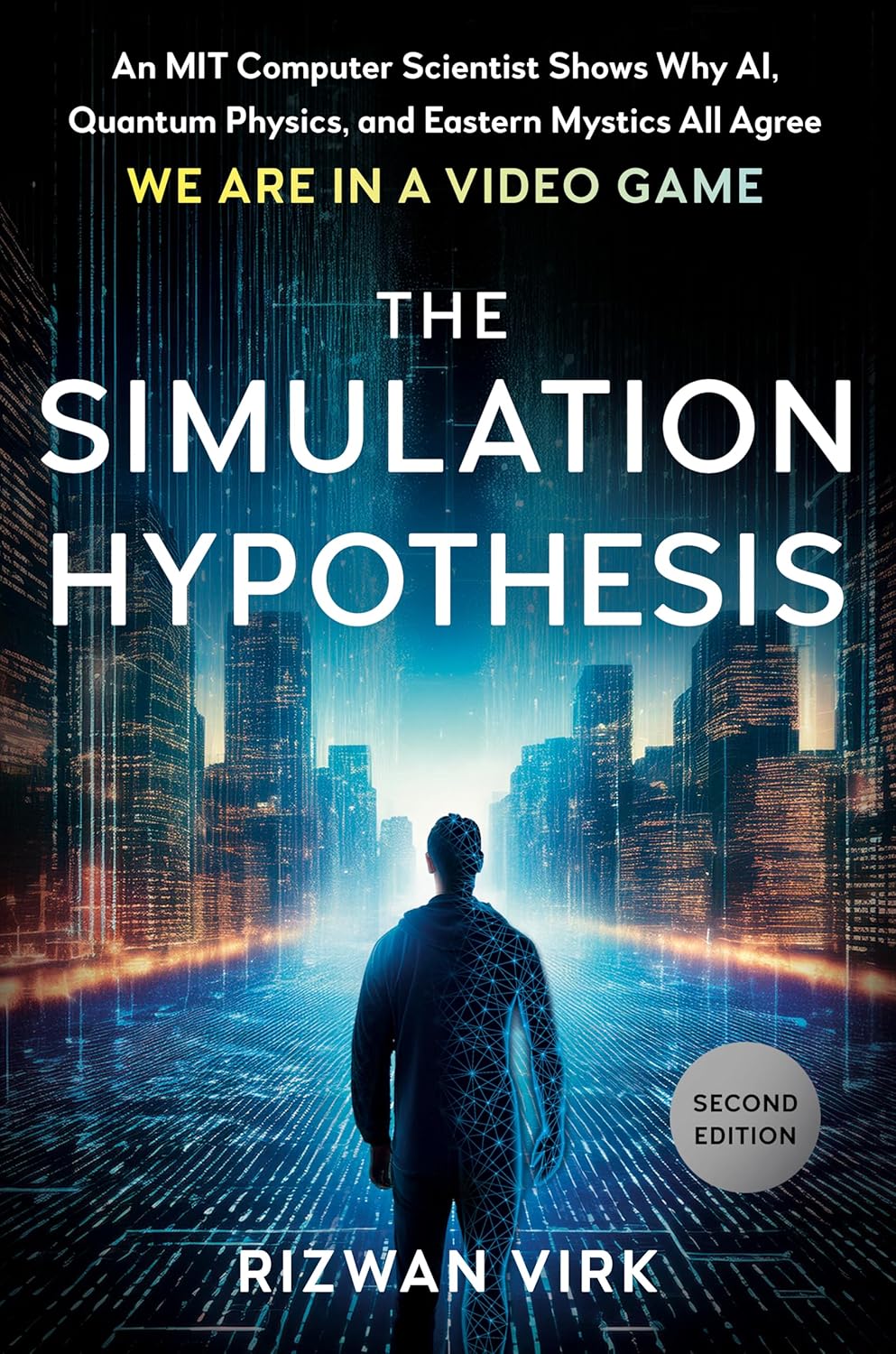
An MIT computer scientist connects AI, quantum physics and video games to take an uncomfortable question seriously: what if we live in a simulation? M
As an Amazon Associate, Zendoric earns from qualifying purchases; the price does not change for you. · all our recommended books →
🔗 Related on Zendoric
- AI glasses in exams: when cheating beats the top 5 of the class, the assessment system has a bigger problem · 2026-06-28
- The China–U.S. gap in AI narrows: why the real contest is no longer technical but about the business model · 2026-06-25
- Cloning a voice no longer takes hours of recording: why older adults are the easy target for fraudulent AI · 2026-07-02