A school custodian, accused of using AI to create child sexual abuse material from social media photos

🕒 Published on Zendoric: July 23, 2026 · 00:24
✨ AI-generated · how it's made
The Hamilton County (Tennessee) sheriff's office accuses a school custodian of altering thousands of photos of minors with AI, among them one of two students at his school. The tip came from the National Center for Missing and Exploited Children and exposes how easy it is to turn an ordinary photo into child sexual abuse material.
📚 Go deeper

The definitive piece of investigative journalism on OpenAI: 260+ interviews, the clash between safety and speed, and the attempted firing of Sam Altma
As an Amazon Associate, Zendoric earns from qualifying purchases; the price does not change for you. · all our recommended books →
By Zendoric · July 23, 2026.
The Hamilton County Sheriff's Office, in southeastern Tennessee, has charged Zackary Nelson, a contracted janitor at Daisy Elementary School, with digitally altering with artificial intelligence more than 3,000 images of minors. According to the investigation, reported by NewsChannel 9 (WTVC), the seized material includes a photograph of two students and a staff member from the school itself, manipulated to simulate nudity. Nelson was arrested at the very school where he worked.
The case came to light through a tip from the National Center for Missing and Exploited Children (NCMEC), the U.S. organization that coordinates with technology platforms to detect child sexual abuse material. According to the police report, investigators identified several of the people in the altered images by cross-referencing them with photographs posted on the school's Facebook page: publicly accessible school photos were enough to generate the material, according to the sources cited by the outlet.
Scott Falk, senior advisor at the organization Child Impact International, warns that "the majority of child sexual abuse and trafficking vectors come from the internet" and that a single photograph — from a school yearbook, from a social network — is enough for a minor to become a potential victim of this type of manipulation. Falk acknowledges that both schools and law enforcement struggle to respond to this technology: there is no simple way to protect an image once it has gone out onto the internet.
ABM, the company subcontracted by Hamilton County schools to maintain its facilities, confirmed that it removed Nelson from the Daisy Elementary contract after the charges became known, though it has not yet responded on whether he had access to other schools in the district. The school district, for its part, limited itself to issuing a generic statement that "the safety of students and staff remains our priority." The investigation remains open, according to the sheriff's office, and the charges — for now accusations, not a conviction — are pending judicial resolution.
In general, this type of case has multiplied with the arrival of "nudify" apps capable of generating fake nudes of a real person from a single frontal photo, with no technical knowledge required. What a few years ago required manual editing with Photoshop is today automated in seconds with image-generation models, and the result can be indistinguishable from a real photograph to much of the public, including the minors depicted themselves.
This is, in its rawest form, the dark side of the short term we have been flagging at Zendoric: the same technology that promises more precise medical diagnoses or personalized tutors also drastically lowers the cost of committing a crime. The barrier to producing child sexual abuse material is no longer access to a physical victim, but access to a single public photograph, and that multiplies the universe of potential offenders in a way that neither schools nor law enforcement yet have the means to contain.
The response cannot depend solely on families' vigilance, though limiting the public exposure of photos of minors — yearbooks, schools' social media, sports club profiles — remains the most effective short-term measure. The structural responsibility falls on those who build and distribute these tools: much of the legal framework against child sexual abuse was written with real photographs in mind, not synthetic images generated from a real person, and various U.S. jurisdictions are still adapting their criminal codes to close that gap. While legislation catches up, cases like Hamilton County's are a reminder that governing generative AI is not an abstract debate about future risks, but an immediate necessity to protect the most vulnerable.
📚 Go deeper

AI as the latest chapter in the history of information networks, from gossip to the printing press to the algorithm.
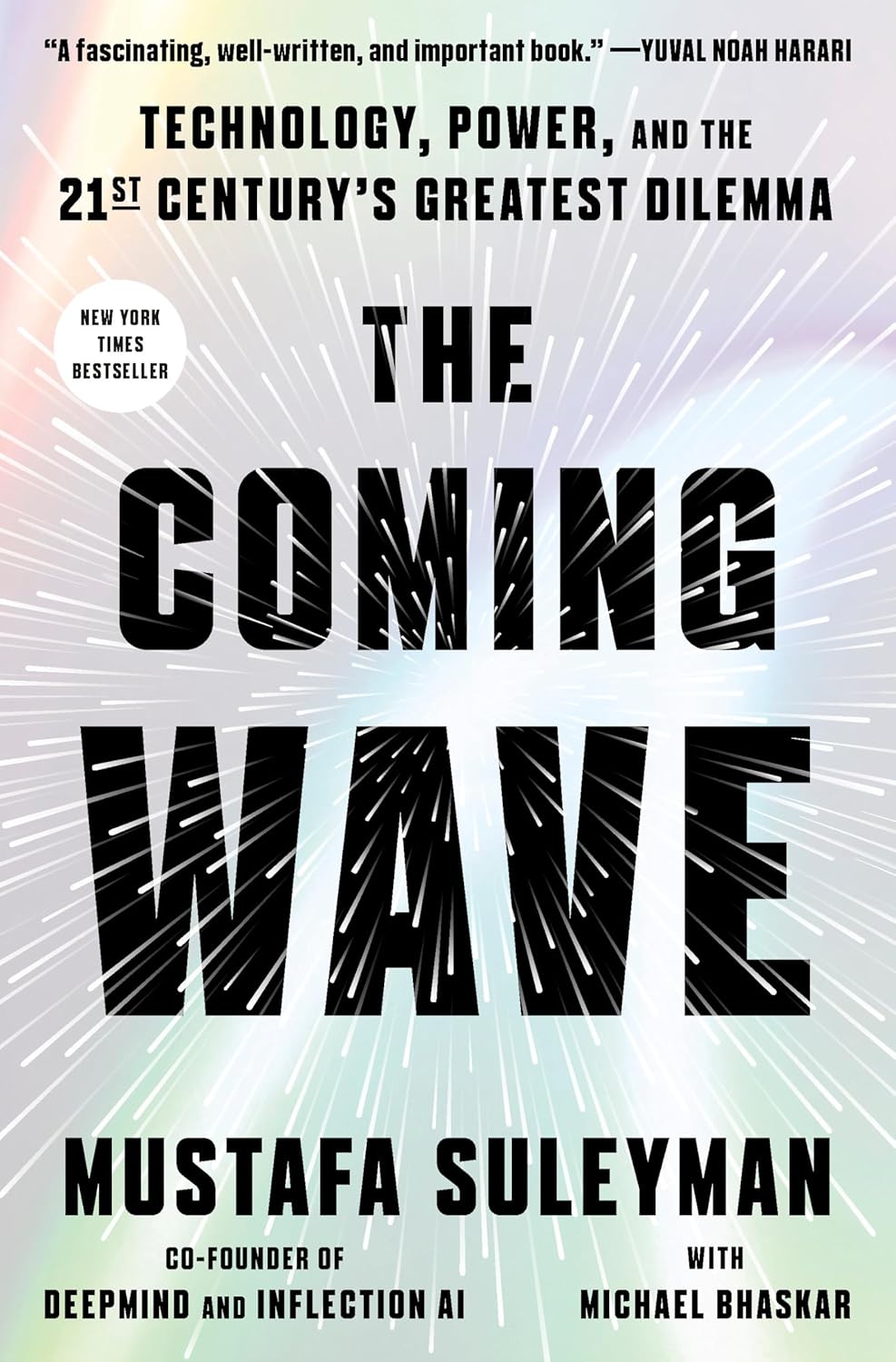
DeepMind co-founder on the dilemma of containing technologies that do not want to be contained.
As an Amazon Associate, Zendoric earns from qualifying purchases; the price does not change for you. · all our recommended books →
🔗 Related on Zendoric
- A Tennessee high school charges two minors for creating AI sexual images of classmates · 2026-09-03
- AI-generated CSAM at an Illinois school: the hardest abuse to detect no longer needs a hidden camera · 2026-07-04
- The Illinois teacher accused of using AI to create child abuse exposes the real limit of safeguards · 2026-07-14