Teralexi: another open-source desktop agent for local AI joins an already saturated market

🕒 Published on Zendoric: July 22, 2026 · 01:59
✨ AI-generated · how it's made
A small team (Naughty-Otters) has published Teralexi on GitHub, an open-source desktop agent that combines an IDE, web browsing, multichannel chat and local memory. It arrives on Hacker News with one point and zero comments: the most honest metric for this piece is its lack of traction, not its features.
📚 Go deeper
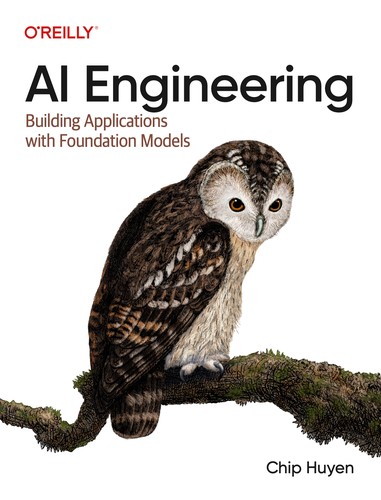
The reference manual for building products on top of AI models: prompts, RAG, fine-tuning, agents, evaluation and deployment.
As an Amazon Associate, Zendoric earns from qualifying purchases; the price does not change for you. · all our recommended books →
By Zendoric · July 22, 2026.
Teralexi is a desktop application built on Electron (TypeScript and Vue, according to its own repository) that packages several already-familiar pieces of the AI agent ecosystem: a research agent that browses and gathers sources, an integrated IDE with git diff review before applying changes, chat connected to channels such as WhatsApp, Slack, Google or Discord, a hub of "skills" and MCP (Model Context Protocol, the open standard that lets a model connect to external tools in a uniform way), and support for both local models (Ollama, llama.cpp) and cloud models (OpenAI, Anthropic, Gemini). The project is open source under the Apache 2.0 license and is already at version v0.0.4, released on July 21, 2026, according to its GitHub releases.
That is as far as the verifiable facts go: the rest of the announcement should be read with caution. The GitHub listing itself shows the project's real status —zero stars, zero forks, zero pull requests— and the Hacker News post from which this summary comes stalled at one point and no comments. There are no download figures, no performance benchmarks, no usage testimonials that would allow one to assess whether it works better or worse than equivalent alternatives; only a list of features and a well-written README.
That does not disqualify it, but it does limit what can be said about it. Broadly speaking, the pattern of "local-first desktop agent that wraps several LLMs and adds MCP" has become a common template ever since the MCP protocol took off as a standard way to connect models with tools: any team fluent in Electron can put together a similar interface in weeks, and that is exactly what seems to have happened here. The question that matters is not whether Teralexi has the fashionable features, but whether it achieves real user retention and community contributions, which is what distinguishes a project that survives from one that gets archived after launch.
Our reading is that these kinds of announcements are the natural background noise of a phase of tool abundance: the cheaper and more accessible models become —via Ollama or inexpensive APIs—, the easier it is to build an agent wrapper, and the more that saturates the discovery space for the end user. It is a positive sign of the democratization of access to AI, consistent with the horizon of abundance we defend over the long term, but in the short term it generates fragmentation: dozens of nearly identical projects competing for the same attention, most of which will not survive beyond their first versions. The category is worth following, not necessarily this particular project.
📚 Go deeper
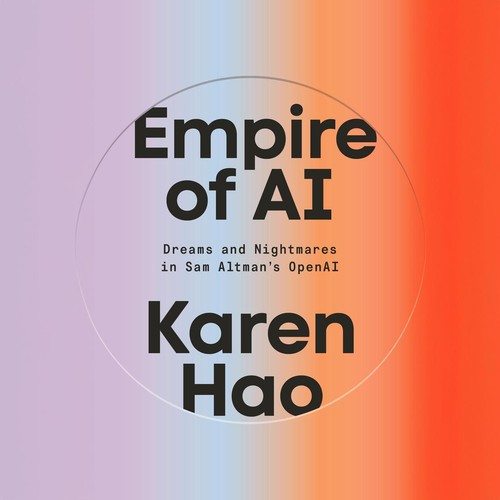
The definitive piece of investigative journalism on OpenAI: 260+ interviews, the clash between safety and speed, and the attempted firing of Sam Altma
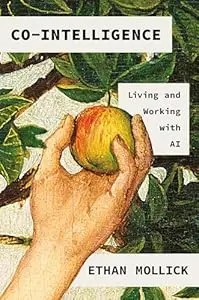
The best starting book if you're not technical: a Wharton professor explains how to work WITH AI — when to delegate, when to supervise, when to keep i
As an Amazon Associate, Zendoric earns from qualifying purchases; the price does not change for you. · all our recommended books →
🔗 Related on Zendoric
- Self-hosted AI agents: Elixir/OTP enters the race for lightweight, sovereign infrastructure · 2026-07-03
- MaskShift: a local, NPM-free coding agent that is 'permissive by default', barely noticed on Hacker News · 2026-09-07
- A VS Code extension with 4 installs takes on a real problem: vague prompts that waste AI tokens · 2026-10-04