AI enters the senior shopping basket: 1 in 5 people over 50 already use it to compare prices

🕒 Published on Zendoric: July 21, 2026 · 00:20
✨ AI-generated · how it's made
19% of people over 50 already use artificial intelligence to compare products before buying, according to Cetelem's Consumo Europa 2026 report. But 79% still trust brick-and-mortar stores, and a quarter of those over 60 have never shopped online: the senior demographic isn't uniform, it's splitting in two.
📚 Go deeper
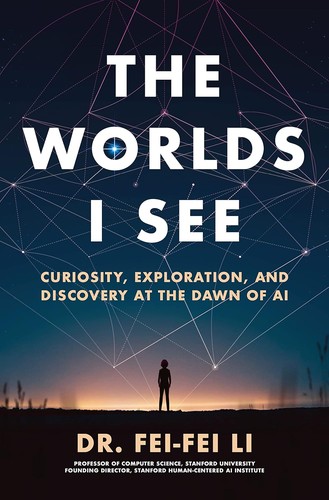
The memoir of the creator of ImageNet, the scientist who made the deep learning revolution in vision possible.
As an Amazon Associate, Zendoric earns from qualifying purchases; the price does not change for you. · all our recommended books →
By KISS FM · July 20, 2026.
One in five people over 50 already turns to artificial intelligence to compare products before deciding on a purchase. The data comes from the Consumo Europa 2026 report by the Observatorio Cetelem: 19% of those over 50 and 13% of those over 60 already use these tools to gather information before checking out.
The rest of the study's figures qualify the headline. 71% of seniors search for information online before buying, but 79% still prefer physical stores to compare items in person. Additionally, 26% of people over 60 have never bought anything online. In parallel, this group maintains more conservative consumption habits: one in three older people prefers to repair a product rather than replace it, quality and price remain their priorities, and they show greater savings capacity than younger generations, especially in Spain and Portugal. 61% say they have already invested with their financial future in mind, although Spain remains one of the European countries with the fewest senior investors.
Our take: the narrative of the "digitally lagging senior" no longer accurately describes this group, but it isn't replaced by a story of uniform adoption either. What these numbers show is a group split in two: one segment that already integrates AI as a trusted advisor for comparing prices, and another, nearly one in four, that remains completely outside online commerce. It's the same digital divide that separated young and old a decade ago, now reproduced within the senior group itself based on income, education, or simple habit. Treating people over 60 as a homogeneous bloc when designing apps or campaigns is a fundamental mistake.
For retail commerce, the data carries a strategic reading beyond the demographic one. If a fifth of a segment with high purchasing power and risk aversion already lets an AI assistant filter its options before buying, the battle for senior consumer attention is increasingly fought not at the storefront but in how that assistant summarizes and recommends products. It's the same dynamic we've already seen in the chess match among big tech companies to control agent distribution: whoever governs that recommendation layer —the assistant, not the store— starts to decide what gets bought.
In the long run, this trend fits with the underlying thesis we hold at Zendoric: AI as a democratizing tool, not a privilege for early adopters. A free assistant that compares prices and quality, available on anyone's phone, protects above all those with less time, fewer alternative comparisons, or less financial margin for error on a major purchase—a profile that fits well with much of the population over 60. The short-term risk isn't that AI will replace the physical store —the study itself shows they will coexist for years— but that the design of these tools may fail to adequately protect the data and trust of a group especially vulnerable to commercial manipulation. That, more than adoption itself, is what will determine whether this advance truly benefits those who need it most.
📚 Go deeper
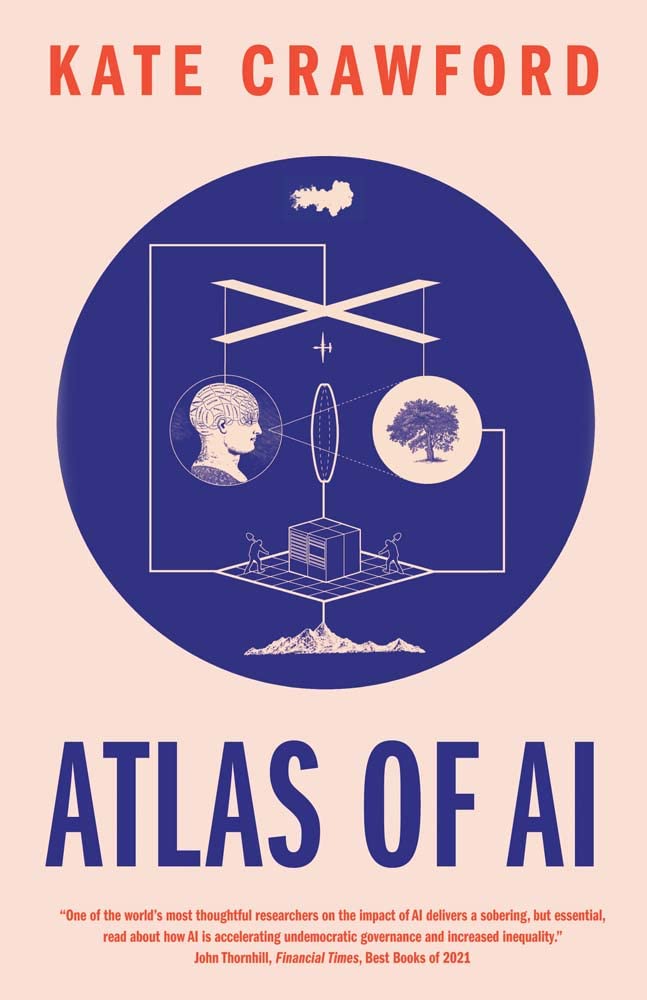
AI as an extractive industry: the lithium, the energy, the underpaid data-labeling work and the bodies behind the cloud.

The only novel on the list, by a Nobel laureate: an artificial friend observes humans with a blend of lucidity and innocence no essay achieves.
As an Amazon Associate, Zendoric earns from qualifying purchases; the price does not change for you. · all our recommended books →
🔗 Related on Zendoric
- Netflix reveals about 300 productions used generative AI in 2026, according to its earnings report · 2026-07-21
- International students read the market before anyone else: they choose AI over the MBA · 2026-07-23
- Electric batteries break another record in the US, though the residential segment slows · 2026-09-10