Texas fills up with AI degrees just as the youth job market tightens: the degree is no longer the merit, it's the entry ticket

🕒 Published on Zendoric: July 9, 2026 · 00:21
✨ AI-generated · how it's made
Texas already has more than 20 AI bachelor's and master's degrees, the most of any US state, as universities like UT Dallas and UNT retool their business and engineering programs. But the very market these degrees promise to conquer has grown tougher for recent graduates: companies like Bank of America and Ericsson warn that the 'AI' label on the diploma opens the door, but doesn't land the job.
📚 Go deeper
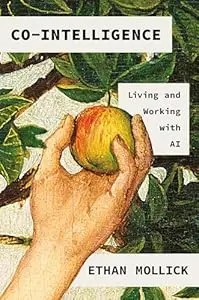
The best starting book if you're not technical: a Wharton professor explains how to work WITH AI — when to delegate, when to supervise, when to keep i
As an Amazon Associate, Zendoric earns from qualifying purchases; the price does not change for you. · all our recommended books →
By GovTech / The Dallas Morning News · July 8, 2026.
At the University of Texas at Dallas, a group of graduate students is presenting a multi-agent system capable of redesigning a company's supply chain on its own, in real time, in response to an inventory or price shock. Another group is teaching an agent that reviews medical bills line by line and generates, for free, the document to dispute an erroneous charge — a service for which a financial analyst would charge hundreds of dollars. This is not campus science fiction: it is the final project of a course called Agentic AI, within a master's program that UT Dallas renamed in 2024 to include the word 'AI' in its title. Texas already has more than 20 degree and graduate programs specifically in artificial intelligence, more than any other state, according to Degree Prospects' count, part of a national wave that now exceeds 300 U.S. universities offering degrees of this kind since Carnegie Mellon opened the first in 2018.
The fact that turns the story on its head is the context in which this expansion arrives: Texas is going through a 'low-hiring, low-firing' labor market, with almost flat employment growth last year, and 10% of companies already report that AI is reducing their need for human staff. Researchers at the Federal Reserve Bank of St. Louis have pointed out that it is precisely the most highly educated young people who are noticing it most, because companies are slowing both expansion and the refilling of vacancies. The University of North Texas itself illustrates the paradox: this fall it is launching a new AI degree while cutting twelve programs —among them linguistics and gender studies— over a $45 million budget deficit. The university is betting on AI as an economic lifeline just as the work those graduates seek is being reshaped beneath their feet.
The most revealing part, however, is what the employers themselves say. At Ericsson, fewer than 1% of U.S. hires since 2024 hold a degree that literally includes 'artificial intelligence' in the title; what has grown is the hiring of profiles with 'AI-related' degrees —computer science, data science— spread across more than 275 different roles. Its head of talent sums it up with a phrase that should be hung in any admissions office: AI in the title is 'the first knock on the door,' but 'it doesn't get you invited to the party.' Bank of America points in the same direction: what matters is not the credential, but being able to show where that knowledge saved time or generated a concrete efficiency. It is confirmation, from the hiring side, of something we already sensed when analyzing AI's impact on business administration: the organization flattens out and the value rises of those who know how to orchestrate the tool over a real problem, not of those who merely mention it on their résumé.
Our reading is that this Texas episode is an almost perfect microcosm of our thesis on AI and employment: in the short term, the transition is hard and uneven, and it is most acute for those entering the job market now, precisely because entry-level tasks —routine financial analysis, invoice processing, monitoring competitors' prices— are the first ones automated by these very agents that students build in class. The student who cut three weeks of accounts-payable work down to 38 seconds did not merely stage an academic demonstration: she showed, unwittingly, why her own entry-level position is increasingly dispensable in its current form. That is the cost of the transition that should not be hidden.
But the other face of those same 38 seconds is exactly the kind of abundance we defend as our underlying horizon: a task that consumed weeks of a person's time now frees that time for the judgment, the client relationship or the innovation that the UT Dallas professor himself pointed out to his students —'building is no longer the problem; the problem is what you do with it.' The agent that disputes medical bills for free, if it scales beyond a class project, is one less point of friction between a patient and an opaque healthcare system; the same pattern, replicated across thousands of domains, is the abundance that in the long run offsets the harshness of the current adjustment. The university as an institution is, at bottom, betting well: it is not that 'AI' will be the magic degree, but that pairing it with a domain —business, engineering, health— and teaching how to orchestrate it over real problems is the skill that survives any hiring cycle. The risk, for the institutions and for the students themselves, is confusing the renaming of a program with the substance behind it; employers, as this article demonstrates, are no longer fooled by the label.
📚 Go deeper
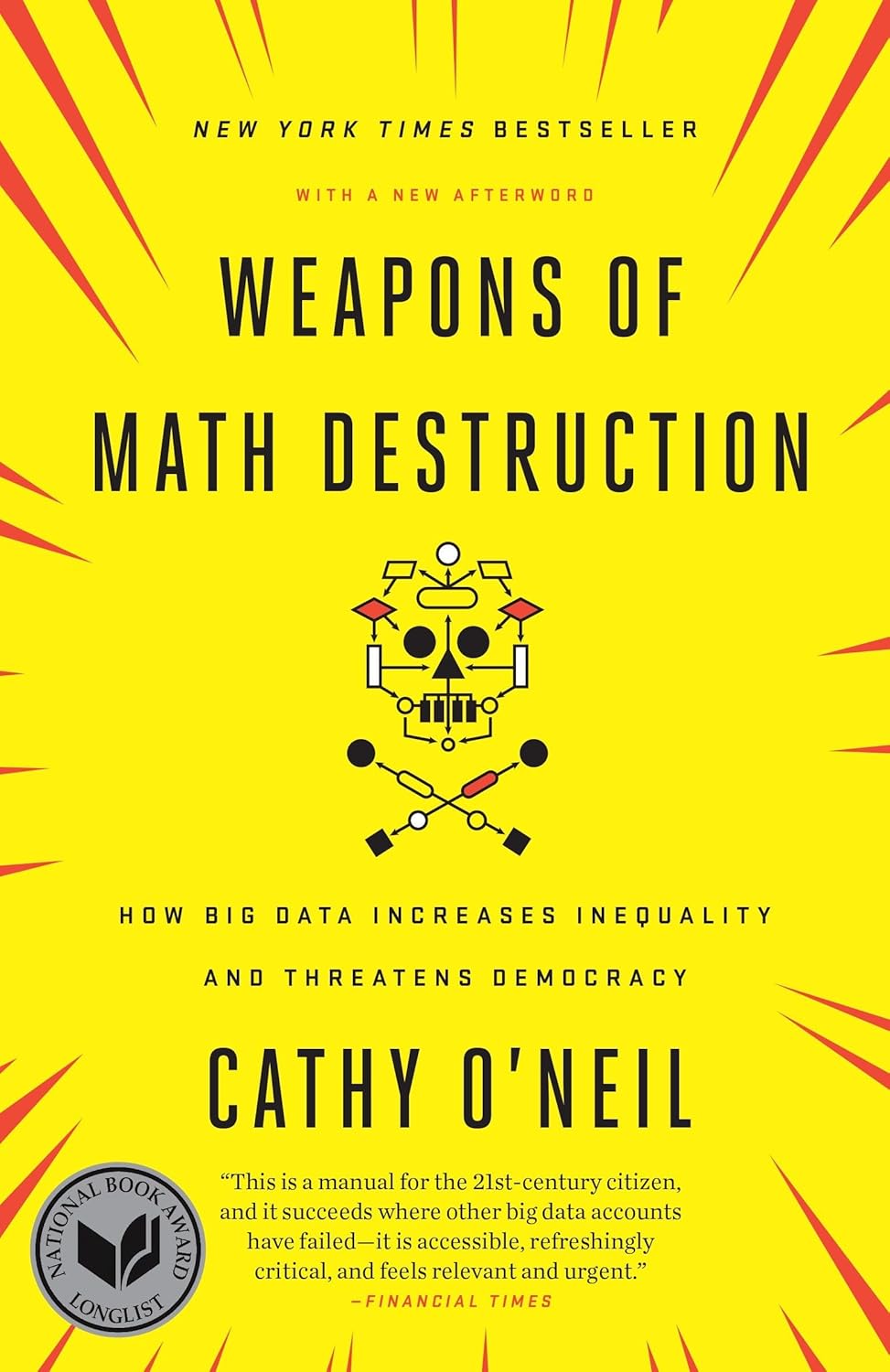
How opaque algorithms decide who gets credit, a job or parole — and why they tend to punish the same people.

The only novel on the list, by a Nobel laureate: an artificial friend observes humans with a blend of lucidity and innocence no essay achieves.
As an Amazon Associate, Zendoric earns from qualifying purchases; the price does not change for you. · all our recommended books →
🔗 Related on Zendoric
- Imperial College creates the first British master's in AI, economics and regulation: the profession of governing technology is born · 2026-07-29
- African banking now outperforms the global sector: why McKinsey's $100 billion is a signal, not an anecdote · 2026-06-28
- Platzi and the Latin American bet: the new gap isn't about money, but attention · 2026-06-29