DeepSeek develops its own AI chip to reduce its dependence on Nvidia and Huawei

🕒 Published on Zendoric: July 9, 2026 · 00:21
✨ AI-generated · how it's made
Editorial note: the link included in the newsletter carried the brief headline "China is looking at curbing overseas access to its top AI models," but the Reuters article actually downloaded from that URL covers a different, more specific topic: DeepSeek's development of its own chip for…
📚 Go deeper

Semiconductors as the oil of the 21st century: history, espionage, and why an island of 23 million people underpins the entire AI economy.
As an Amazon Associate, Zendoric earns from qualifying purchases; the price does not change for you. · all our recommended books →
Editorial note: the link included in the newsletter carried the brief headline "China is looking at curbing overseas access to its top AI models," but the Reuters article actually downloaded from that URL deals with a different and more specific topic: DeepSeek's development of its own artificial intelligence chip. Reuters mentions in passing, among the related articles, a piece titled "China weighs silicon curtain around sought-after AI models," which is probably the one the newsletter summary had in mind; however, that is not the piece whose content was retrieved. For the sake of journalistic honesty, this analysis is based exclusively on the text actually obtained, that is, the exclusive on DeepSeek's chip.
According to three sources consulted by Reuters who asked not to be identified because the information is not public, DeepSeek, the Hangzhou-based Chinese start-up that became famous worldwide for its low-cost AI models, is developing its own artificial intelligence chip. The stated goal, according to the sources, is to reduce the company's dependence on semiconductors from Nvidia and Huawei, which it has so far used both to train and to run its models. Unlike a training chip, this new development is designed specifically for inference, that is, the phase in which an already-trained model generates responses for end users.
If the project succeeds, it would mark a significant strategic shift for a company that until now has been characterized by focusing on advances in its AI models rather than on commercializing its own technology, and that has also kept a very low profile despite becoming the standard-bearer of China's ambitions in artificial intelligence. The news had an immediate impact on the markets: Nvidia's shares fell by about 1.6% in pre-market trading. Analyst Richard Windsor, of Radio Free Mobile, cited in the article, noted that "Nvidia is at zero in China and is going to stay that way" and that "DeepSeek has little chance of selling silicon outside China unless it gains access to leading-edge manufacturing," adding that this development does not affect the US manufacturer.
The article places this move in the context of China's $50 billion AI chip market. Although Huawei's products still lag behind Nvidia's most advanced chips, the US ban on exporting those components to China has allowed Huawei to capture around half of that domestic market, supplying DeepSeek and other major companies in the sector. Nevertheless, Huawei's dominance is already weakening because tech rivals such as Alibaba and Baidu are developing their own AI chips and gaining market share. DeepSeek's entry into this race is still at a very early stage: the company has been reaching out to external partners and holding talks with chip design, foundry and memory firms. The effort, according to one of the sources, began about a year ago, and in recent months DeepSeek has stepped up the hiring of chip design engineers, though discreetly and without posting job openings on public platforms. The company did not respond to Reuters' request for comment.
The report frames this move within a global trend: more and more AI developers are seeking greater control over the hardware that underpins their models in order to depend less on Nvidia. It cites the case of OpenAI, which last month unveiled Jalapeño, its first in-house inference chip, developed together with Broadcom, and that of Anthropic, which according to an earlier Reuters report from April is said to be studying building its own AI chips. For DeepSeek, however, the added factor is geopolitical: US export controls prevent Chinese companies from buying Nvidia's most advanced chips, while Beijing is pressing its tech champions to develop domestic alternatives. The article recalls that DeepSeek's founder, Liang Wenfeng, acknowledged in a rare interview granted to a Chinese outlet in 2024 that chip export controls posed a challenge for the company.
As for DeepSeek's hardware track record, the company has used both Nvidia and Huawei chips. As the company itself has explained, the foundational model underpinning R1 —the reasoning model whose low-cost performance triggered a plunge in US tech stocks in January 2025— was trained with Nvidia's H800, a chip designed specifically for the Chinese market that Washington banned in late 2023. Since then, DeepSeek has relied increasingly on Huawei: in April it released its V4 model adapted to Huawei's Ascend chips, and Huawei itself stated that its processors were used in part of the training of V4-Flash, a lighter version of that model. Reuters has previously reported that orders for Huawei's Ascend 950 chips by Chinese tech conglomerates surged after that launch.
The inference chip DeepSeek is said to be developing would target precisely the fastest-growing segment of AI computing: as AI applications multiply, a growing share of the sector's compute load is shifting from training models to running them, a task that can be handled with specialized chips that are cheaper and less energy-demanding than general-purpose GPUs. Even so, Reuters stresses that there is no guarantee of success: designing a competitive AI chip typically requires years of work and large amounts of capital. Added to this is a manufacturing obstacle, since the United States bars Chinese designers from accessing the most advanced foreign foundries, while additional US restrictions have cut China's access to high-bandwidth memory (HBM), a critical component for AI inference chips.
Finally, the article connects this bet on an in-house chip with another recent turn in DeepSeek's strategy: opening up to external capital. Reuters reported in June that the company planned to raise $7 billion in its first funding round, at a valuation of between $52 billion and $59 billion, thus reversing a years-long strategy of rejecting outside investment. Taken together, the piece portrays a DeepSeek that, after its global breakthrough with highly efficient AI models, is beginning to move toward deeper vertical integration —designing its own silicon and opening its capital— against a backdrop of intense geopolitical pressure over access to advanced semiconductors and increasingly fierce domestic competition from Huawei, Alibaba and Baidu.
📚 Go deeper

The story of NVIDIA and Jensen Huang: how a video-game card company ended up making the most coveted resource on the planet.
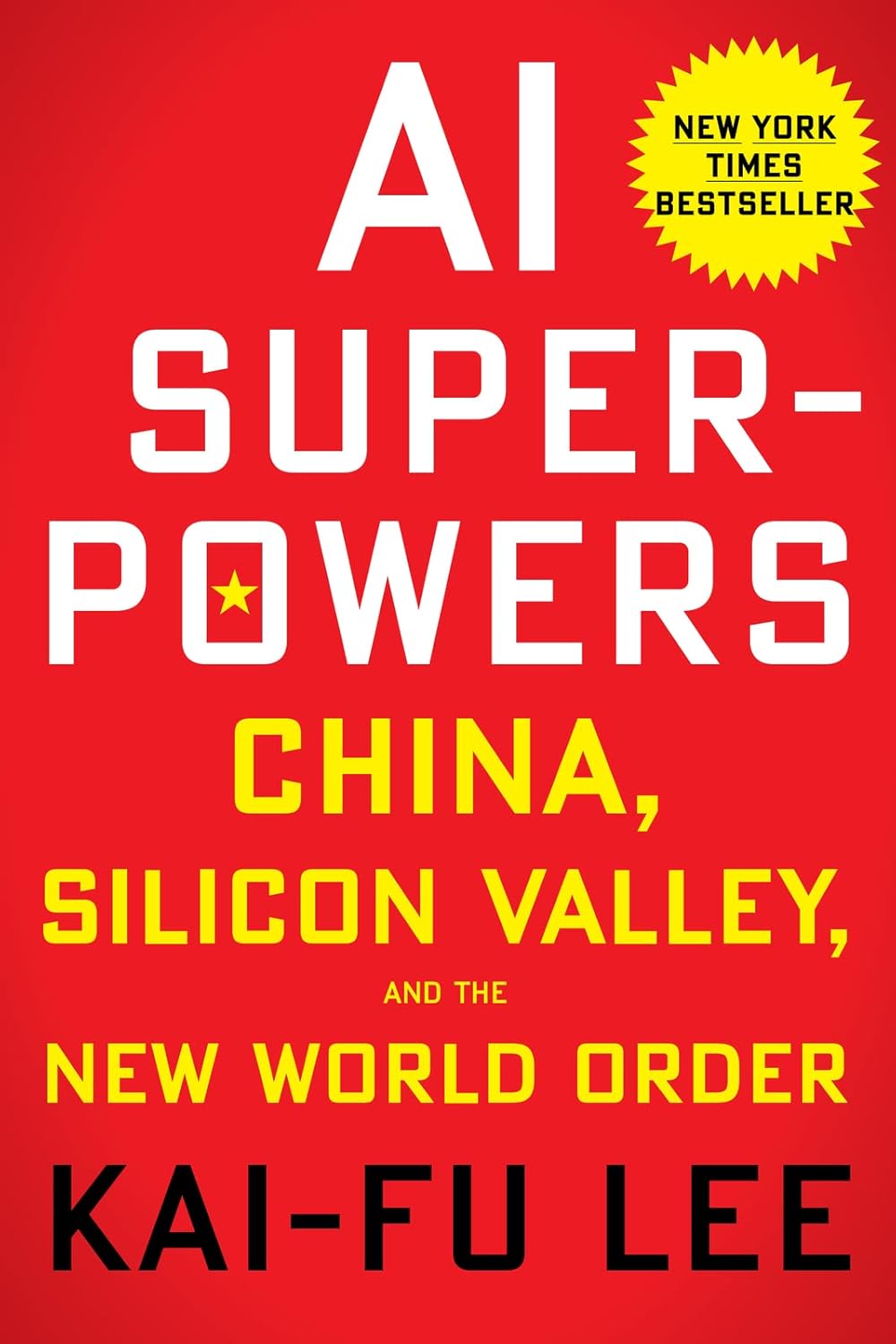
China vs.
As an Amazon Associate, Zendoric earns from qualifying purchases; the price does not change for you. · all our recommended books →
🔗 Related on Zendoric
- China would allow its large AI companies to buy a limited quantity of Nvidia H200 chips · 2026-07-10
- African banking outperforms its global peers in profitability with revenues exceeding $100 billion, according to McKinsey · 2026-06-29
- In the AI race, China bets on winning from behind: 'good enough' and cheaper models · 2026-06-30