Trump's AI Action Plan: a distraction that dismantles the foundations of American leadership

🕒 Published on Zendoric: July 4, 2026 · 00:29
✨ AI-generated · how it's made
This opinion piece, published in MIT Technology Review by Asad Ramzanali (who served as chief of staff and deputy director of strategy at the White House Office of Science and Technology Policy under Biden, and currently leads AI and technology policy at the Vanderbilt Policy Accelerator), argues that…
📚 Go deeper
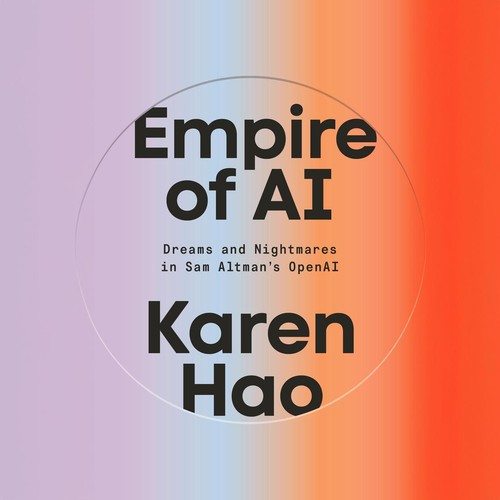
The definitive piece of investigative journalism on OpenAI: 260+ interviews, the clash between safety and speed, and the attempted firing of Sam Altma
As an Amazon Associate, Zendoric earns from qualifying purchases; the price does not change for you. · all our recommended books →
This opinion piece, published in MIT Technology Review by Asad Ramzanali (who served as chief of staff and deputy director for strategy at the White House Office of Science and Technology Policy under Biden, and currently leads AI and technology policy at the Vanderbilt Policy Accelerator), argues that the Trump administration's recent "AI Action Plan" —accompanied by three executive orders and a presidential speech— is largely a smokescreen. While the government touts flashy measures to "lead" in AI, according to the author it is simultaneously dismantling the historic pillars that made that leadership possible.
The three executive orders signed address: first, avoiding "woke AI" by requiring the federal government to only procure language models deemed "ideologically neutral"; second, accelerating the construction of AI data centers by relaxing environmental protections, subsidizing large companies, and handing over federal land; and third, funding the export of American AI technology and infrastructure to compete diplomatically with rival powers. The author notes that these measures, while generating headlines and benefiting Big Tech, conceal a simultaneous dismantling of the policies that originally cemented U.S. dominance in AI.
The article identifies four historic public policy pillars that, according to the author, are being eroded. The first is federal investment in research and development: he recalls that fundamental advances behind today's generative AI —from the first AI program in 1956 to the first chatbot in 1961— were funded by federal agencies such as the Department of Defense, the NSF, NASA, and the NIH, as were underlying technologies like lithium batteries, GPS, or the chips used in data centers. Although the plan recommends investing in R&D, the administration's actual budget proposes cutting non-defense spending by 36%, in addition to laying off federal scientists and pressuring leading research universities.
The second pillar is support for immigration. The author highlights that the transformer model (the "T" in ChatGPT) was developed by a Google team in which six of eight researchers were born outside the U.S. According to an Institute for Progress analysis cited in the article, 60% of the 42 U.S. companies on Forbes' 2025 ranking of the top 50 AI startups have at least one immigrant co-founder, and immigrant figures lead or co-founded OpenAI, Anthropic, Google, Microsoft, Nvidia, Intel, and AMD. The author warns that recent studies suggest the U.S. is already losing its edge in AI talent due to the administration's restrictive immigration policies.
The third pillar is the ban on non-compete clauses, which in California —the birthplace of Silicon Valley— have been interpreted as prohibited since the state constitution of 1872. This allowed the labor mobility that gave rise to successive waves of companies (from Fairchild Semiconductor to Intel and AMD, from Yahoo to WhatsApp and Slack, from PayPal to LinkedIn and YouTube, and from Google to more than 1,200 startups including Instagram). Last year the FTC under Biden attempted to ban these clauses nationwide, but a Trump-appointed judge blocked the measure, and the current FTC appears ready to abandon it.
The fourth pillar is antitrust policy, which historically acted as a lubricant for innovation: the case against AT&T in the 1950s allowed Shockley to found the first semiconductor company in Silicon Valley by forcing the licensing of the transistor patent; antitrust pressure led IBM to separate software and hardware, boosting the software market; and the case against Microsoft in the 90s created the competitive space that allowed Google's rise. However, one of the new executive orders demands a review of FTC investigations and settlements that "burden" AI innovation, which according to the author could stall recent progress in antitrust policy, including investigations into Microsoft's actions in AI.
The author concludes that, while he supports a future where AI improves lives, he warns that prioritizing short-term industry gains over these fundamental principles —bold public research, openness to global talent, and fair competition— not only puts the U.S. technological future at risk, but also its role as the world's innovation superpower.
📚 Go deeper
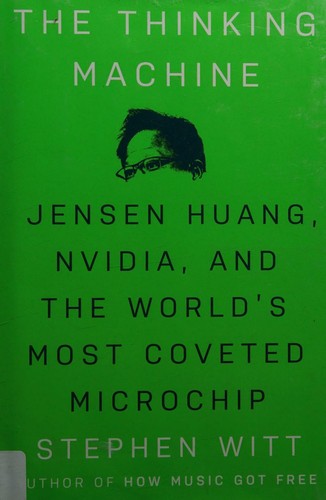
The story of NVIDIA and Jensen Huang: how a video-game card company ended up making the most coveted resource on the planet.

The reference manual for building products on top of AI models: prompts, RAG, fine-tuning, agents, evaluation and deployment.
As an Amazon Associate, Zendoric earns from qualifying purchases; the price does not change for you. · all our recommended books →
🔗 Related on Zendoric
- Trump's AI czar is a spy chief: naming Clayton makes superintelligence a security file, not a consumer one · 2026-10-04
- Trump's AI czar is a spy chief: the Superintelligence Task Force files AI under security, not consumer law · 2026-10-05
- Don't be fooled by this summer's AI hype, warn Gebru and Bender · 2026-09-23