Embodied robotics: McKinsey and MIT suggest the lab is starting to give way to real life

🕒 Published on Zendoric: June 25, 2026 · 09:00
✨ AI-generated · how it's made
In a new McKinsey piece, Daniela Rus (MIT CSAIL) describes robots that learn faster, react in real time and fit naturally into everyday life. The consultancy frames it as an 'inflection point' for applied robotics. It deserves attention, but also caution.
📚 Go deeper

How opaque algorithms decide who gets credit, a job or parole — and why they tend to punish the same people.
As an Amazon Associate, Zendoric earns from qualifying purchases; the price does not change for you. · all our recommended books →
McKinsey launches a conversation with Daniela Rus, director of MIT's CSAIL and one of the most authoritative voices in robotics and embodied artificial intelligence. The thesis suggested by the headline is an appealing one: we may be at an 'inflection point' for robots that operate in the real world, able to learn faster, respond in real time and interact naturally with people. In the interest of transparency about the source: the available material is a promotional teaser, so here we comment on the framing and its context, not on a technical discussion that does not appear in the message.
The chosen framing is significant. The fact that the piece is driven by the consultancy's global leaders of its Industrials practice, Dorothee Herring and Steffen Fuchs, places robotics not in the realm of science fiction but in that of concrete productive transformation: factories, logistics, maintenance. 'Embodied AI' refers precisely to that shift from models that reason over text to systems that perceive, decide and act on the physical environment. It is the frontier where artificial intelligence stops being a browser tab and becomes an actor with a body.
The two companion articles mentioned in the newsletter fill in the map of interests. One addresses how to turn constraints in the humanoid supply chain into multibillion-dollar opportunities; the other asks whether embodied AI will give rise to true robotic coworkers. Together they show that the debate is no longer just whether the technology will work, but how it will be manufactured at scale and how it will be integrated into human teams. These are the questions that come with a maturing technology.
That said, an honest assessment requires separating the promise from the timeline. The phrase 'inflection point' is seductive and probably right about the direction, but real-world robotics carries a long history of spectacular demonstrations that are slow to translate into profitable, reliable deployments. The bottleneck usually lies less in intelligence and more in mechanics, costs, safety and the supply chain, which is exactly what McKinsey points out. That a figure as rigorous as Rus is betting on this moment is a signal to take seriously; whether we turn it into a reasonable expectation rather than hype depends on tracking real adoption data over the coming quarters.
📚 Go deeper

AI as the latest chapter in the history of information networks, from gossip to the printing press to the algorithm.
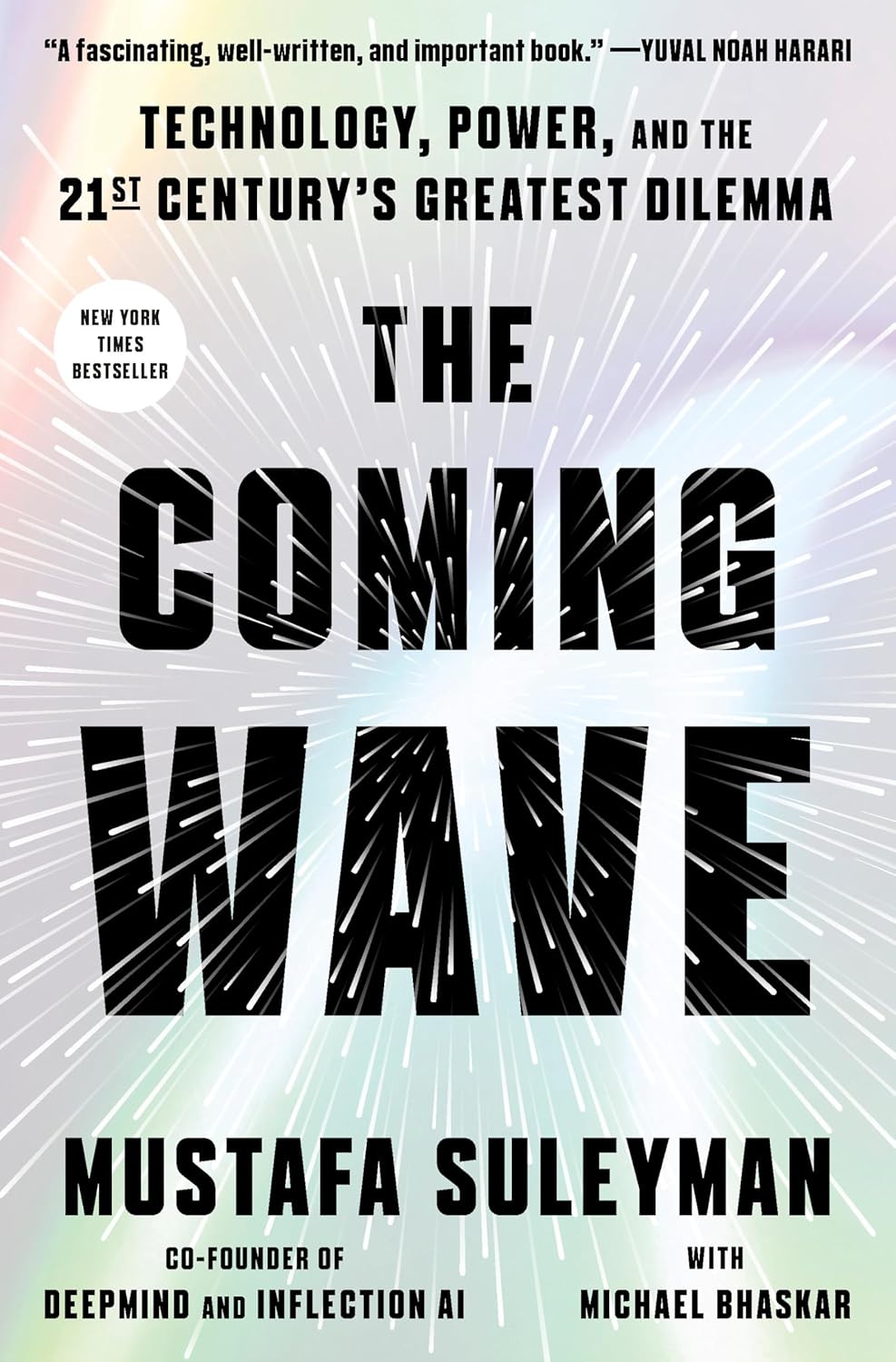
DeepMind co-founder on the dilemma of containing technologies that do not want to be contained.
As an Amazon Associate, Zendoric earns from qualifying purchases; the price does not change for you. · all our recommended books →
🔗 Related on Zendoric