What Will We Do When AI Does All the Work? Money Has a Fix; Purpose Doesn't Yet
✨ AI-generated · how it's made
In 1930, Keynes predicted a 15-hour workweek by 2030. He was right about productivity and wrong about distribution. In 2026 the debate is no longer theoretical: young workers most exposed to AI are already losing ground, basic-income pilots have published results, and sharing AI's wealth has reached the US Congress. Our thesis holds and hardens: the bottleneck to abundance won't be technical — it will be institutional and existential.
🎬 Our Short
📺 The full analysis on video (with chapters)
📚 Go deeper
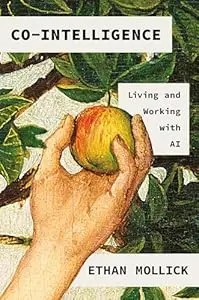
The best starting book if you're not technical: a Wharton professor explains how to work WITH AI — when to delegate, when to supervise, when to keep i
As an Amazon Associate, Zendoric earns from qualifying purchases; the price does not change for you. · all our recommended books →
THE THESIS. The society of abundance AI promises will not fail for lack of technology. It will fail — or succeed — at two human bottlenecks. The first is institutional: who captures the wealth and how it gets shared. The second is existential: what we do with our lives once work stops organizing them. What's new in 2026 is that the first problem now has data and draft legislation on the table. The second still doesn't have a single pilot program.
THE PROPHECY THAT CAME HALF TRUE. In 1930, economist John Maynard Keynes predicted that by around 2030 his grandchildren would work 15 hours a week thanks to technical progress. He got the economic half right: productivity in advanced economies has more than doubled since the 1970s. He got the human half wrong: the 40-hour week remains the norm and real wages have grown far less than productivity. The lesson is uncomfortable but useful: technology creates the surplus, but it doesn't decide who keeps it or how many hours we work. Institutions — laws, taxes, labor agreements — and culture decide that. With AI, the gap between the technical and the social will widen much faster than it did in the twentieth century.
THE BOTTOM RUNG IS BREAKING. The short term already hurts, and it hurts where we predicted: at the entrance to the labor market. A Stanford study estimates a 16% relative decline in employment for workers aged 22 to 25 in the occupations most exposed to AI; among young software developers, employment has fallen nearly 20% from its 2024 peak. And yet aggregate unemployment has shown no detectable rise since late 2022, according to sources as different as Anthropic, the IMF and Stanford's AI Index. Both things are true at once: AI is not destroying jobs overall — it is breaking the first rung of the ladder for young people in highly exposed sectors. Another data point tempers the doom: workers most exposed to AI currently earn about 47% more than unexposed peers, and job postings asking for 'agentic' AI skills — systems that execute tasks autonomously, not just chatbots — grew 280% in a year. The pattern, flagged by several labor-market analyses: where AI automates the task, junior hiring falls; where it augments the task, hiring holds or rises.
WHAT THE PILOTS SAY: MONEY DOESN'T KILL WORK. Here is the year's best under-told story. The largest basic-income experiment in the US — OpenResearch's study, funded by Sam Altman: 1,000 people receiving $1,000 a month for three years — found the reduction in work was minimal: about five hours a month, the equivalent of one extra 15-minute break a day. Recipients spent the money on rent, food and transport, and entrepreneurship rose: 26% more among Black recipients and 15% more women-led businesses. Germany's pilot (Mein Grundeinkommen, evaluated by the DIW institute: 122 people receiving €1,200 a month for three years against a control group of 1,580) reached the same conclusion: recipients did not work less, reported better mental health and more self-determined decisions, and put part of the money into savings and helping others, not just consumption. Our read: the 'social hammock' is an empirical myth. People with guaranteed income keep working, because work is not only money. That solves half the problem and sharpens the other half: if work is identity and structure, a check cannot replace it.
DISTRIBUTION ENTERS POLITICS. The second novelty of 2026 is that the question 'who owns AI's wealth?' no longer lives only in essays. In June, Senator Bernie Sanders introduced the American AI Sovereign Wealth Fund Act: a one-time 50% tax, paid in stock, on companies with more than $200 million in annual AI revenue, creating a public fund of roughly $7 trillion that would pay an initial dividend of about $1,000 per person per year. Critics point to a real problem: that dividend would require some $350 billion a year in distributed profits from companies that today mostly earn no profit at all. Almost simultaneously, according to TechCrunch, OpenAI proposed donating 5% of its equity to a US sovereign wealth fund. Our read: the Sanders bill will not pass this Congress, and its numbers don't add up yet. But when the industry itself offers equity to the state, the 'AI dividend' has moved from utopia to negotiation. A macroeconomic argument pushes the same way: a recent academic analysis (arXiv, March 2026) models the 'displacement spiral' — each firm that swaps labor for AI cuts aggregate income, which depresses demand and accelerates further substitution — and concludes the risk is not too little production but too few buyers. Redistribution would not be charity; it would keep the market itself standing.
THE PROBLEM WITH NO PILOT. That leaves the bottleneck no experiment can test: purpose. Basic-income pilots can measure hours worked and mental health over three years; they cannot measure what happens to a whole society when employment stops anchoring identity for a generation. The little we know points somewhere hopeful: in the pilots, people freed from economic urgency did not collapse onto the couch — they studied, started businesses, cared for others, left abusive homes. Purpose does not vanish when obligation does; it changes shape. But that happened in small experiments, with the rest of society running normally around them. Scaling it to everyone requires something no check can buy: institutions of meaning — education that teaches people to choose what to do with a life, communities, social recognition for unpaid work. That is the real deficit, and nobody is piloting it.
OUR READ AND THE IMPLICATIONS. We stand by the thesis, strengthened by this year's data: the road to abundance has two tolls, and only one can be paid in money. In the short term, honesty: the first job is already getting harder to land for young people in exposed sectors (Stanford: -16% for ages 22-25), and neither governments nor companies have a serious plan for that broken rung. In the medium term, distribution will be decided in fiscal policy, not in labs: proposals like Sanders' bill and OpenAI's equity offer are the first drafts — clumsy but inevitable — of AI's social contract. And in the long term we keep our usual measured optimism: if AI delivers even a fraction of its promise — eradicating disease, driving down the cost of energy and goods, extending healthy life — humanity will face the best problem in its history: deciding what to do with its time. The pilots suggest we will handle it better than we fear. But no one will hand us the distribution or the purpose. Keynes warned us almost a century ago: the hard part is not producing abundance — it is living up to it.
📚 Go deeper
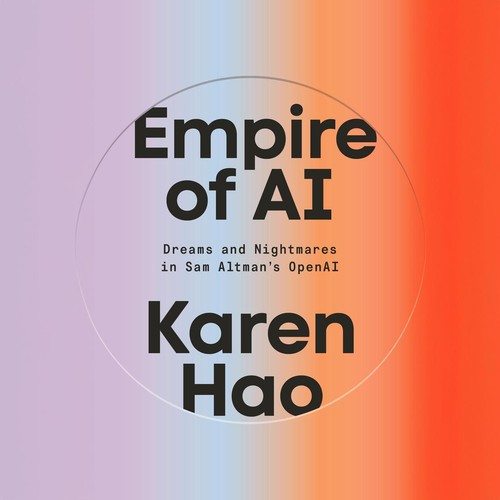
The definitive piece of investigative journalism on OpenAI: 260+ interviews, the clash between safety and speed, and the attempted firing of Sam Altma
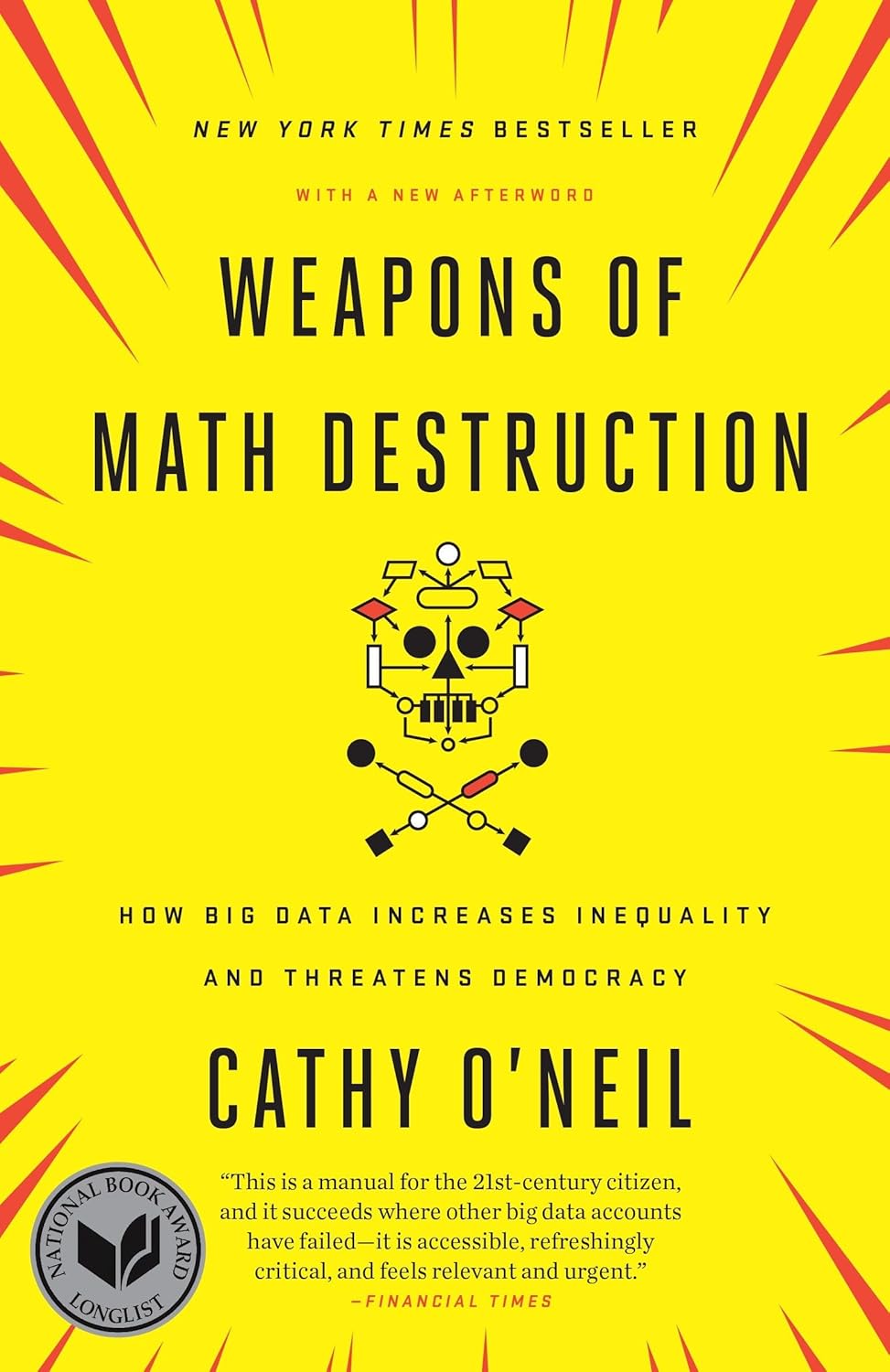
How opaque algorithms decide who gets credit, a job or parole — and why they tend to punish the same people.
As an Amazon Associate, Zendoric earns from qualifying purchases; the price does not change for you. · all our recommended books →
Sources & references
- Sam Altman-backed UBI study shows the receipts (OpenResearch)
- Did Sam Altman's Basic Income Experiment Succeed or Fail? — Scott Santens
- Pilotprojekt Grundeinkommen — resultados del estudio (DIW/Mein Grundeinkommen)
- AI and Jobs in 2026: What the Labor Data Really Shows (Digital Applied)
- The Impact of AI on the Early-career Labor Market (NACE)
- Sanders Introduces Legislation to Create $7 Trillion AI Sovereign Wealth Fund (Senate.gov)
- Sovereign wealth fund tax on AI companies unveiled by Sanders (Roll Call)
- OpenAI proposed donating 5% of its equity to a US sovereign wealth fund (TechCrunch)