China is winning the diffusion race, not the frontier race: the real state of its AI models
✨ AI-generated · how it's made
Independent evaluations put China's models seven to eight months behind the best US systems. Its edge lies elsewhere: much of the world is now building on its open models. The brake is still the same one: compute, and specifically chip memory.
🎬 Our Short
📺 The full analysis on video (with chapters)
📚 Go deeper

Semiconductors as the oil of the 21st century: history, espionage, and why an island of 23 million people underpins the entire AI economy.
As an Amazon Associate, Zendoric earns from qualifying purchases; the price does not change for you. · all our recommended books →
THE THESIS. China has not reached the AI frontier. It has done something that may matter more in the long run: it has become the world's default supplier of open models. Independent evaluations place its best models seven to eight months behind the leading US systems. That gap is not closing, because the bottleneck is physical: chips and, above all, memory. Meanwhile, its open-weight models (models anyone can download and run on their own machines) are now the most downloaded in the world. Our reading: the US wins on peak capability; China wins on adoption. Both are true at once, and the two should not be confused.
HOW BIG THE GAP REALLY IS. The most rigorous data point comes from CAISI, the AI evaluation center at the US National Institute of Standards and Technology (NIST). In May it tested DeepSeek V4 Pro on nine benchmarks. Two were private, to avoid contamination (the model having seen the answers during training). Its conclusion: V4 Pro performs like GPT-5, a model released about eight months earlier. DeepSeek, by contrast, claims parity with Opus 4.6 and GPT-5.4. The gap shows up in the hard tests. On a cybersecurity benchmark (CTF-Archive-Diamond), V4 Pro scored 32% against GPT-5.5's 71%. On graduate-level science (GPQA-Diamond), it reached 90%. Epoch AI, an independent institute that tracks AI progress, broadly agrees: Chinese open models have trailed by about seven months on average since 2023, within a range of four to fourteen. Some experts criticize CAISI's methodology. Its cost comparison, for instance, admitted only one US model, GPT-5.4 mini. Even so, our reading is that seven to eight months is a reasonable estimate. In AI that is a lot, but it is not a full generation.
THE LAB-BY-LAB MAP. There is no single Chinese champion, and that is telling in itself. On the Artificial Analysis index (a broad composite of benchmarks, revised in September with a new scale), the top open models are Chinese. According to aggregators citing that index, Xiaomi's MiMo-V2.6-Pro scores 46, Zhipu's GLM-5.3 scores 45 and Moonshot's Kimi K3 scores 44. DeepSeek V4-Pro ranks seventh out of 112 models. On our own Quality index, GLM-5.2 (77) now ties Grok 4.3. It trails Fable 5 (90) and GPT-5.6 Sol (79), but sits ahead of Gemini 3 Pro (66). A key warning. The coding numbers that labs publish themselves vary enormously depending on the version and grading method. For DeepSeek V4 Pro, reported SWE-bench Verified results (the standard test of fixing real bugs in code) range from 80% to 96%. Our reading: trust private or contamination-resistant tests, not launch-day tables.
WHY CHINA BETS ON OPEN. It is a strategic choice, not an altruistic one. If you cannot win on peak capability, you compete on diffusion. The result is measurable. According to the spring report from Hugging Face (the largest open-model platform), Chinese-origin models accounted for 41% of open-weight downloads between February 2025 and February 2026. US models accounted for 36.5%. Alibaba's Qwen has passed one billion cumulative downloads, according to several sources. A caveat: "open" does not always mean the same thing. GLM-5 uses the MIT license, which is very permissive. Kimi K3 and Qwen 3.8-Max use custom licenses with conditions. K3 also has 2.8 trillion parameters, and Moonshot recommends 64 accelerators to run it, so in practice it is not within everyone's reach. Our reading: open models are the great democratizing force of this technology, and that is good news at heart. But they turn Chinese models into foreign infrastructure for many Western companies. That raises legitimate governance questions: what biases they carry, and who sets the de facto standards.
CHIPS: THE CEILING THAT WON'T MOVE. This is the underlying reason for the gap. Epoch AI's report, published in September, estimates that Huawei will make about 1.5 million Ascend chips this year. Nvidia will make about 5.9 million. Measured in usable computing power, Huawei produces less than 4% of Nvidia's output: about 880,000 "H100 equivalents" against roughly 23 million. Each Ascend 950 delivers about 2 PFLOPS (quadrillion operations per second) at low precision. Nvidia's B300 delivers 13.5. The real bottleneck is HBM, the ultra-fast memory that sits alongside these chips. Epoch estimates that only about 240,000 of those Ascend chips would use Chinese-made memory. China does have self-reliance milestones. Zhipu says it trained GLM-5 entirely on Ascend chips, though that claim has not been independently verified. But Epoch does not expect Huawei to catch Nvidia before 2030. Its estimate is that in 2030 Huawei will produce what Nvidia produces today.
CONTROLS, PRIDE AND ENERGY. Export policy has swung back and forth. In April 2025, the US required a license to sell the H20, Nvidia's cut-down chip for China. In September 2025, according to press reports, Beijing told its companies to stop buying Nvidia chips. In January 2026, Washington approved sales of the more powerful H200, with conditions. But China's response held them back. According to Nvidia's quarterly filing, H200 sales to China were less than 1% of its data-center revenue. In July, a Commerce official described shipments as "very few", despite about $10 billion in approved licenses. Our reading: the controls have strengthened China's will to be self-reliant, but not its actual capacity, which is still capped by memory. Where China does lead is energy. It generates more than twice as much electricity as the US. In 2025 alone it added more than 430 gigawatts of wind and solar, according to Al Jazeera, citing BloombergNEF. Morgan Stanley forecasts a 44-gigawatt power shortfall for US data centers by 2028. If chips stop being the limit, energy will be the next battle.
IMPLICATIONS. First, price. Chinese models set the market's floor. DeepSeek launched V4-Pro at $1.74 per million input tokens (units of processed text) and $3.48 per million output tokens, according to CAISI. In August it priced the revised version at $0.435 and $0.87, according to VKTR. But there are signs of change. DeepSeek warned in August of a price increase, and Kimi K3 charges $14.25 per million output tokens. Our reading: with compute scarce, the era of near-free Chinese AI is ending at the high end. Second, in the short term the risks are real. Dual use, a lack of transparency about censorship, and reliance on unaudited foreign models all call for evidence-based governance, not panic. Third, in the long term, competition between two ecosystems that push each other makes intelligence cheaper for everyone. That brings an age of abundance closer: faster medical research, and tools within reach of people who cannot afford the expensive ones. The decisive question is no longer who has the smartest model. It is who writes the rules and builds the infrastructure that everyone's AI will run on.
📚 Go deeper
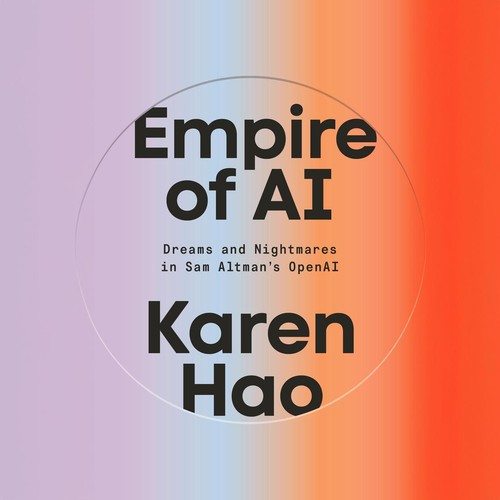
The definitive piece of investigative journalism on OpenAI: 260+ interviews, the clash between safety and speed, and the attempted firing of Sam Altma
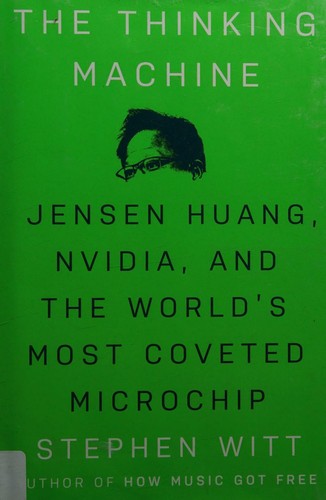
The story of NVIDIA and Jensen Huang: how a video-game card company ended up making the most coveted resource on the planet.
As an Amazon Associate, Zendoric earns from qualifying purchases; the price does not change for you. · all our recommended books →
Sources & references
- NIST – CAISI Evaluation of DeepSeek V4 Pro (mayo 2026)
- Epoch AI – Will Huawei catch up to Nvidia by 2030? (sep. 2026)
- Startup Fortune – China's open AI models now trail the US frontier by just seven months (Epoch AI)
- CSIS – What to Know About Chinese AI Models
- Yahoo Tech – US Government Says China's Best AI Models Lag Behind. Experts Aren't So Sure
- Morph – DeepSeek V4: specs, pricing, benchmarks (snapshot Artificial Analysis)
- Vals.ai – SWE-bench Verified leaderboard
- Geotoolbox – Chinese AI Models Compared (Artificial Analysis v4.3.2)