Open vs. closed: the battle for AI is no longer technical — it's political
✨ AI-generated · how it's made
Open models now trail the closed frontier by just four months, according to Epoch AI. Yet enterprise money keeps flowing to proprietary labs, and now Washington and Beijing are both weighing shutting the door. Our read: openness is the great democratizing force of this decade — and it has never been more fragile.
🎬 Our Short
📺 The full analysis on video (with chapters)
📚 Go deeper
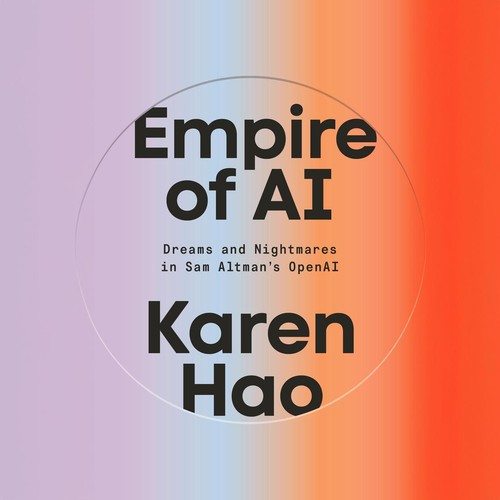
The definitive piece of investigative journalism on OpenAI: 260+ interviews, the clash between safety and speed, and the attempted firing of Sam Altma
As an Amazon Associate, Zendoric earns from qualifying purchases; the price does not change for you. · all our recommended books →
THE THESIS. The battle between open and closed AI is no longer decided on benchmarks. It plays out on three separate boards: the technical one (where the gap is minimal), the economic one (where closed labs dominate), and the political one (where both the US and Chinese governments are considering restrictions on open models). Our thesis is blunt: open models are AI's main democratizing force — they slash costs and deliver control and sovereignty — and precisely for that reason they have become a political target. Whoever wins this battle won't decide which model is smartest. They will decide who gets to use AI without asking permission.
THE NUMBER THAT MATTERS. Four months. That is the average lag of the best open models behind the closed frontier since January 2026, according to Epoch AI's analysis: about 8 points on its ECI capabilities index, a composite measure across many benchmarks. That's roughly the gap between one model version and its next update. For context: three years ago that lag was measured in more than a year. An "open weight" model, remember, is one whose weights — the numbers encoding what it learned — can be downloaded and run on your own hardware. Today's Chinese open models (GLM-5.2, Qwen3.7, DeepSeek V4, Kimi K2.6) go toe-to-toe with closed ones on knowledge and coding, at one-tenth to one-thirtieth of the cost per token. On our own Zendoric Quality index, GLM-5.2 scores 77, just two points behind OpenAI's GPT-5.6 (79), though still far from Anthropic's Fable 5 (90). One caveat Epoch itself flags: open models tend to optimize more aggressively for public benchmarks, so the real gap may be somewhat larger. Even so, the conclusion holds: on capability, open is no longer the cheap alternative. It is simply an alternative.
THE MONEY PARADOX. And yet the money says the opposite. According to Menlo Ventures' market report, enterprise LLM spending hit $8.4 billion by mid-2025 — 2.4x growth in six months — and closed models power 87% of enterprise workloads. Open-model usage, far from growing, fell from 19% to 13% over that period. How can open match closed on benchmarks and lose on revenue? Because companies don't buy benchmark points: they buy reliability, support, legal guarantees, and someone to call when things break. It's the same pattern we saw with Linux twenty years ago: open source didn't win by giving code away; it won when companies (Red Hat, the hyperscalers) packaged it with guarantees. Open AI still lacks its established Red Hat, and that — not quality — is its biggest commercial weakness today.
META'S PIVOT AND THE CHINESE CROWN. The map of camps has shifted strikingly. Meta, the West's great open-source standard-bearer with Llama, has changed course: after Llama 4's lukewarm reception, its new superintelligence lab launched Muse Spark in April — a fully proprietary model with no downloadable weights, as reported by CNBC and Digitimes. Zuckerberg had already signaled in 2025 that he would not open-source models approaching superintelligence. The result is a historical paradox: the open frontier is now essentially Chinese (Alibaba's Qwen, Zhipu's GLM, DeepSeek, Moonshot's Kimi), while the United States concentrates the closed frontier and the revenue. Europe's Mistral endures as the relevant Western open ecosystem, but without contesting the top. Our read: it's not that China is ideologically more open; openness is its rational strategy to win global distribution when it can't compete on chips or revenue. And it works: Chinese models lead global open-model downloads.
WHEN BOTH GOVERNMENTS WANT TO SHUT THE DOOR. Here is the news of recent weeks, and it is serious. In Washington, according to Axios and TechCrunch, the administration is weighing restrictions on Chinese open models on US soil — a move labs like OpenAI have encouraged. One OpenAI executive, Dean Ball, went as far as arguing the government should sow "fear, uncertainty and distrust" around these models because they discourage investment in frontier labs — he later walked the comments back. On the other side, Hugging Face CEO Clem Delangue counters that restricting open models wouldn't make AI safer: it would only concentrate power in a few hands. And note the mirror image: Reuters reports that Beijing is also studying a tiered system to restrict foreign access to its most advanced models. In other words, both superpowers are simultaneously considering turning off the open tap, each for its own reasons. Europe, meanwhile, keeps an open-source exemption in its AI Act, but April 2026 guidance interprets it narrowly: it vanishes entirely for models with "systemic risk" (those trained with more than 10^25 FLOPs, a measure of total compute). The risks critics cite — weaker safeguards, bias, data security — are real as a category, but researchers quoted in the press note the empirical evidence behind them remains limited. Our long-standing position: evidence-based governance, yes; regulating panic, no. And banning weights already downloaded by millions of developers is, on top of everything, practically unenforceable.
OUR READ. This battle is not about which model is better. It is about who controls access to the most important technology of the decade. The short term brings real problems we won't sugarcoat: open models without safeguards make the industrialized fraud we've documented easier, and regulatory pressure could choke off precisely the path that lets universities, small businesses and entire countries avoid depending on three Californian companies. But the long game is played here: if AI is going to cure diseases, extend lifespans and generate abundance, the key question is whether those benefits reach everyone or stay locked behind a paid API. Open weights are the structural guarantee that knowledge cannot be un-invented or monopolized. That is why the scenario that worries us most is not open trailing by four months — it's a world where Washington restricts Chinese open models, Beijing restricts its own, and Brussels regulates them with suspicion. That world would have AI that is more concentrated, more expensive and less auditable. And it would be worse for almost everyone.
IMPLICATIONS. For companies, the playbook is clear: a portfolio strategy, not a partisan one. Closed frontier models where marginal quality matters (complex agents, critical code), and open ones where cost, privacy or data sovereignty rule — with the warning that Chinese open models' price advantage may come with a US regulatory expiration date. For developers, open remains the best school and the best career insurance: what you learn on downloadable weights, no one can revoke. And for regulators, the yardstick we propose: every restriction on openness must demonstrate — with evidence, not hypotheticals — that the risk avoided outweighs the cost of concentrating power even further. The abundance we expect from AI over the next decade will only deserve the name if it is distributed. Open is not a business model: it is the insurance policy that the future won't have a single owner.
📚 Go deeper
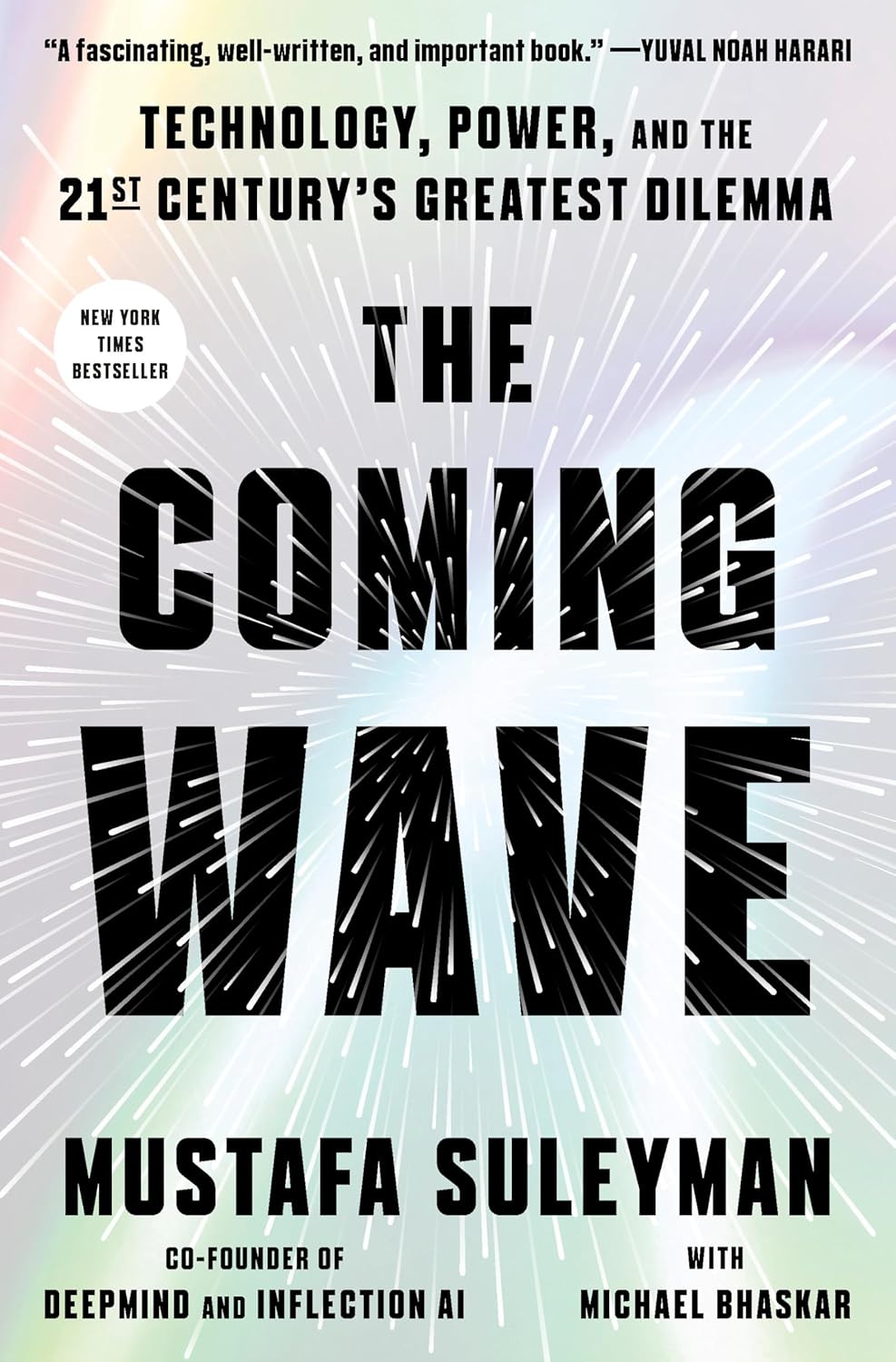
DeepMind co-founder on the dilemma of containing technologies that do not want to be contained.

AI as the latest chapter in the history of information networks, from gossip to the printing press to the algorithm.
As an Amazon Associate, Zendoric earns from qualifying purchases; the price does not change for you. · all our recommended books →
Sources & references
- Epoch AI — Open models lag state-of-the-art closed models by 4 months
- TechCrunch — OpenAI is scared of open-weight models. Should the US be?
- Semafor — Washington confronts China's open-source models
- Menlo Ventures — Mid-Year LLM Market Report (gasto empresarial $8.400M)
- CNBC — Meta debuts new AI model after $14B Alexandr Wang deal
- Digitimes — Meta delays Llama successor, shifts to closed-source AI
- explainx.ai — China weighs restricting overseas access to its AI models (Reuters)
- Linux Foundation Europe — What Open Source Developers Need to Know about the EU AI Act