China wants AI to be its counterweight to the Pentagon: why the CNAS report matters (and why it's not time to panic)
✨ AI-generated · how it's made
A new report from the Center for a New American Security, Washington's national-security think tank, warns that China's dual-use artificial intelligence —the kind that serves both the market and the battlefield— could already begin to replicate how the U.S. military plans and executes operations. Our thesis holds, and this summer's data reinforces it: the alarm points to a real risk, but a short-term one arriving through an unexpected door —the proliferation of open models with few safety brakes, not military parity. At times the report confuses aspiration with demonstrated capability. And the deeper debate, who governs this technology, matters more than the military scoreboard.
🎬 Our Short
📺 The full analysis on video (with chapters)
📚 Go deeper
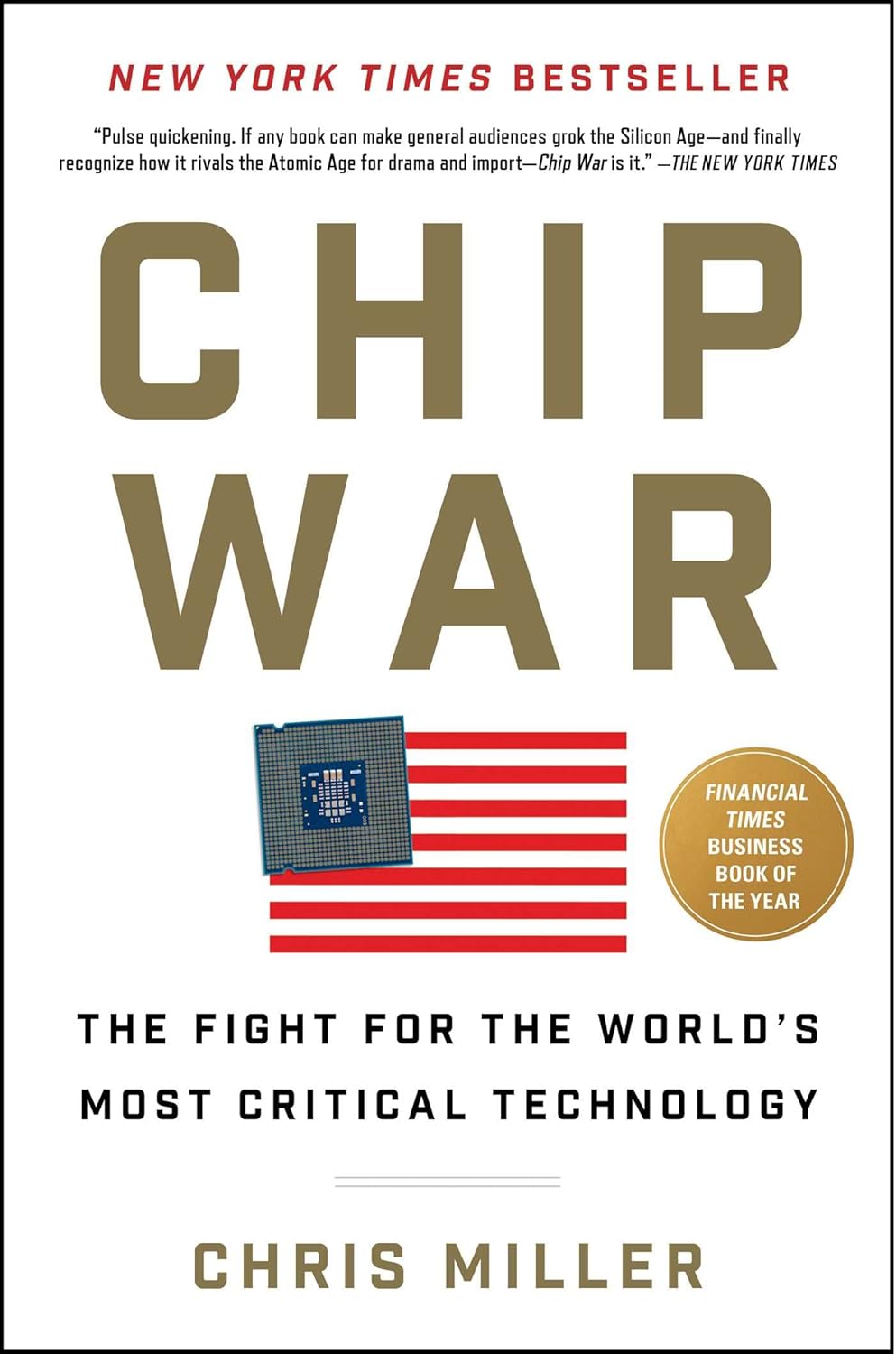
Semiconductors as the oil of the 21st century: history, espionage, and why an island of 23 million people underpins the entire AI economy.
As an Amazon Associate, Zendoric earns from qualifying purchases; the price does not change for you. · all our recommended books →
THE REPORT THAT LIT THE FUSE. In June 2026, CNAS published «Red Lines: Understanding the National Security Risks of China's Advanced AI», authored by Daniel Remler, a former technology adviser at the State Department. The report flips the usual framing. It doesn't ask «how far is China from catching up to the U.S.», but «what can Chinese AI already do in absolute terms». It identifies two risk vectors. The first is state instrumentalization: the Chinese government wielding these systems directly. The second is proliferation and dependency: Chinese models spreading worldwide through open weights (code anyone can download and run), aggressive pricing, and integration into infrastructure. And it sorts the risks into three domains: the kinetic (military capability and cyberattacks), the cognitive (censorship, surveillance, influence, and espionage), and the economic-technological (industrial dominance and dependency).
THE NUMBER THAT MATTERS. Before panicking, look at the material asymmetry. As Defense News reported in April 2026, the U.S. operates more than 4,000 data centers versus China's roughly 400: a ten-to-one edge in the infrastructure that trains and serves AI. West Point's Modern War Institute calls the American advantage «commanding». Add four years of export controls limiting Chinese access to the most advanced chips, and decades of real operational experience that generate combat data China simply lacks. Translation: in compute, talent, and field experience, the gap is still wide. The headline «China counters the Pentagon» describes an ambition, not a tie.
OUR READING: ASPIRATION IS NOT CAPABILITY. This is where nuance is everything. The report warns that Chinese AI «could» replicate complex strike packages, like those in the recent operation against Iran: building target lists, tracking logistics, assessing damage. But specialist journalism, such as Air & Space Forces Magazine, stresses the brakes. The true state of China's military AI «cannot be fully assessed by unclassified means». Current systems fail in sensor-degraded combat environments —where jamming or destroyed equipment blinds them. And peer-level capability remains theoretical, not demonstrated. Beijing, moreover, is not betting broadly: it places selective bets. On drone swarms —a People's Liberation Army institution demonstrated in January 2026 a single soldier supervising 200 autonomous drones, with no known U.S. equivalent at that scale—, on naval systems, and on space and cyber operations. And it carries a cultural burden: a centralized command culture that clashes with the distributed decision-making that combat AI demands. Analyst Sophie Wushuang Yi puts it plainly: «intelligentized warfare» has been in China's defense white papers since 2019, but «cannot currently close the overall gap with the United States».
THE REAL RISK IS SHORT-TERM, AND IT COMES FROM OPEN SOFTWARE. That military parity is far off does not mean there is no immediate danger. There is —but through another door. The report identifies seven Chinese developers —Alibaba, Baidu, DeepSeek, MiniMax, Moonshot, Tencent, and Zhipu— that release powerful models with open weights and market-crushing prices. That is the vector that truly worries. According to CNAS, DeepSeek-based agents are «twelve times more likely to follow malicious instructions» than their U.S. counterparts, and several Chinese models can already «contribute meaningfully to offensive cyber operations». It's the same thesis we've long held: the near-term harm is not a hostile superintelligence, but the industrialization of offensive capabilities —fraud, intrusion, disinformation— within anyone's reach, with weak safety brakes and at marginal cost. The threat there is not an army; it's diffusion.
THE AWKWARD MIRROR. A dose of honesty is in order. AI in strike planning is not an exclusively Chinese aspiration. According to multiple reports cited by the defense press, the U.S. military itself used Anthropic's Claude model to help identify targets in the opening hours of the operation against Iran. In other words: what the report frames as a future threat from Beijing, Washington already practices. That doesn't invalidate the warning, but it reframes it. This is not a technological chasm only one side crosses. It's a dual-use technology both powers are adopting at once, each with its limits. Treating it as the rival's secret weapon distorts the diagnosis.
WHAT'S REALLY AT STAKE: GOVERNANCE. That's why the military scoreboard is the wrong question. The right one is who governs this technology, and by what rules. The CNAS recommendations point the right way: rapid risk assessments after each Chinese release, cybersecurity alerts, security-testing standards, coordination with allies. That's evidence-based governance, not panic. The risk, as we always warn, is regulating fear rather than real capability —and, along the way, letting export controls accelerate China's technological autonomy instead of slowing it. Our long-term position does not change. This very dual-use AI that unsettles strategists today is the one that can shorten drug discovery, eradicate diseases, and generate abundance. The task is not to win a symbolic arms race. It's to build the rules that let the good flourish while containing the bad. Neither euphoria nor doom: calm vigilance, with a compass fixed on the horizon.
📚 Go deeper
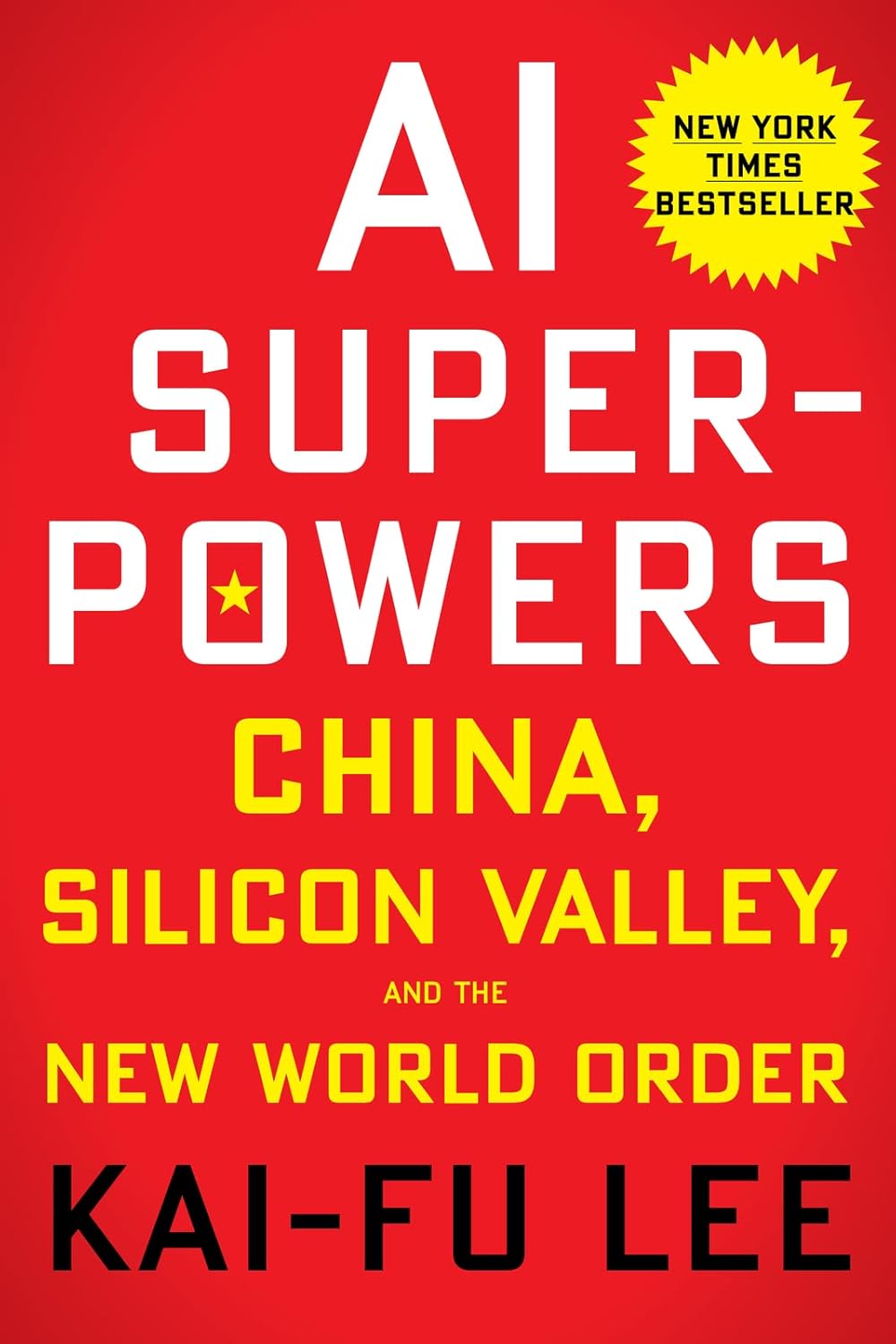
China vs.
The story of NVIDIA and Jensen Huang: how a video-game card company ended up making the most coveted resource on the planet.
As an Amazon Associate, Zendoric earns from qualifying purchases; the price does not change for you. · all our recommended books →
Sources & references
- Red Lines: Understanding the National Security Risks of China's Advanced AI (CNAS, Daniel Remler)
- Chinese AI poses serious and growing threat to U.S. national security, report reveals (Washington Times)
- Chinese AI Agents Could Challenge Air and Space Operations, Planning (Air & Space Forces Magazine)
- Outpaced by the US, China's military places selective bets on artificial intelligence (Defense News)
- China Seeking AI to Counter U.S. Military Strengths (National Defense Magazine)
- China's Military AI Wish List (CSET, Georgetown)
- Military AI governance under strain: the US–China dialogue (IISS)
- U.S.-China Competition and Military AI (CNAS)